

African Civet | A Complete Safari Guide
Learn about African civet behaviour and when sightings are most likelyOverview
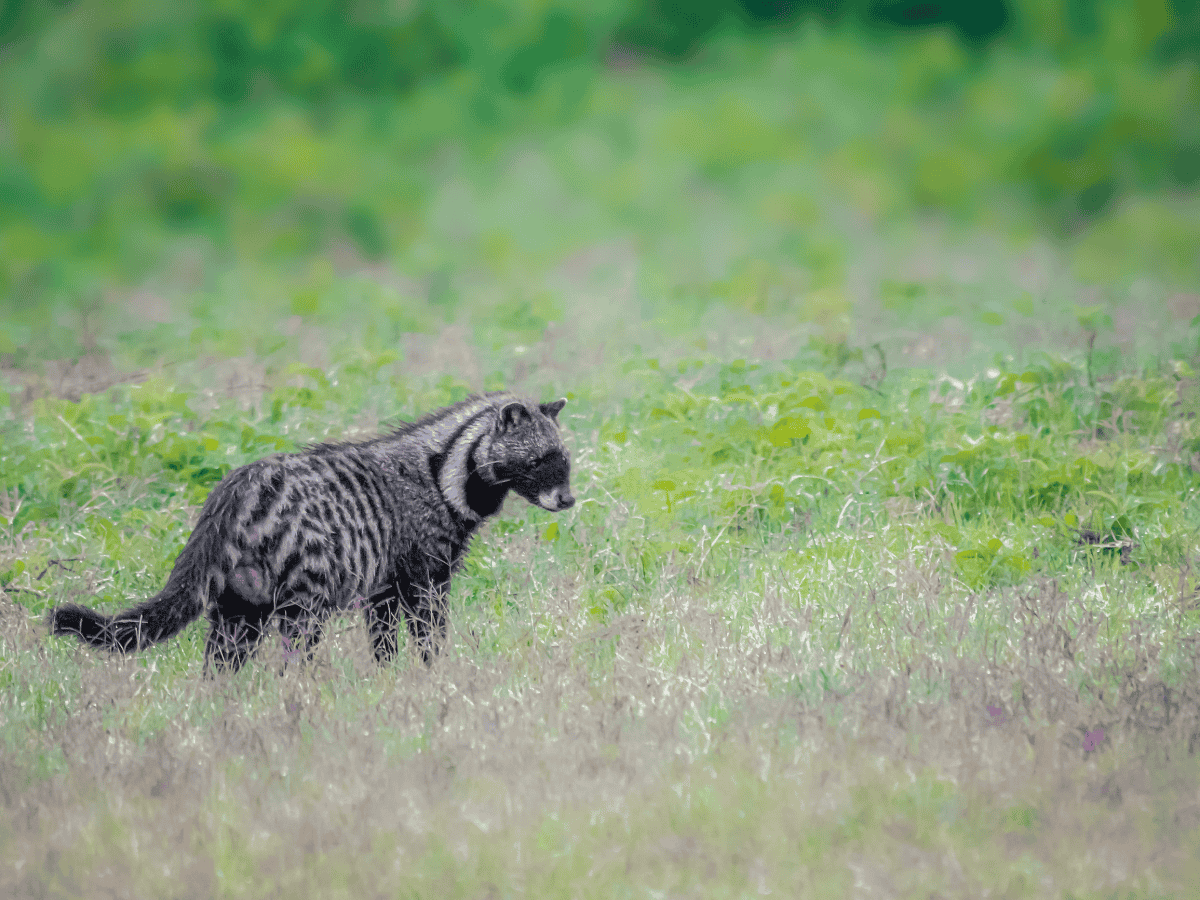
The African civet is a nocturnal and secretive animal, recognised by its bold black and white markings, bushy tail, and low, cat-like body. It is found across much of sub-Saharan Africa, usually in woodlands, grasslands, and areas close to water. Civets are solitary and mostly active at night, making sightings uncommon. For travellers, seeing one is a special experience often during night drives. Its quiet movements and striking appearance add a sense of mystery to the safari, while it plays a role in controlling small prey and spreading seeds.










Gallery
Summary
Best Places To See
African civet are most reliably seen in areas that offer night drives and a mix of woodland and riverine habitat, with Kruger National Park standing out as a strong destination due to regular nocturnal sightings along quiet roads and near watercourses. Adjacent private reserves such as Sabi Sands Game Reserve provide higher-quality encounters, supported by expert guides and off-road tracking that improves visibility at night. In Botswana, Moremi Game Reserve and Chobe National Park offer consistent sightings in floodplain and woodland environments, while in South Africa’s Zululand Region, Phinda Private Game Reserve delivers reliable encounters in varied habitat where civets are active after dark.
Best Time Of Year To See
The best time to see African civets is during the dry season, when reduced vegetation and cooler nights improve chances on night drives. They are strictly nocturnal and often seen along roads or open areas. In the wet season, thicker vegetation and abundant food make them harder to locate.
Identification
African Civets have long bodies, black-and-white markings, and bushy tails. Their coats are patterned with spots and stripes. They may be confused with genets, but civets are larger and heavier.
Behaviour
African civets are nocturnal omnivores that feed on fruit, insects, small animals, and carrion. They forage alone, moving slowly and methodically while using scent to locate food. They are solitary and highly territorial, marking areas with scent. During the day, they rest in dense cover. Breeding occurs without long-term pair bonds, and females raise young alone. On safari, sightings usually happen at night, where travellers may see a civet walking along roads or open areas, pausing frequently to sniff and investigate its surroundings.
Diet
African civets are omnivores that feed on fruits, insects, small animals, and carrion. They are mostly active at night and forage on the ground. They rely on smell and hearing to find food. Their diet changes with the seasons, with more fruit eaten when available. They may also scavenge. They often feed alone and cover large areas while searching for food. Their varied diet allows them to adapt to different environments.
Habitat
African civets inhabit woodland, savanna, and forest edges where cover is dense and food is available. Their habitat provides protection and access to a varied diet. They prefer areas near water and thick vegetation. Terrain is usually shaded and quiet. Travellers most often see civets at night in lodges or reserves with good nocturnal activity, where their distinctive markings and slow movement make them memorable sightings.
Conservation Status
African civets are listed as least concern, with stable populations. Their biggest threats include habitat loss and hunting in some areas. They are adaptable and survive in various environments. Strong populations exist in protected areas. Safari tourism supports these ecosystems and helps protect civets.
Interesting Facts
African civets are nocturnal mammals with striking black-and-white markings and a long, banded tail. They are solitary and spend their nights foraging for a wide range of food, including insects, fruits, and small animals. Civets play an important role in seed dispersal. They are also known for producing a substance called civet, historically used in perfumes. Their secretive lifestyle means sightings are usually brief and special.
Folklore
African civets are linked to mystery, night, and adaptability. Their nocturnal habits have associated them with the unseen aspects of the natural world. In some traditions, they represent balance between different environments. Their presence reinforces themes of adaptability and quiet movement.