
African Fish Eagle | A Complete Birding Guide
Learn to identify African Fish Eagle calls and where to spot themOverview
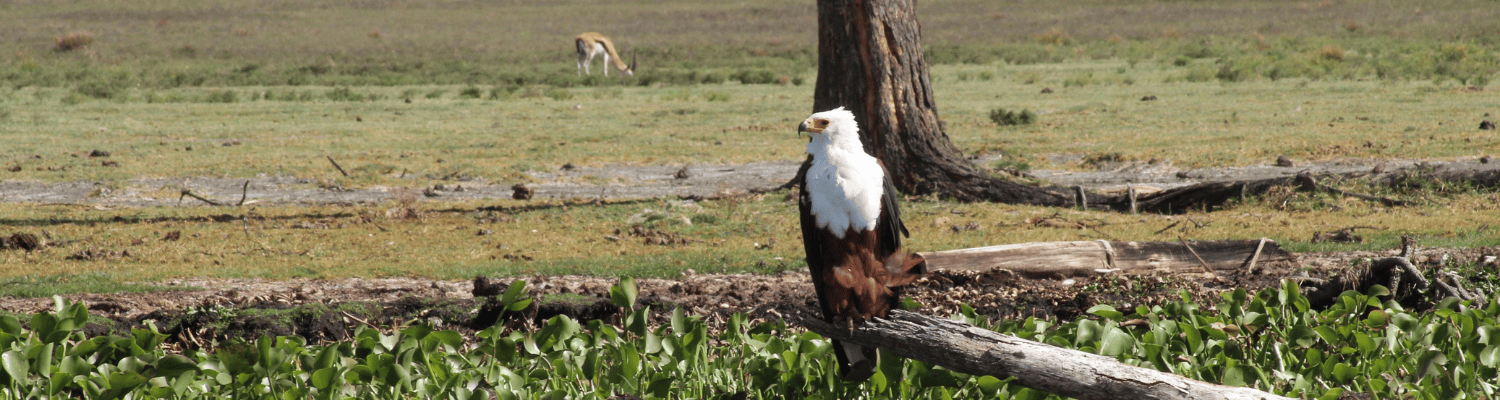
The African Fish Eagle is a large, iconic raptor with a white head, dark body, and powerful hooked bill. It is found near rivers, lakes, and wetlands across Africa. Often seen perched near water, it dives to catch fish. Its distinctive call and striking appearance make it one of the defining sounds and sights of safari.







Gallery
Summary
Best Time Of Year To See
African Fish Eagles can be seen throughout the year, with consistently strong visibility due to their territorial nature and reliance on stable water-based prey. Sightings are often most rewarding during warmer months when fish activity increases and birds hunt more frequently. Breeding season may also increase calling and territorial displays, improving detection. In cooler months, activity remains steady. Early morning and late afternoon are particularly productive, when birds are actively calling and hunting along water edges.
Identification
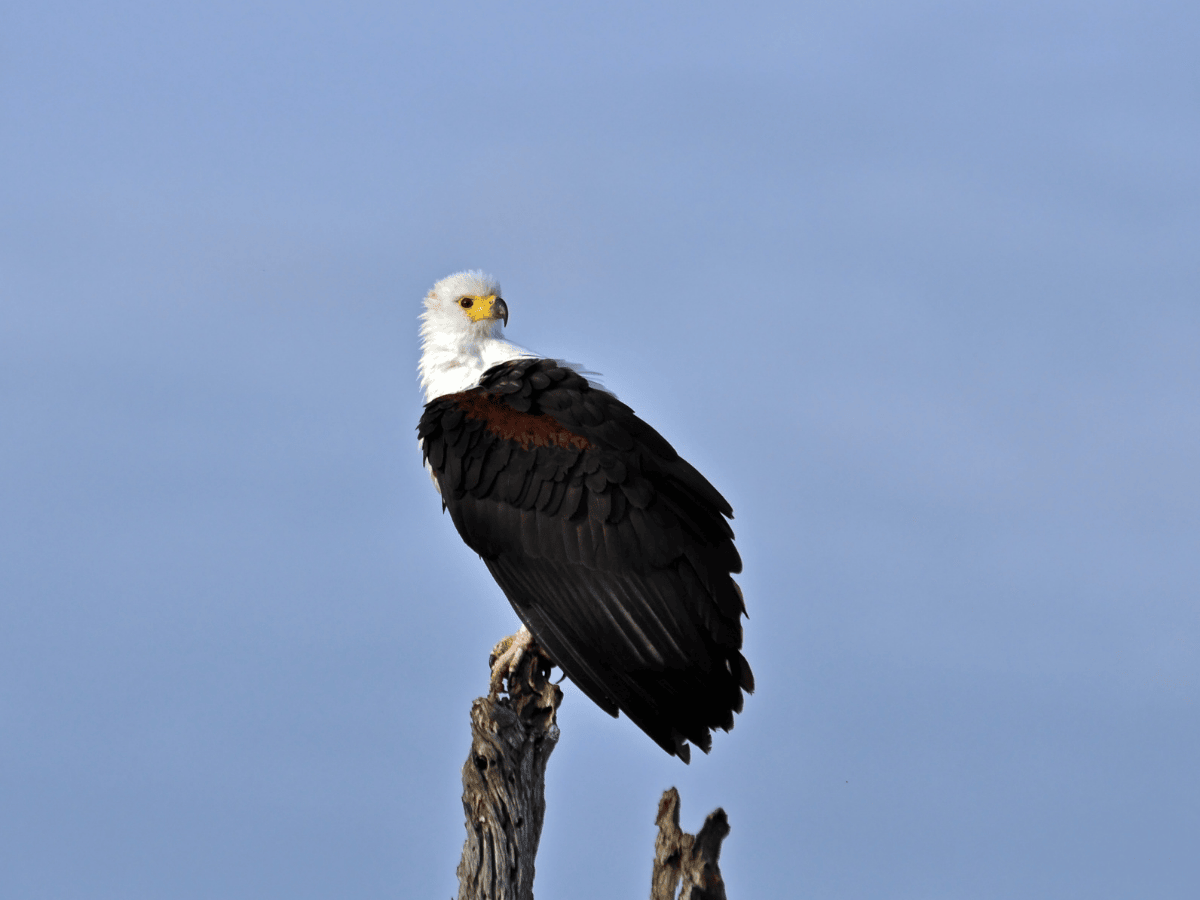
African Fish Eagles are large raptors with a distinctive white head and chest, dark brown body, and white tail. They have a strong yellow bill with a black tip and bright eyes. In flight, their bold colour contrast and broad wings make them easy to identify. Males and females are similar, although females are larger. They are unlikely to be confused with other species due to their unique colouring and association with water.
Behaviour
African Fish Eagles feed mainly on fish, which they catch by swooping down and snatching prey from the water’s surface with their talons. They are often seen perched near water, scanning for movement. The species is territorial and usually found in pairs. Their loud, ringing call is often heard throughout the day. Travellers are most likely to observe them hunting, perched prominently, or calling from elevated positions.
Diet
African Fish Eagles feed primarily on fish, but may also take waterbirds, small mammals, and carrion when available. They hunt by watching from a perch or soaring before making a controlled descent to capture prey. Feeding activity is consistent throughout the year due to stable prey availability. Their diet reflects their role as top predators within aquatic ecosystems.
Habitat
African Fish Eagles prefer rivers, lakes, wetlands, and floodplains where permanent water supports fish populations. They are most often found perched in trees near water or soaring above open waterways. This habitat supports both hunting and nesting. Travellers are most likely to encounter them in areas with large water bodies and good visibility.
Conservation Status
African Fish Eagles are considered stable and widespread, with healthy populations across much of their range. Their adaptability to different water systems supports their resilience. However, water pollution and habitat disturbance can affect local populations. Protected areas such as Kruger National Park and Chobe National Park help maintain suitable conditions. Conservation of aquatic ecosystems is important for supporting this species.
Interesting Facts
African Fish Eagles are known for their iconic call, often described as the sound of Africa. They can snatch fish from the water without fully submerging themselves. Pairs often remain together for life and defend territories along water bodies. Their presence is often a reliable indicator of nearby water and healthy fish populations.
Folklore
African Fish Eagles are often seen as symbols of Africa itself, with their call representing the spirit of the wild. In many traditions, they are associated with strength, freedom, and connection to water. Their commanding presence and voice may symbolise authority and awareness. In some interpretations, they represent the voice of nature, reinforcing their role as iconic and culturally significant birds.
Best Places To See
African Fish Eagles are most reliably found along large rivers, lakes, and wetlands where fish are abundant and open perches are available. Kruger National Park offers some of the most consistent sightings, particularly along major rivers where birds are frequently seen hunting or calling. Chobe National Park provides a strong complementary option with extensive waterways and high fish availability. These locations are reliable because stable water systems, abundant prey, and open visibility allow the species to remain active and easily detectable throughout the day.