
African Hawk-Eagle | A Complete Birding Guide
Understand African Hawk-Eagle identification and where to see itOverview
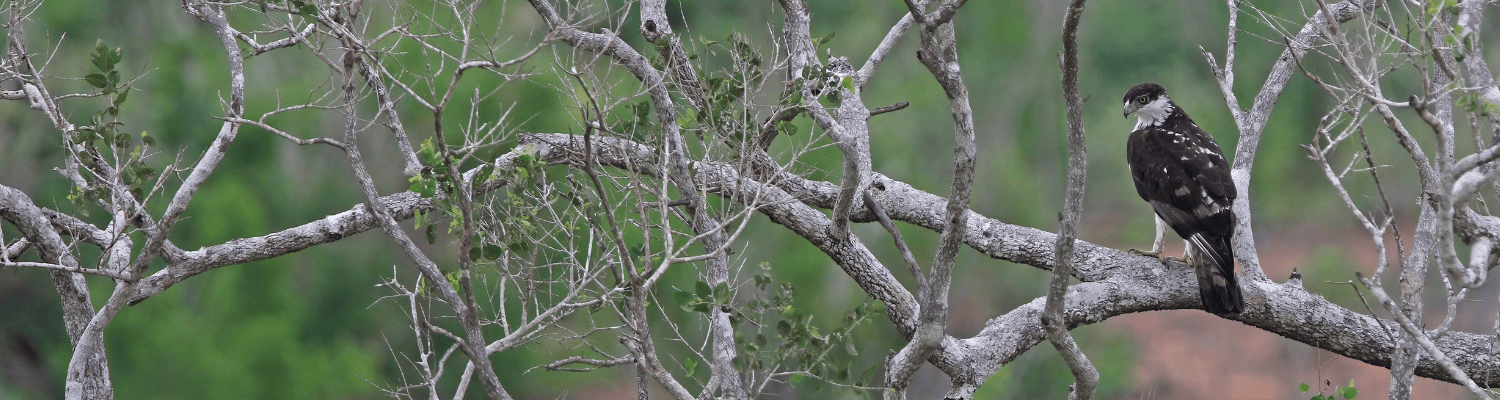
The African Hawk-Eagle is a medium-sized raptor with bold black, white, and chestnut markings and a strong, agile build. It is found in woodlands and savannas across sub-Saharan Africa. Often seen perched quietly before launching fast, powerful hunts, it preys on birds and small mammals. Its speed and striking appearance make it an exciting bird of prey to encounter on safari.








Gallery
Summary
Best Places To See
The African Hawk-Eagle is most reliably found in open woodland and savanna where tall trees provide nesting sites and open ground allows for effective hunting. Kruger National Park offers some of the most consistent sightings, particularly in mixed woodland areas with good visibility and abundant prey. Madikwe Game Reserve provides a strong complementary option with similar habitat and reliable raptor activity. These locations are effective because a balance of open hunting space and elevated perches allows the species to hunt efficiently while remaining visible to observers.
Best Time Of Year To See
The African Hawk-Eagle can be seen throughout the year, but sightings are most consistent during warmer months when prey activity increases and birds are more active and visible. During this period, hunting frequency rises and territorial behaviour during breeding season may improve detection. Thermal currents also support soaring, making birds easier to spot overhead. In cooler months, activity may decrease slightly. Late morning to early afternoon is often the most productive time, when both prey and raptor activity are elevated.
Identification
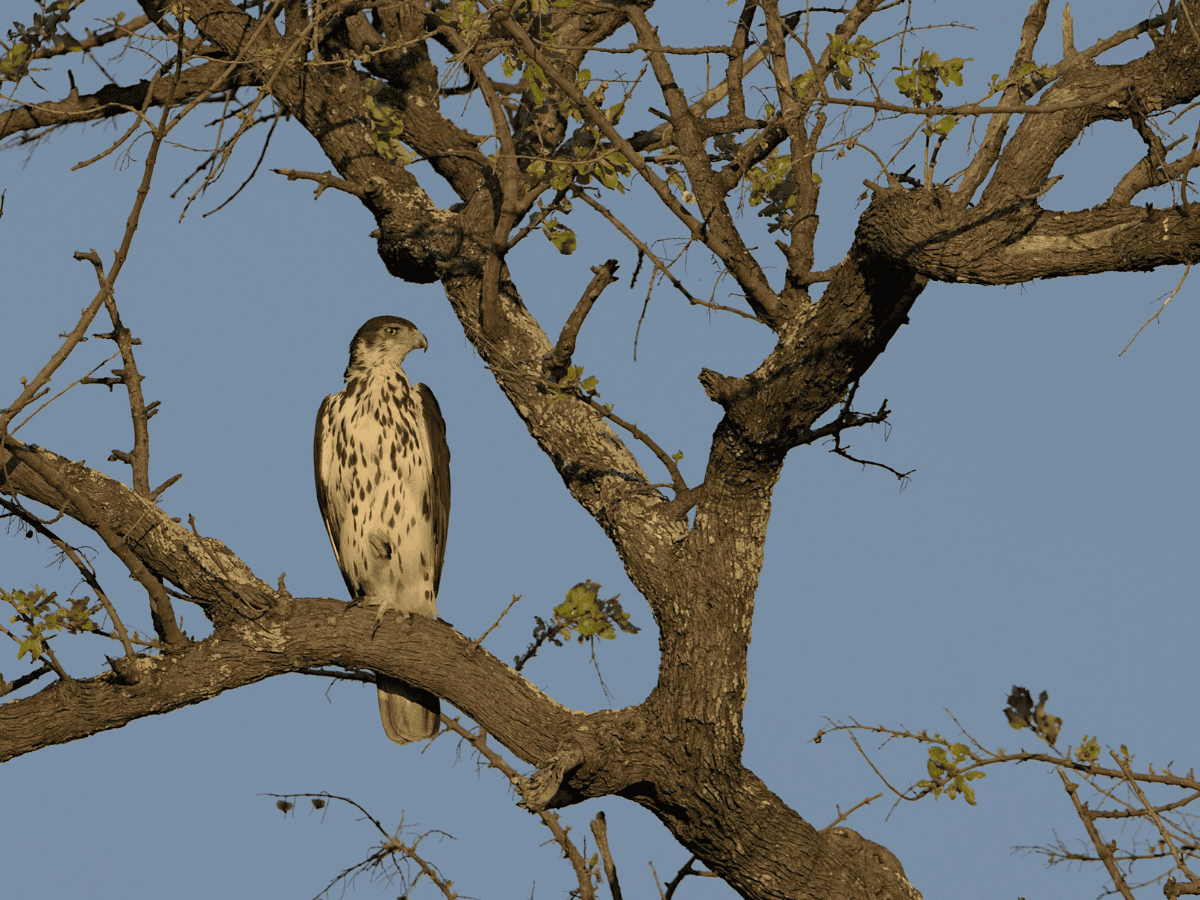
The African Hawk-Eagle is a medium to large raptor with bold contrasting plumage, including white underparts marked with dark streaks and a darker back. It has broad wings, a relatively long tail, and strong legs. Its facial expression is intense, with bright eyes and a hooked bill. Males and females are similar, although females are larger. In flight, it shows strong contrast and a powerful silhouette. It can be confused with other eagles, but its pattern and size help distinguish it.
Behaviour
The African Hawk-Eagle feeds on birds, mammals, and reptiles, hunting with speed and precision. It often launches from a perch or soars before making a rapid, direct attack. It is usually solitary or seen in pairs and is highly territorial. The species may call during breeding season and performs aerial displays. Travellers are most likely to observe it perched high in trees or actively hunting across open terrain.
Diet
The African Hawk-Eagle feeds on a wide range of prey, including birds, small mammals, and reptiles. It hunts by using surprise and speed, often attacking from above or from a concealed perch. Feeding activity is linked to prey availability, which increases during warmer months. Its varied diet reflects its adaptability and role as a top predator within its habitat.
Habitat
The African Hawk-Eagle prefers open savanna, woodland, and rocky terrain where both hunting space and nesting sites are available. It is most often found perched in tall trees or soaring above open landscapes. This habitat supports both hunting and territorial behaviour. Travellers are most likely to encounter it in areas with a mix of open ground and scattered trees.
Conservation Status
The African Hawk-Eagle is considered stable, although it depends on intact habitats and healthy prey populations. Habitat loss and human disturbance can affect local populations. Protected areas such as Kruger National Park and Madikwe Game Reserve help maintain suitable conditions. Conservation of savanna and woodland ecosystems is important for supporting this species across its range.
Interesting Facts
The African Hawk-Eagle is an exceptionally agile hunter capable of capturing birds in flight. Its bold plumage makes it one of the more visually striking eagles in Southern Africa. It often uses surprise and speed rather than prolonged pursuit when hunting. Its presence is often an indicator of a healthy ecosystem with abundant prey.
Folklore
Large raptors are often associated with strength, vision, and authority in African folklore. The African Hawk-Eagle’s hunting ability may symbolise power and precision. Its commanding presence reflects dominance within the natural world. In some interpretations, birds of prey represent clarity and perspective, reinforcing this species’ connection to awareness and balance within natural systems.