
African Jacana | A Complete Birding Guide
Discover African Jacana behaviour and where to find itOverview
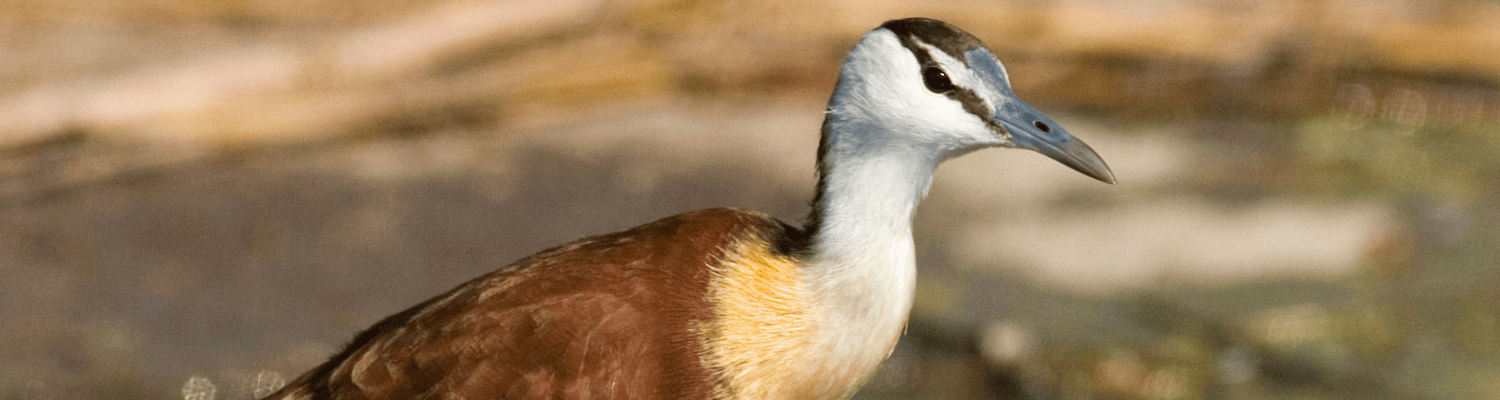
The African Jacana is a distinctive wetland bird with long toes that allow it to walk on floating vegetation. It is found on lakes, rivers, and wetlands across Africa. Often seen stepping lightly across lily pads, it feeds on insects and small aquatic life. Its unique movement and appearance make it one of the most recognisable wetland birds.







Gallery
Summary
Best Time Of Year To See
The African Jacana can be seen throughout the year, but sightings are most consistent during warmer months when water levels are stable and vegetation is at its peak. During this time, breeding activity increases movement and visibility, and birds are more frequently seen foraging and interacting. Increased insect availability also supports higher feeding activity. In cooler or drier periods, shrinking water bodies can reduce suitable habitat. Summer generally provides the best conditions, combining high activity, strong visibility, and optimal wetland coverage.
Identification
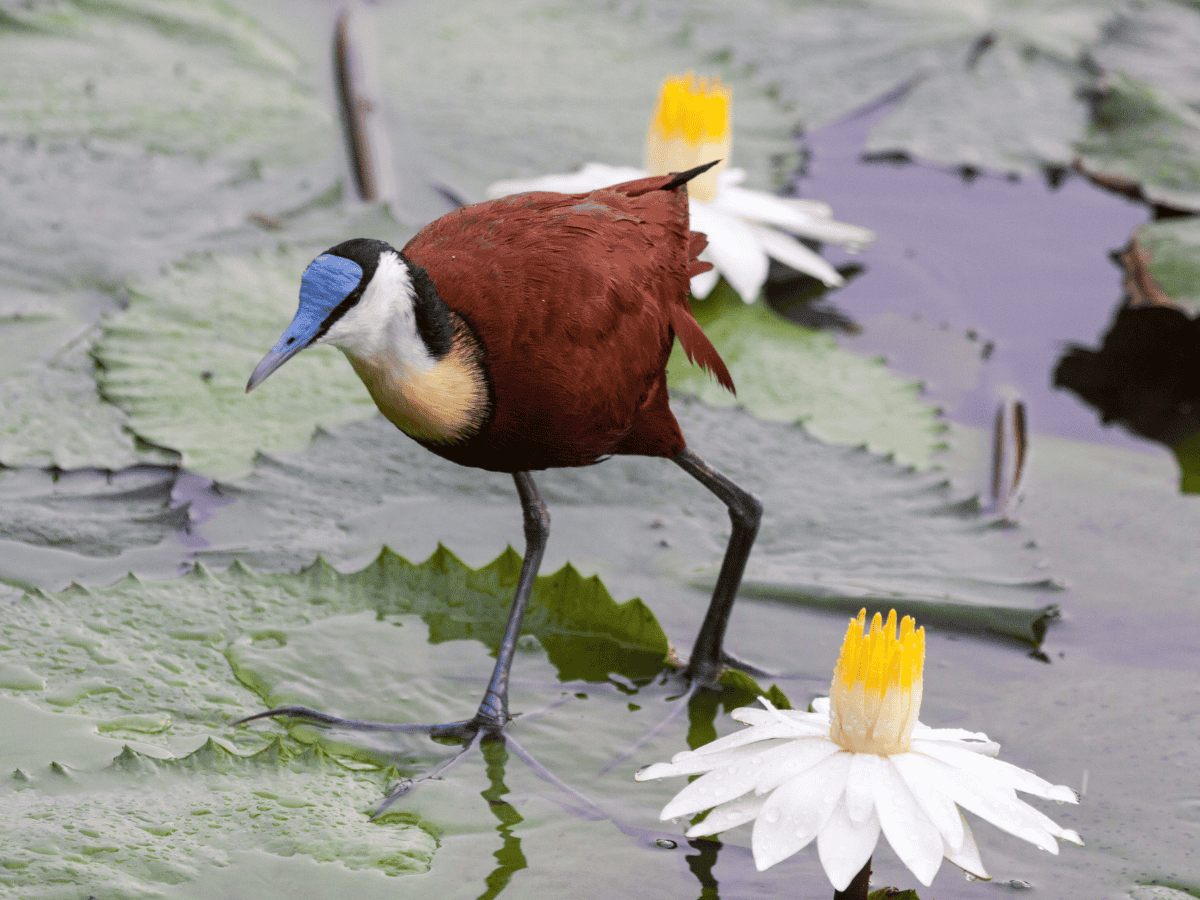
The African Jacana is a medium-sized waterbird with a rich chestnut body, black head and chest, and bright blue frontal shield above the bill. Its most distinctive feature is its extremely long toes and claws, which allow it to walk on floating vegetation. It has a slender body and upright posture. Males and females are similar, although females are slightly larger. It is unlikely to be confused with other species due to its unique structure and behaviour.
Behaviour
The African Jacana feeds on insects and small aquatic invertebrates, picking prey from the surface of floating vegetation. It walks slowly and deliberately across lily pads, often appearing weightless. The species is known for its unusual breeding system, where females may mate with multiple males while males take on nesting duties. Travellers are most likely to observe it walking across vegetation, feeding, or interacting with other individuals in wetland areas.
Diet
The African Jacana feeds primarily on insects, larvae, and small aquatic invertebrates found on or just below the surface of floating vegetation. It forages by walking across lily pads and picking prey with precision. Feeding activity is closely tied to water levels and vegetation density. During warmer months, increased insect life supports higher feeding rates. Its specialised feeding behaviour is closely linked to wetland ecosystems.
Habitat
The African Jacana prefers wetlands, floodplains, lakes, and slow-moving rivers with abundant floating vegetation such as lily pads. It is most often found walking across the surface of this vegetation rather than swimming. This habitat provides both feeding opportunities and nesting sites. Travellers are most likely to encounter it in shallow wetlands with dense plant cover and calm water conditions.
Conservation Status
The African Jacana is considered stable and widespread, with no major threats affecting overall populations across its range. Its dependence on wetland ecosystems means that water management and habitat quality are important for long-term survival. Protected areas such as Kruger National Park and iSimangaliso Wetland Park help maintain suitable conditions. Conservation of wetlands and responsible tourism practices support the continued presence of this species.
Interesting Facts
The African Jacana is often called the “lily trotter” because of its ability to walk across floating vegetation. Its long toes distribute its weight, preventing it from sinking. Females are larger and more dominant than males, which is unusual among birds. Males are responsible for incubating eggs and caring for chicks. This unique breeding system makes it one of the most interesting birds in wetland environments.
Folklore
Waterbirds are often associated with balance and adaptability in African folklore. The African Jacana’s ability to walk on water plants may symbolise lightness and harmony with nature. Its unusual breeding behaviour can reflect themes of role reversal and cooperation. In some interpretations, birds that move across water surfaces represent balance between stability and change within natural systems.
Best Places To See
The African Jacana is most reliably found in wetlands with abundant floating vegetation where its long toes allow it to move across the surface. Kruger National Park offers some of the most consistent sightings, particularly around pans and slow-moving water with dense lily coverage. iSimangaliso Wetland Park provides a strong complementary option with extensive wetlands and ideal habitat conditions. These locations are reliable because stable water levels and rich aquatic vegetation create perfect feeding and nesting environments, allowing birds to remain visible as they move across the water surface.