
African Wild Dog | A Complete Safari Guide
Understand African wild dog pack behaviour and where to see them on safariOverview
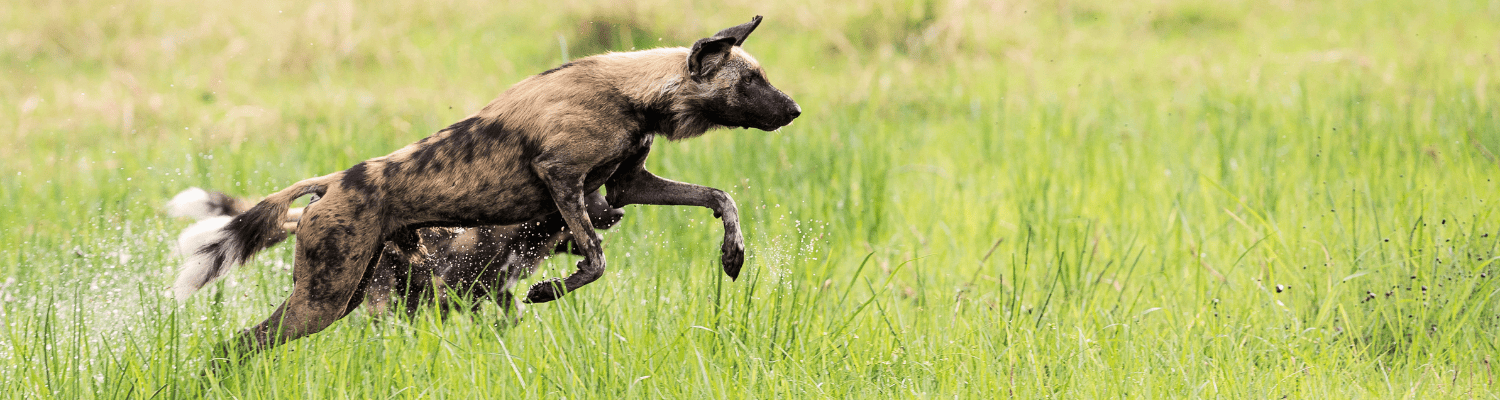
The African wild dog is a striking and highly social predator, known for its painted coat of black, brown, and white patches and large rounded ears. It is found in scattered populations across eastern and southern Africa, often in remote savannas and wilderness areas. Wild dogs live and hunt in tight-knit packs, working together with remarkable coordination and success. For travellers, they are one of the rarest and most exciting animals to see on safari. Their energy, teamwork, and unpredictability make every sighting feel fast-paced and unforgettable.









Gallery
Summary
Best Places To See
African wild dogs are most reliably seen in large, low-density ecosystems with strong conservation management and expert tracking, with the Okavango Delta, particularly Moremi Game Reserve and surrounding private concessions, standing out for consistent sightings due to healthy pack populations and open terrain. In Zimbabwe, Hwange National Park offers excellent opportunities, especially around waterholes where packs move predictably. South Africa’s Kruger National Park and adjacent reserves such as Timbavati Game Reserve provide regular encounters supported by skilled guides, while in Tanzania, the southern Serengeti and Grumeti Game Reserve deliver strong seasonal sightings in expansive, lightly pressured landscapes.
Best Time Of Year To See
The best time to see African wild dogs is during the dry season, particularly in the denning period when packs stay within a smaller, predictable area while raising pups. At this time, they hunt frequently and are highly active in the early morning and late afternoon, making sightings more consistent. As vegetation thins and water becomes limited, tracking is easier and movement patterns are more defined. Outside of denning season, packs roam over large distances, making sightings less predictable. In the wet season, thicker vegetation and wider prey distribution reduce visibility, although conditions are quieter with fewer vehicles.
Identification
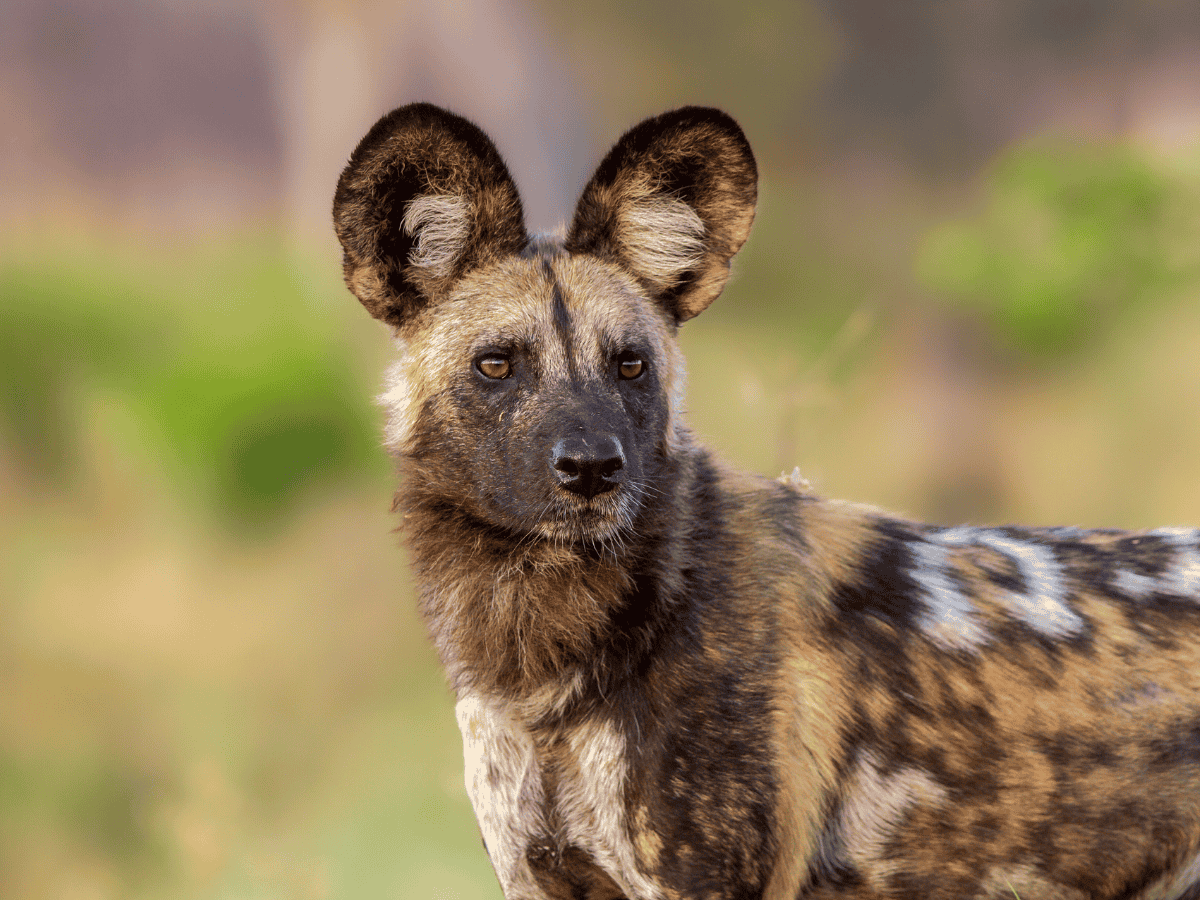
African Wild Dogs have lean bodies, long legs, and large rounded ears. Their coats are uniquely patterned with patches of black, brown, white, and tan, making each individual distinct. They have bushy tails with white tips and move with a light, energetic gait. Males and females look similar, though pack members vary slightly in size. They may be confused with hyenas, but wild dogs are slimmer with larger ears and more colourful coats. Their constant movement and strong pack behaviour make them easy to identify.
Behaviour
African wild dogs are highly social carnivores that hunt in coordinated packs. They rely on teamwork and endurance to chase down prey over long distances. Pack structure is strong, with a dominant breeding pair and cooperative care of pups. They are active during the day and move frequently. On safari, sightings often involve packs on the move, social interactions, or energetic greetings between members.
Diet
African wild dogs are highly social carnivores that hunt in packs and rely on teamwork. They mainly hunt medium-sized antelope such as impala, but will also take larger or smaller prey depending on opportunity. Hunts are energetic and often take place during the day. Once prey is caught, the pack feeds quickly, with all members sharing. They regurgitate food for pups and weaker pack members. Their diet can shift based on prey availability. They are efficient hunters with a high success rate compared to other predators.
Habitat
African wild dogs prefer open savanna, grassland, and lightly wooded areas where they can move easily in packs. Their habitat supports long-distance movement and hunting, often covering large areas. They avoid dense vegetation and prefer regions with low human disturbance. Water is useful but not always essential. Travellers are most likely to see wild dogs in large, protected areas with strong prey populations, often encountered during early morning or late afternoon as packs move quickly across open landscapes.
Conservation Status
African wild dogs are listed as endangered, with relatively small and fragmented populations. Their biggest threats include habitat loss, human conflict, and disease transmitted from domestic animals. Because they require large territories, they are especially vulnerable to expanding human activity. Despite this, strong populations remain in select protected areas. Conservation efforts focus on monitoring packs, protecting habitat, and reducing conflict. National parks and private reserves are vital for their survival. Safari tourism helps fund these initiatives and raises awareness, making it an important tool in protecting this highly social and endangered species.
Interesting Facts
African wild dogs are among the most successful hunters in Africa, with a high hunting success rate due to their teamwork and endurance. They live in tight-knit packs and communicate using high-pitched calls. Each dog has a unique coat pattern, making individuals easy to identify. Packs care for injured or weak members, sharing food and showing strong social bonds, which makes them one of the most cooperative predators in the wild.
Folklore
African wild dogs are often seen as symbols of cooperation, loyalty, and teamwork. Their strong pack structure reflects the importance of community and shared responsibility in many African cultures. Some traditions highlight their coordinated hunting as a lesson in unity and communication. Although sometimes viewed cautiously due to their predatory nature, they are widely respected for their social bonds, reinforcing values of cooperation and collective success.