
Bateleur | A Complete Birding Guide
Learn to identify Bateleur flight patterns and where to spot itOverview
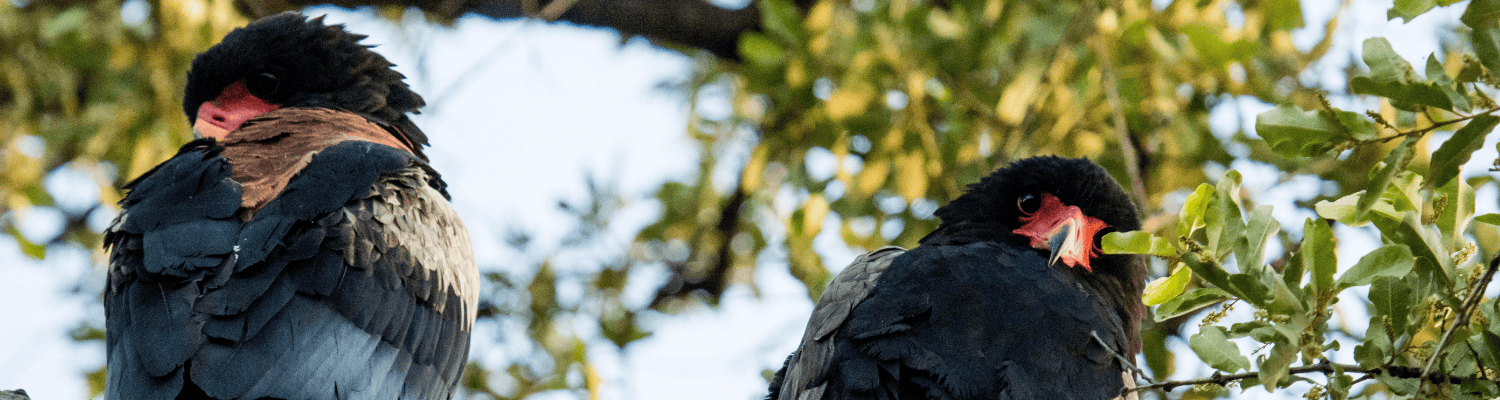
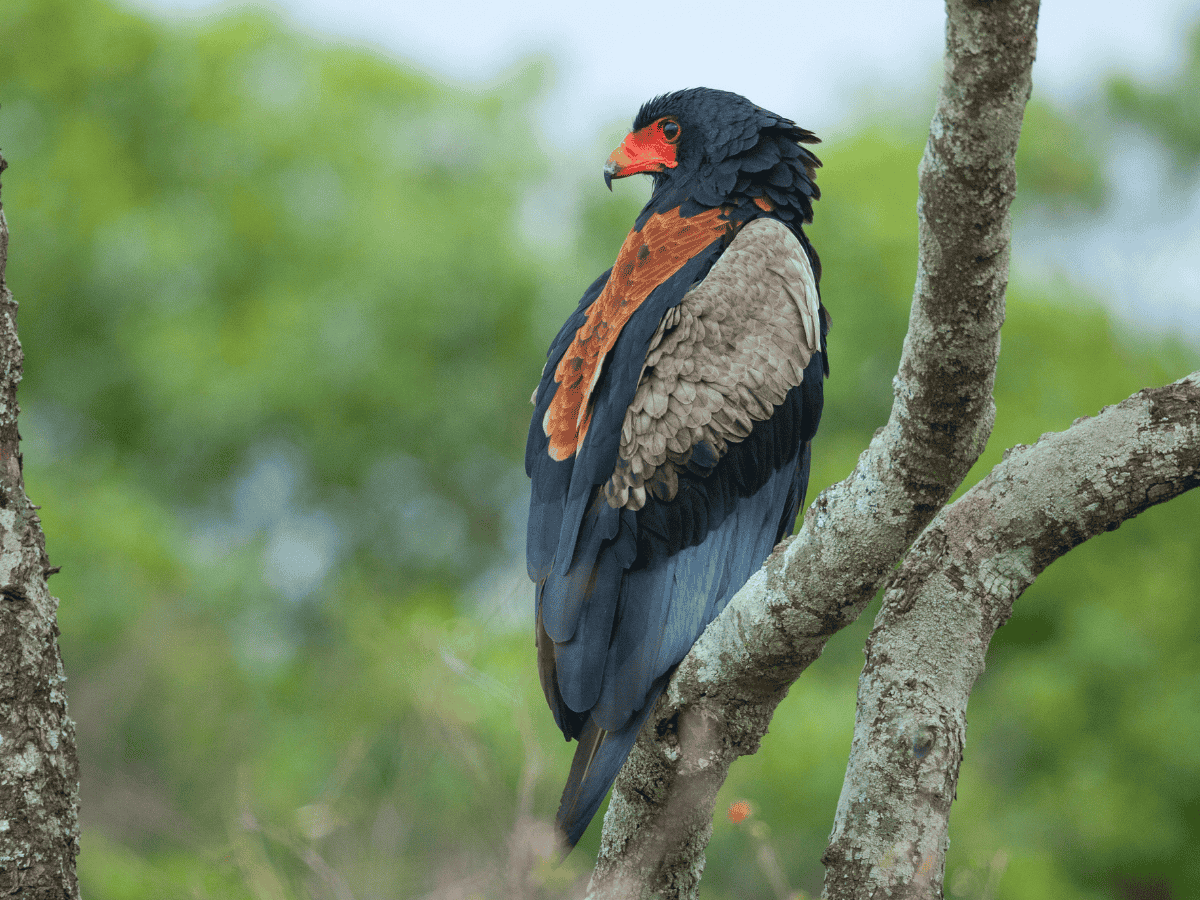
The Bateleur is a distinctive eagle with short tail feathers, long wings, and striking black, white, and chestnut plumage with a red face. It is found across open savannas in Africa. Known for its rocking flight style, it spends much of the day soaring. Its unique shape and graceful movement make it one of the most recognisable raptors on safari.








Gallery
Summary
Best Places To See
The Bateleur is most reliably found in open savanna and woodland where large areas of undisturbed habitat support wide-ranging movement and feeding behaviour. Kruger National Park offers some of the most consistent sightings, particularly in open areas where birds are frequently seen soaring or moving between feeding sites. Etosha National Park provides a strong complementary option with expansive terrain and excellent visibility. These locations are reliable because large protected landscapes, abundant wildlife, and minimal disturbance allow the species to travel widely while remaining highly visible in flight.
Best Time Of Year To See
The Bateleur can be seen throughout the year, with consistently good visibility due to its extensive daily movement and reliance on both scavenging and active hunting. Sightings are often most rewarding during warmer months when thermal currents are strong, allowing birds to soar effortlessly at lower, more visible heights. Increased activity during breeding season may also improve detection. In cooler months, activity may decrease slightly, but the species remains present. Midday is often the best time to observe individuals gliding across open landscapes.
Identification
The Bateleur is a medium-sized eagle with black plumage, a bright red face, and a very short tail that gives it a distinctive shape in flight. Its wings are long and broad, creating a rocking or tilting motion when soaring. The underwing may show contrasting patches depending on light. Males and females are similar in appearance. It is unlikely to be confused with other raptors due to its unique proportions and flight style.
Behaviour
The Bateleur feeds on carrion as well as small animals, combining scavenging with active hunting. It spends much of the day soaring across large distances in search of food, rarely remaining in one place for long. It is usually seen alone or in pairs and is known for covering vast areas within a single day. Travellers are most likely to observe it gliding low over open terrain or circling briefly before moving on.
Diet
The Bateleur has a varied diet that includes carrion, small mammals, birds, reptiles, and insects. It feeds opportunistically, taking advantage of available food sources across its range. It may descend quickly to feed on carcasses or capture live prey. Feeding activity is not strongly seasonal, but warmer conditions support increased movement and foraging. Its flexible diet allows it to thrive across a wide range of open habitats.
Habitat
The Bateleur prefers open savanna, woodland, and lightly wooded plains where it can travel freely and locate food over large areas. It is most often seen soaring above open landscapes or occasionally perched in trees. This habitat supports its wide-ranging movement and feeding strategy. Travellers are most likely to encounter it in large, open reserves with good visibility and active wildlife populations.
Conservation Status
The Bateleur is considered endangered, with populations declining due to habitat loss, poisoning, and human-related pressures. Its wide-ranging behaviour makes it particularly vulnerable to threats across large areas. Protected areas such as Kruger National Park and Etosha National Park play an important role in supporting remaining populations. Conservation efforts focus on reducing poisoning and protecting large, connected habitats. Responsible tourism and awareness are essential for its long-term survival.
Interesting Facts
The Bateleur can spend most of the day in flight, covering large distances in search of food. Its name comes from a French word meaning “tightrope walker,” referring to its rocking flight style. Its bright red face and legs make it one of the most colourful eagles in Africa. It rarely builds large nests compared to other eagles, often using existing structures.
Folklore
The Bateleur is often associated with movement and freedom in African folklore due to its constant flight and wide-ranging behaviour. Its rocking motion in the sky may symbolise balance and adaptability. Its bold colouring reflects vitality and presence. In some interpretations, birds that travel great distances represent connection across landscapes, reinforcing this species’ link to continuity and the flow of life within natural systems.