
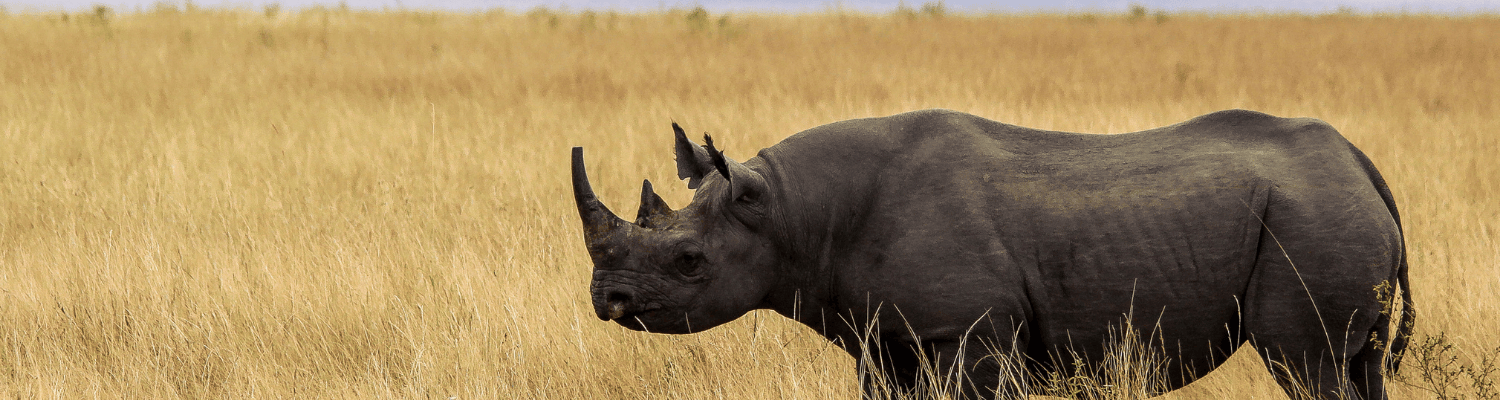
Black Rhino | A Complete Safari Guide
Understand black rhino behaviour and where sightings are most likely on safariOverview
The black rhino is a smaller, more solitary relative of the white rhino, recognised by its pointed upper lip and more compact build. It is found in scattered populations across eastern and southern Africa, often in dense bush and woodland areas. Black rhinos are known for their alert and sometimes unpredictable nature, making sightings feel rare and exciting. For travellers, it is one of the most special animals to encounter due to its low numbers and conservation importance. Seeing one in the wild is a powerful highlight and a reminder of Africa’s ongoing conservation efforts.








Gallery
Summary
Best Places To See
Black rhinos are best seen in well-protected, low-density reserves where tracking expertise and controlled access improve sighting success, with Hluhluwe-iMfolozi Game Reserve in South Africa’s Zululand Region remaining a key stronghold due to its conservation success and stable populations. In Namibia, Etosha National Park offers reliable sightings around waterholes, where dry conditions concentrate animals. Private reserves such as Phinda Private Game Reserve and Thanda Private Game Reserve provide more exclusive encounters, supported by skilled guides and off-road tracking. In Kenya, Lewa Wildlife Conservancy stands out for its intensive protection and high sighting consistency in open, easily navigable terrain.
Best Time Of Year To See
The best time to see black rhino is during the dry season, when reduced vegetation makes it easier to spot this more elusive and solitary species. As water sources become limited, rhinos tend to move between predictable feeding areas and water points, increasing the chances of encounters. They are often most active in the cooler early morning and late afternoon, spending the heat of the day resting in dense cover. In the wet season, thicker vegetation and wider food availability allow them to spread out, making sightings less reliable, although conditions are more scenic and quieter with fewer visitors.
Identification
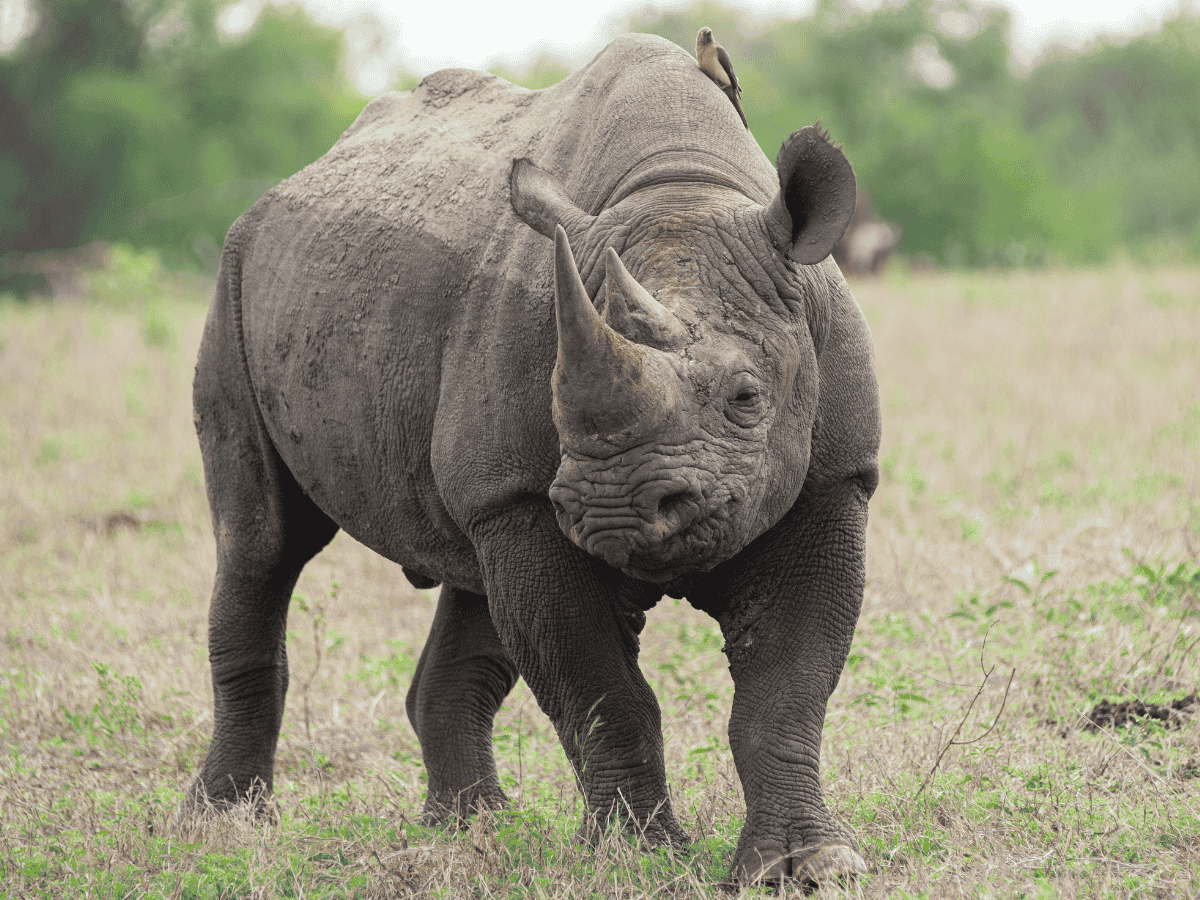
Black Rhinos are smaller and more compact than white rhinos, with a distinctive pointed, hooked lip used for browsing shrubs and trees. Their heads are held higher, giving them a more alert and tense posture. They also have two horns, but their body shape is more angular and less bulky. Males and females look similar, though bulls may appear slightly heavier. They are often confused with white rhinos, but the pointed lip and solitary behaviour are key differences. Black rhinos are typically found in thicker vegetation and are more elusive.
Behaviour
Black rhinos are browsers that feed on leaves, shoots, and branches, using their pointed upper lip to grasp vegetation. They are mostly solitary and highly territorial, with individuals often keeping distance from one another. They are more active at dawn and dusk and can be unpredictable in behaviour. Males compete for territory and access to females. On safari, sightings are usually brief, often in thicker bush, where they feed quietly or move cautiously through vegetation.
Diet
Black rhinos are browsers that feed on leaves, twigs, shrubs, and small trees rather than grass. They use their pointed lips to grip and pull vegetation from branches. They are selective feeders and often choose specific plants. Feeding usually takes place in cooler parts of the day or at night. During dry periods, they rely more on hardy shrubs and woody plants that remain available. They can go longer without water than many other large animals. Their browsing helps control bush growth and shapes vegetation structure.
Habitat
Black rhinos prefer dense bush, thickets, and woodland rather than open plains. Their habitat is shaped by the availability of shrubs and bushes, which they feed on rather than grass. They often stay in thicker vegetation where they are harder to spot. Water is still important, but they can survive in drier areas than white rhinos. Travellers usually encounter black rhinos in well-protected reserves with dense cover, often seen browsing in bushy areas or moving quietly through woodland during cooler parts of the day.
Conservation Status
Black rhinos are listed as critically endangered, with populations still recovering from past declines. The biggest threat is poaching for their horns, which remains a serious challenge despite strong protection efforts. Habitat loss and pressure from expanding human populations also affect their range. Encouragingly, numbers are slowly increasing in well-managed protected areas. Intensive conservation programmes, including relocation and monitoring, are helping rebuild populations. National parks and private reserves are essential for their survival, and safari tourism supports funding and awareness, giving black rhinos a stronger chance of recovery.
Interesting Facts
Black rhinos are smaller and more solitary than white rhinos, with a pointed lip perfectly adapted for browsing shrubs and trees. They are known for their unpredictable temperament and can charge when threatened, even if the danger is not visible. Despite poor eyesight, they rely heavily on smell and hearing. Black rhinos play a vital role in shaping vegetation by feeding on woody plants, helping maintain balance in their ecosystems.
Folklore
Black rhinos are often associated with power, unpredictability, and fierce independence. In traditional beliefs, their solitary and defensive nature has led to them being respected as symbols of strength and protection. Some communities view them as guardians of territory, embodying resilience in harsh environments. Their presence commands caution and respect, reinforcing lessons about boundaries and coexistence. The black rhino’s rarity today has also deepened its symbolic value as a reminder of the need to protect what remains.