
Black-throated Wattle-eye | A Complete Birding Guide
Learn to identify Black-throated Wattle-eye and where to find itOverview
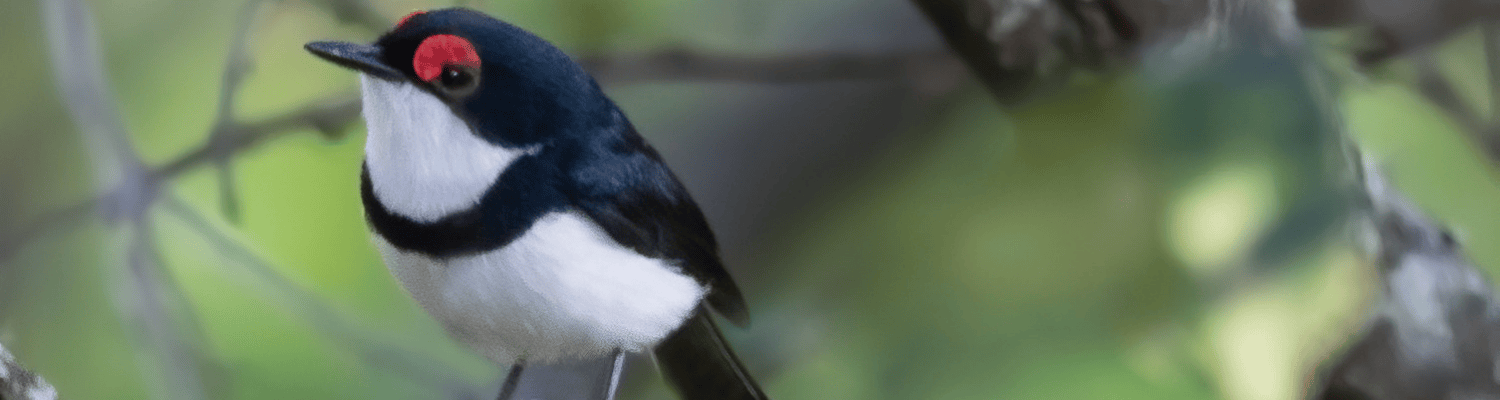
The Black-throated Wattle-eye is a small, striking bird with bold black and white markings and a distinctive throat patch. It is found in dense forests and thickets across parts of Africa. Usually seen in pairs, it moves actively through foliage catching insects. Its contrast in colour and lively behaviour make it a memorable forest species.







Gallery
Summary
Best Time Of Year To See
The Black-throated Wattle-eye can be seen throughout the year, but sightings are most consistent during warmer months when insect activity increases and birds become more active and vocal. During this period, feeding is more frequent and movement through vegetation improves visibility. Breeding season may also bring more territorial behaviour, making individuals easier to locate. In cooler months, activity may decrease slightly, although the species remains present. Early mornings provide the best opportunity, when birds are most active and responsive.
Identification
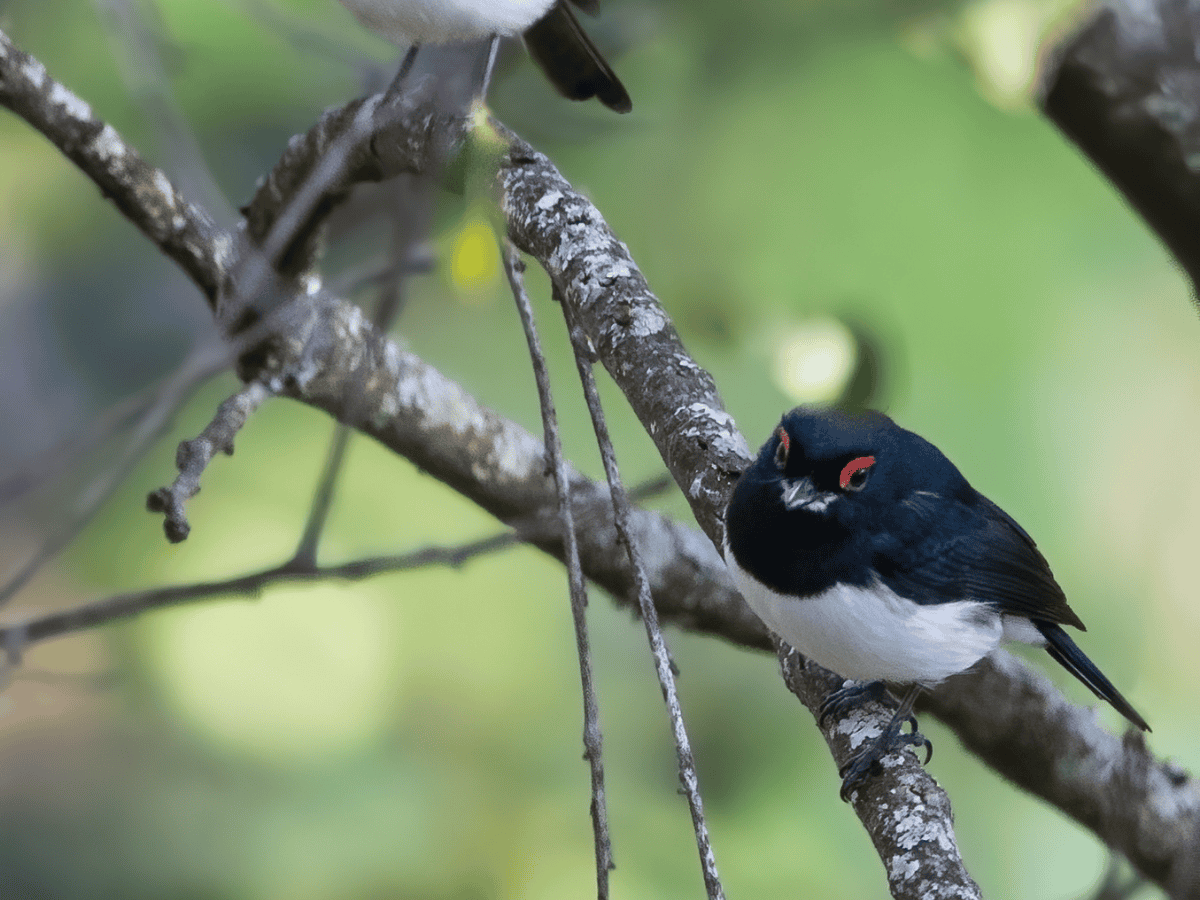
The Black-throated Wattle-eye is a small bird with bold black and white plumage, a chestnut belly, and a distinctive red wattle around the eye. It has a short tail, compact body, and a fine bill suited to insect feeding. Males are more striking, while females are slightly duller in colour. Its facial wattle and colour contrast are key identifying features. It can be confused with other small forest birds, but its facial markings and pattern make it distinctive when seen clearly.
Behaviour
The Black-throated Wattle-eye feeds mainly on insects, which it catches by gleaning from leaves or making short flights from low perches. It is active but often remains within dense vegetation, moving quietly through the undergrowth. The species is usually seen alone or in pairs and may join mixed-species feeding flocks. Travellers are most likely to observe it at close range in shaded areas, where it moves quickly between branches while foraging.
Diet
The Black-throated Wattle-eye feeds primarily on insects and small invertebrates found within foliage and along branches. It forages by picking prey from leaves or making short, controlled flights to capture insects. Feeding activity increases during warmer months when insect populations are higher. Its diet reflects its role as an active insect hunter within forest ecosystems, helping maintain balance within these environments.
Habitat
The Black-throated Wattle-eye prefers dense woodland, forest edges, and riverine vegetation where thick cover provides protection and feeding opportunities. It is most often found in the lower to mid-level vegetation, where it moves actively but remains partially concealed. This habitat supports both feeding and nesting. Travellers are most likely to encounter it in well-wooded areas with dense undergrowth and active birdlife.
Conservation Status
The Black-throated Wattle-eye is considered stable, although it depends on intact forest and woodland habitats for long-term survival. Habitat degradation and fragmentation can impact local populations. Protected areas such as Kruger National Park and iSimangaliso Wetland Park help maintain suitable conditions. Conservation of forest ecosystems and responsible tourism practices support the continued presence of this species in its natural range.
Interesting Facts
The Black-throated Wattle-eye’s bright red facial wattle is one of its most distinctive features and gives the species its name. It often moves quietly through dense vegetation, making it easy to miss despite its bold colouring. It may join mixed-species flocks, which can help birders locate it. Its compact size and active behaviour make it an engaging species to observe at close range.
Folklore
Small forest birds are often associated with subtle awareness and hidden beauty in African folklore. The Black-throated Wattle-eye’s bright facial markings may symbolise alertness and perception within shaded environments. Its quiet movement reflects careful observation and patience. In some interpretations, birds of dense woodland represent the unseen life within nature, reinforcing this species’ connection to subtle presence and quiet activity within complex ecosystems.
Best Places To See
The Black-throated Wattle-eye is most reliably found in dense woodland and forest undergrowth where thick vegetation provides cover and feeding opportunities. Kruger National Park offers consistent sightings, particularly in riverine woodland where layered vegetation supports insect life and shelter. iSimangaliso Wetland Park provides a strong complementary option with coastal forest and dense habitat conditions. These locations are reliable because intact forest structure and rich insect populations allow the species to move actively at lower levels, making it easier to detect through movement and soft vocalisations.