
Black Wildebeest | A Complete Safari Guide
Learn how to identify black wildebeest and where to find them on safariOverview
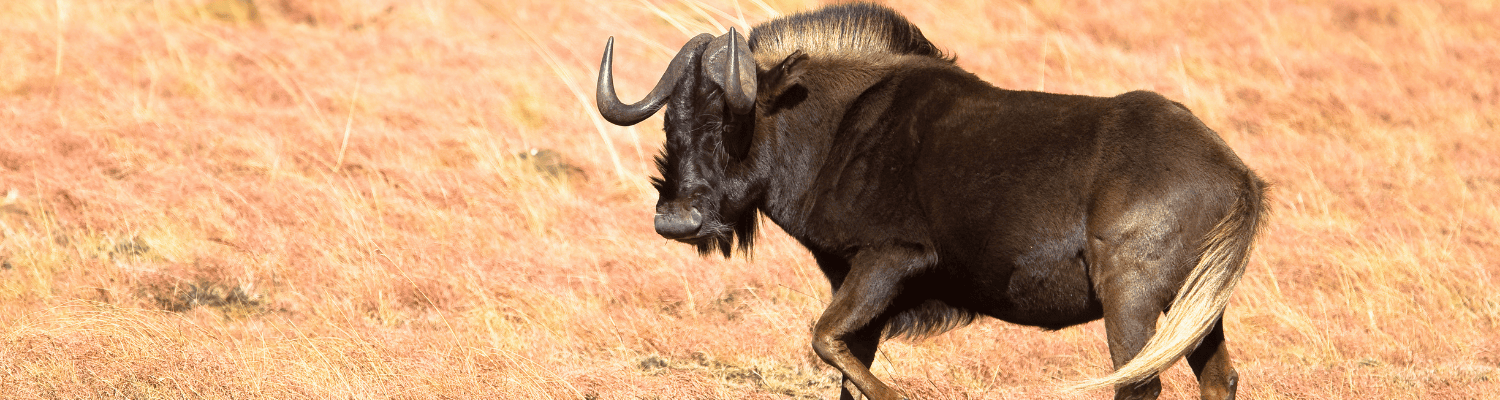
The black wildebeest is a distinctive antelope known for its dark coat, upright mane, and long white tail. It is found mainly in southern Africa, especially in open grasslands and high plains. Unlike the blue wildebeest, it often forms smaller herds and shows energetic, playful behaviour, including sudden bursts of running and turning. For travellers, it offers a more unique and less common sighting. Its movements and grazing habits help shape grassland ecosystems, making it an important part of the safari landscape.








Gallery
Summary
Best Places To See
Black wildebeest are most reliably seen in open grassland environments within South Africa, where populations are well established and protected, with Mountain Zebra National Park standing out as a flagship destination due to its stable herds and clear, open terrain that allows for easy viewing. In the Eastern Cape Safari Region, private reserves such as Kariega Game Reserve and Shamwari Private Game Reserve offer consistent sightings supported by managed populations and accessible landscapes. Additional opportunities can be found in the Karoo and Free State regions, where large, open plains and low vegetation make herds easy to locate and observe.
Best Time Of Year To See
The best time to see black wildebeest is during the dry season, when shorter grass and open plains improve visibility and herds are easier to locate. As grazing becomes more limited, they concentrate in predictable areas, often forming smaller groups or territorial clusters that are easier to observe. Males become more active and visible during the breeding season, displaying territorial behaviour in open areas. In the wet season, abundant grass allows them to spread out across wider landscapes, making sightings less concentrated, although conditions are greener and quieter with fewer visitors.
Identification
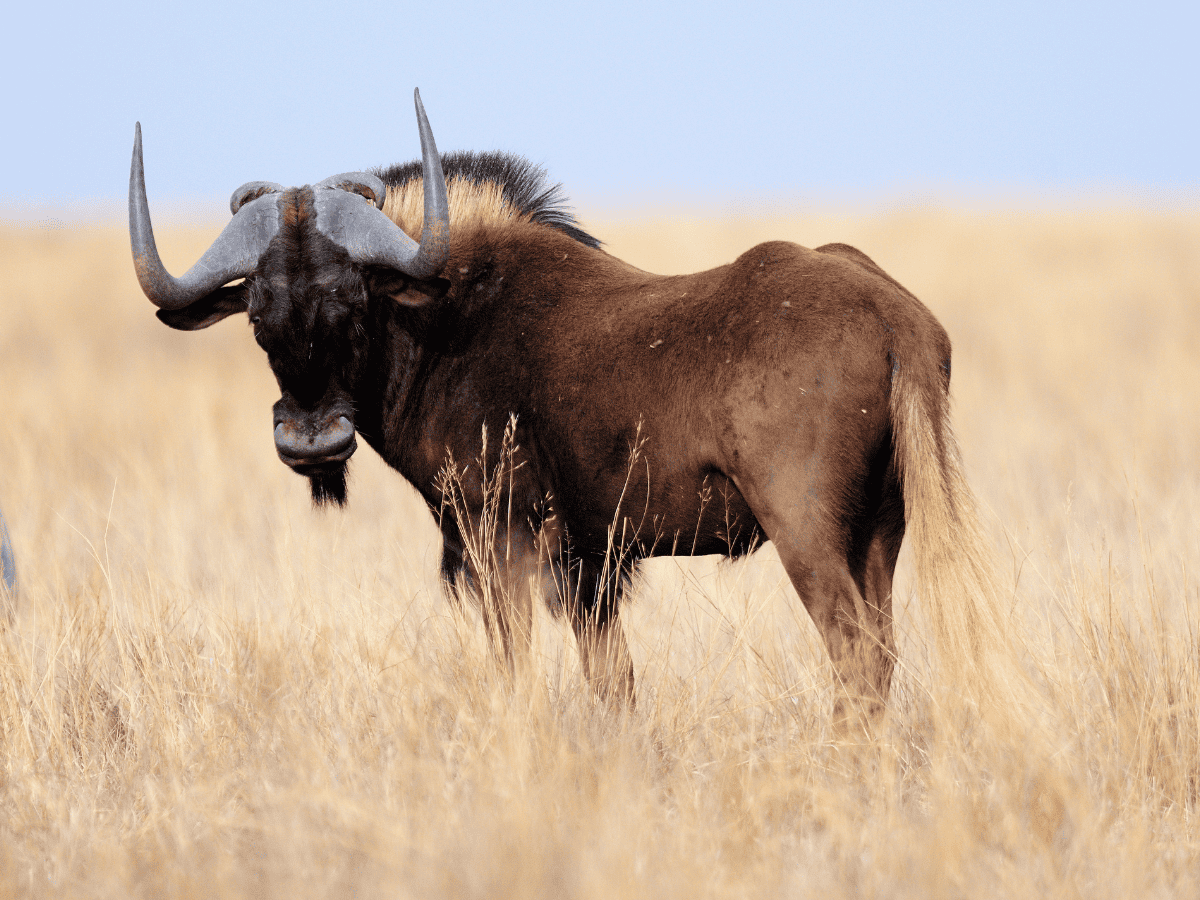
Black Wildebeest are darker with shaggy manes and long white tails. Their horns curve forward and upward, giving them a distinctive shape. They have a more upright posture compared to blue wildebeest. Both sexes look similar. They may be confused with blue wildebeest, but their darker colour, white tail, and horn shape are key differences. They are often found in open plains and move in smaller groups.
Behaviour
Black wildebeest are grazers that prefer open grasslands. They live in smaller herds and males establish territories during breeding season. They are energetic and often display playful running behaviour. On safari, they are seen grazing or engaging in short bursts of movement.
Diet
Black wildebeest are grazers that feed mainly on grasses in open grasslands. They prefer shorter grass and spend much of their day grazing while moving across their territory. They are often seen in smaller herds compared to blue wildebeest. During dry periods, they rely on remaining grass and may concentrate around water sources. Their feeding patterns help maintain grassland health. They are more territorial and may remain in specific areas rather than migrating long distances, depending on food availability and environmental conditions.
Habitat
Black wildebeest prefer open grasslands, particularly in highland areas. Their habitat is less varied than blue wildebeest, focusing on wide, open plains. They are less dependent on water but still require access. Travellers usually see them in smaller herds on open grasslands, often in areas with fewer trees and wide visibility.
Conservation Status
Black wildebeest are listed as least concern, with stable populations primarily in southern Africa. They were once heavily reduced due to hunting and habitat loss but have recovered well through conservation efforts. Today, they are commonly found in protected areas and private reserves. Their main threats remain habitat changes and limited natural range. Conservation management has been successful in maintaining healthy populations. Safari tourism supports these efforts by providing funding and encouraging the preservation of grassland habitats.
Interesting Facts
Black wildebeest, also known as white-tailed gnu, have a more compact build and a distinctive white tail. They are highly territorial and often seen in open grasslands. Males perform energetic displays, including running in circles and tossing their heads, to defend territories. Unlike their blue counterparts, they do not undertake long migrations. Their behaviour and grazing habits help maintain grassland health and biodiversity.
Folklore
Black wildebeest are often seen as symbols of resilience and adaptation to open grasslands. Their energetic and sometimes erratic behaviour has been linked to vitality and alertness. In folklore, they may represent unpredictability balanced with survival instincts. Their presence in herds reinforces themes of unity and awareness, highlighting the importance of group dynamics in open and exposed environments.