
Blue Wildebeest | A Complete Safari Guide
Explore blue wildebeest behaviour and where to see them on safariOverview
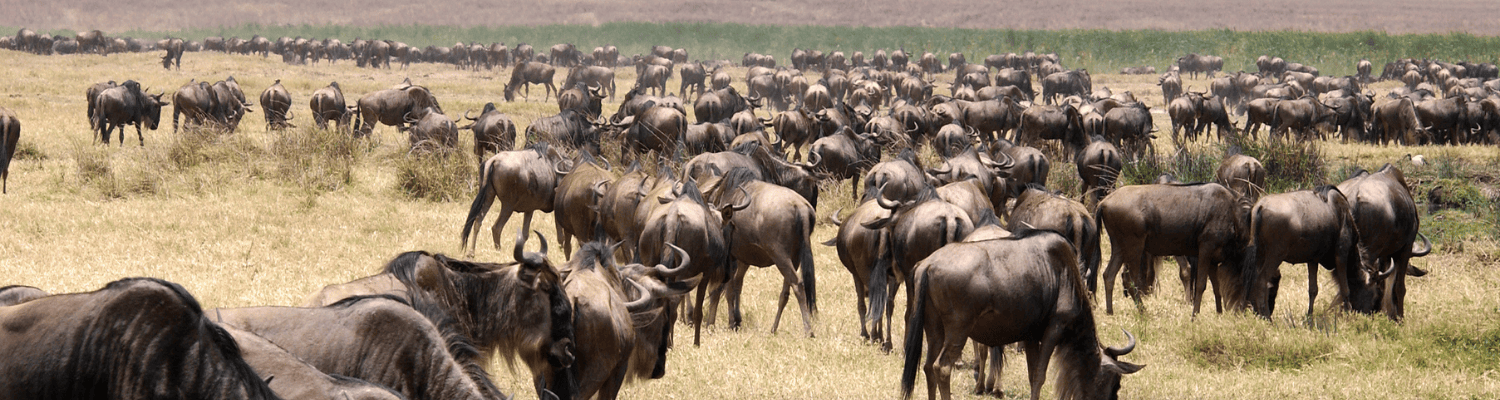
The blue wildebeest is a large, heavy-built antelope known for its curved horns, sloping back, and shaggy mane. It is found across eastern and southern Africa, especially in open plains and savannas where grass is abundant. Wildebeest are highly social and often move in large herds, creating dramatic scenes across the landscape. For travellers, they are best known for their role in seasonal migrations, where thousands move together in search of fresh grazing. Their presence supports predators and plays a key role in the balance of safari ecosystems.









Gallery
Summary
Best Places To See
Blue wildebeest are most reliably seen in open grassland ecosystems with strong grazing conditions, with Serengeti National Park in Tanzania standing out as the flagship destination due to the immense herds that drive the Great Migration. In Kenya, the Masai Mara National Reserve offers peak sightings during migration periods, particularly around river crossings where numbers concentrate dramatically. In Southern Africa, Kruger National Park and adjacent reserves such as Sabi Sands Game Reserve provide consistent year-round sightings from stable resident populations, while in Botswana, Moremi Game Reserve and parts of the Okavango Delta deliver regular encounters in floodplains where grazing remains productive.
Best Time Of Year To See
The best time to see blue wildebeest is during the dry season, when herds gather around permanent water sources and grazing areas, making sightings consistent and often in large numbers. Shorter grass improves visibility, especially across open plains where they are most commonly found. In regions with seasonal migrations, movements are driven by rainfall, with peak viewing depending on where fresh grazing is available at the time. During the wet season, abundant grass and widespread water allow herds to disperse, making sightings less concentrated, although the landscape is greener and conditions are quieter.
Identification
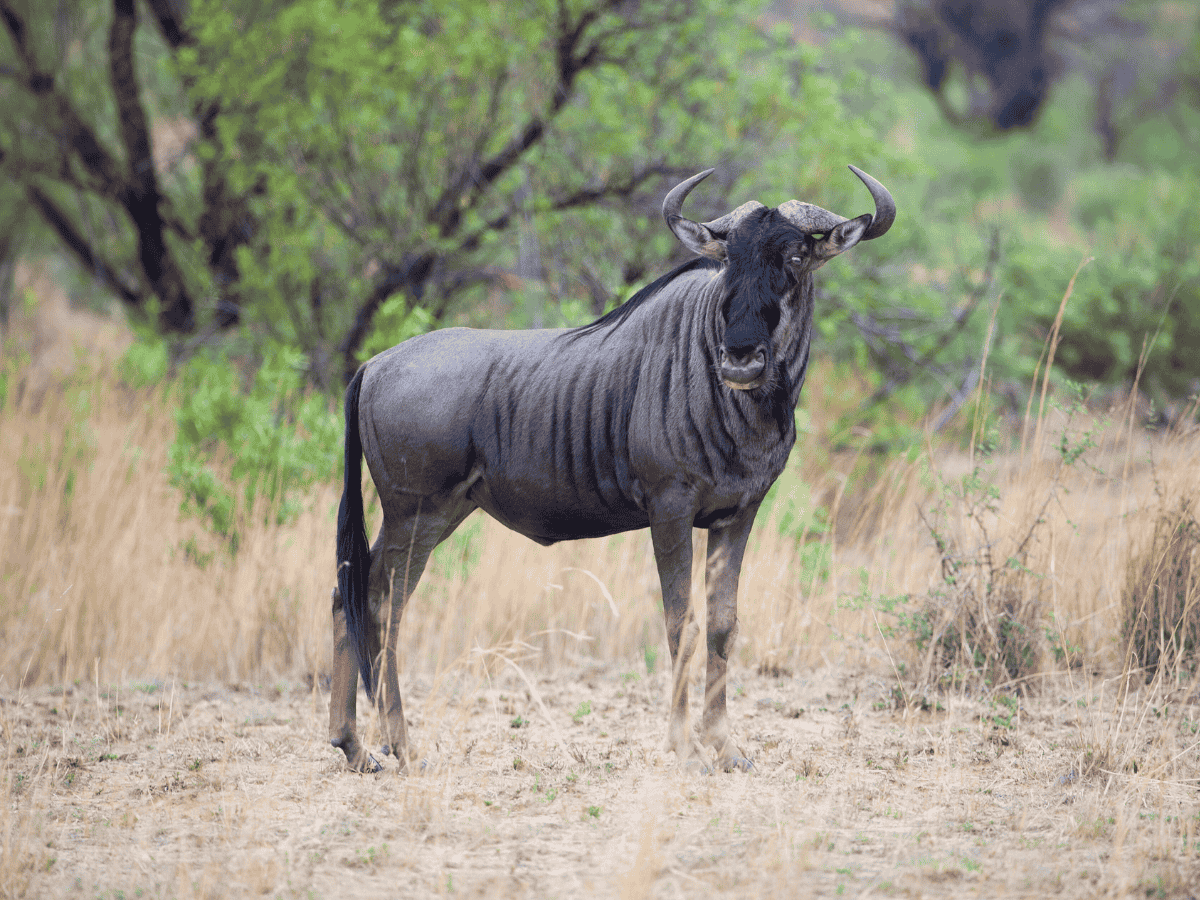
Blue Wildebeest have heavy front bodies, sloping backs, and curved horns. Their coats are greyish-blue with dark vertical stripes along the shoulders. Both males and females have horns, though males’ are thicker. Calves are lighter and follow their mothers closely. They may be confused with black wildebeest, but blue wildebeest have curved horns and striped bodies. Their large herds and constant movement make them easy to recognise.
Behaviour
Blue wildebeest are grazers that feed mainly on grass and are known for their large herd movements. They are social animals and often move in groups, sometimes migrating in response to rainfall. They are active throughout the day. On safari, they are frequently seen grazing in herds or moving across open plains.
Diet
Blue wildebeest are grazers that feed mainly on short grasses in open plains. They move in herds and often follow rainfall patterns to find fresh grazing. Feeding takes place throughout the day, with peak activity in cooler hours. During the dry season, they depend on remaining grass near water sources and must drink regularly. Their movements are driven by the search for food and water. They play a key role in large migrations, shaping ecosystems and supporting predators that follow their herds across the landscape.
Habitat
Blue wildebeest prefer open grasslands and savanna with access to water. Their habitat supports large herds that move seasonally in search of fresh grazing. Water is essential, so they stay within reach of rivers or waterholes. Travellers most often see them in open plains, especially in large numbers, where they graze and move together across the landscape.
Conservation Status
Blue wildebeest are listed as least concern, with large and stable populations across much of Africa. Their biggest threats include habitat fragmentation and disruption of migration routes due to fencing and development. However, they remain one of the most abundant large mammals in Africa. Strong populations exist in protected areas where large-scale migrations still occur. Safari tourism plays a key role in preserving these ecosystems, supporting conservation efforts and maintaining the open landscapes that wildebeest depend on.
Interesting Facts
Blue wildebeest are famous for their role in large-scale migrations, particularly in East Africa. They have a distinctive appearance with a sloping back and curved horns. Wildebeest rely on numbers for safety, forming massive herds that reduce individual risk from predators. Calves can stand and run within minutes of birth, an essential adaptation for survival. Their constant movement helps shape ecosystems by influencing grazing patterns.
Folklore
Blue wildebeest are often associated with movement, migration, and survival. Their large-scale migrations have become symbols of seasonal change and the rhythm of nature. In some traditions, they represent persistence and the drive to follow natural cycles. Their strong herd instinct reinforces themes of unity and collective movement, highlighting the importance of staying connected to both community and environment.