
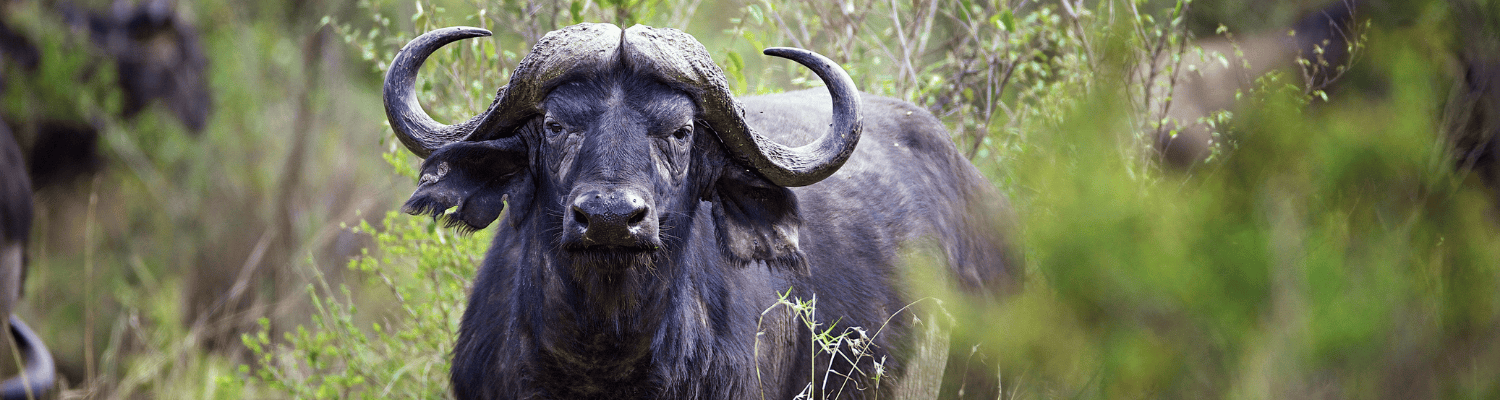
Buffalo | A Complete Safari Guide
Learn how buffalo behave in herds and where to spot them on safariOverview
The African buffalo is a large, heavy-built animal known for its curved horns and strong herd behaviour. It is widely found across sub-Saharan Africa, especially in savannas, woodlands, and areas close to water. Buffalo often move in large herds, creating dramatic and active sightings on safari. Despite their calm appearance when grazing, they are highly protective and can be unpredictable. For travellers, they are part of the iconic Big Five and play an important role in the ecosystem, supporting predators and shaping the landscapes they move through.









Gallery
Summary
Best Places To See
Buffalo are most reliably seen in areas with strong grazing conditions and permanent water, with Kruger National Park and adjacent private reserves such as Sabi Sands Game Reserve and Timbavati Game Reserve offering consistently high encounter rates due to large, resident herds and expert guiding. In Botswana, Chobe National Park is a standout, particularly along the Chobe River where vast herds gather in the dry season. The Okavango Delta, especially Moremi Game Reserve, provides excellent sightings in a mix of floodplains and woodlands, while in East Africa, the Masai Mara National Reserve delivers regular encounters with large, mobile herds across open savanna.
Best Time Of Year To See
The best time to see African buffalo is during the dry season, when herds gather in large numbers around permanent water sources and grazing areas, making sightings highly consistent and often impressive in scale. Shorter grass and thinner vegetation improve visibility, especially in open plains and along river systems. Buffalo tend to move predictably between water and feeding grounds, with activity highest in the early morning and late afternoon. In the wet season, abundant grass and widespread water allow herds to disperse, making them less concentrated, although the scenery is greener and quieter with fewer vehicles in the field.
Identification
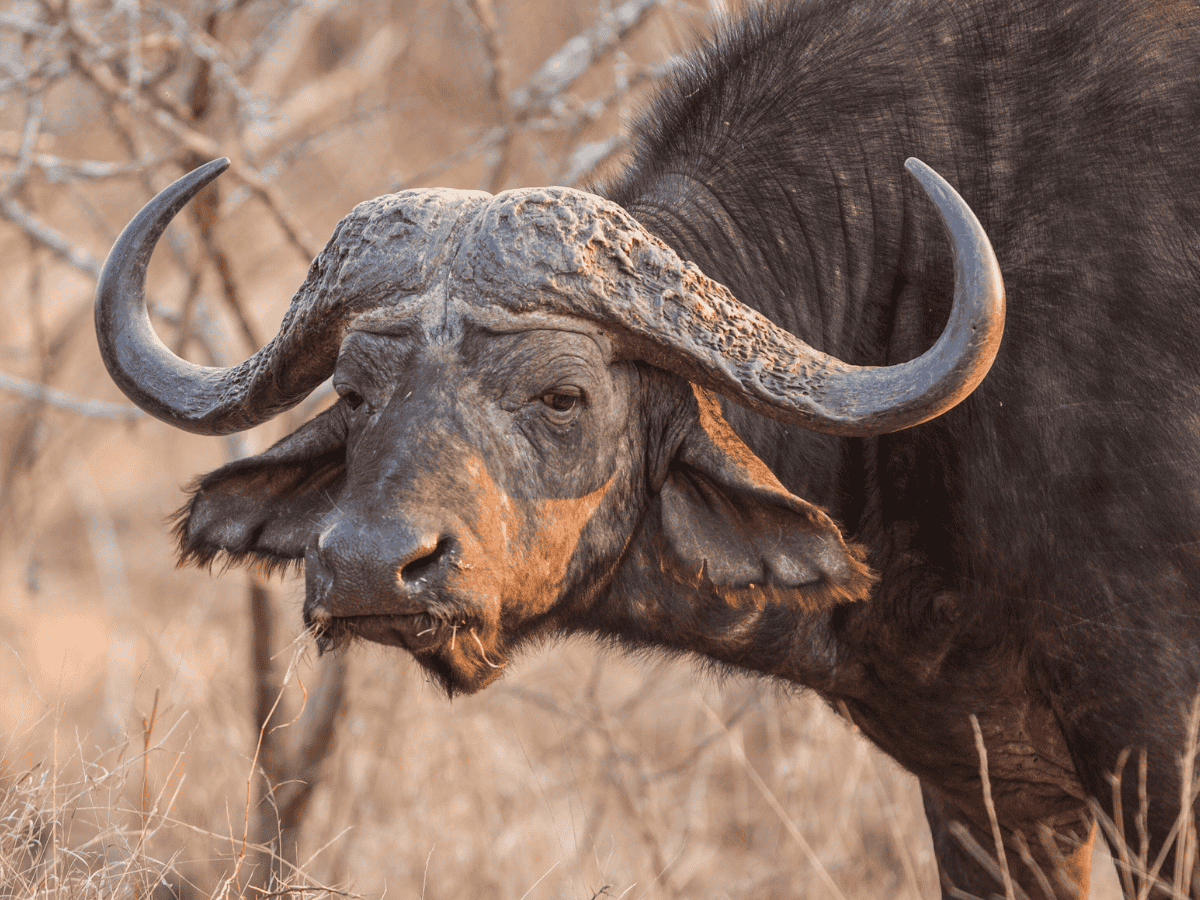
African Buffalo are large, dark brown to black animals with heavy builds and strong horns. Males have thick, curved horns that meet in the middle to form a solid boss, while females have thinner horns without a full boss. Their bodies are robust, and they often move in large herds. Calves are lighter in colour and stay within the group. They may be confused with domestic cattle, but their thicker horns, darker colour, and wild behaviour distinguish them. Their unpredictable nature and herd dynamics make them one of the most recognisable safari animals.
Behaviour
Buffalo are grazers that feed mainly on grass and are known for their strong herd structure. They live in large herds that offer protection from predators, with smaller bachelor groups forming among older males. They move constantly in search of grazing and water and are highly alert to danger. Mating occurs within the herd, and dominance plays a role in breeding success. On safari, travellers often see large herds moving across open areas, resting, or gathering at waterholes.
Diet
Buffalo are bulk grazers that feed mainly on grasses, preferring longer and more abundant growth. They move in herds and feed together, often covering large areas in search of food. Their feeding peaks in the early morning and late afternoon. During the dry season, they rely on remaining grass near water sources, which keeps them tied to rivers and pans. They drink water daily. Their grazing helps shape grassland ecosystems, and their movement patterns influence where predators like lions are most likely to be found.
Habitat
Buffalo prefer savanna, woodland, and areas with reliable water. They need to drink daily, so their movements are strongly linked to water availability. Large herds are often found in open grasslands near rivers or floodplains, while smaller groups may use thicker bush. During dry periods, they gather around permanent water sources. Travellers are most likely to see buffalo in large herds grazing in open areas or resting in shade near water, particularly in well-watered reserves with strong grass growth.
Conservation Status
African buffalo are currently listed as near threatened, with stable populations in many protected areas. Their biggest threats include habitat loss and disease, as well as conflict with livestock farming in some regions. Outside protected areas, populations are more vulnerable due to land conversion. However, buffalo remain one of the most successful large mammals in Africa. Strong populations exist in national parks and private reserves where they are well protected. Safari tourism supports these areas, ensuring that buffalo continue to thrive while contributing to the broader health of the ecosystem.
Interesting Facts
African buffalo are known for their unpredictable behaviour and strong herd dynamics. They form large groups that work together to defend against predators, often mobbing lions to protect weaker members. Their curved horns fuse into a solid “boss” on the forehead, acting as a powerful shield. Buffalo have excellent memory and are known to remember threats, sometimes returning to confront predators that previously attacked them.
Folklore
Buffalo are widely seen as symbols of strength, unity, and resilience. In many African traditions, their herd behaviour represents community protection and collective power. Among groups such as the Zulu, the buffalo is respected for its toughness and unpredictability, often associated with warriors. Their willingness to stand and face threats reinforces themes of courage and loyalty, making them a powerful emblem of both defence and group cohesion in the natural world.