
Bushpig | A Complete Safari Guide
Learn about bushpig behaviour and where sightings occur on safariOverview
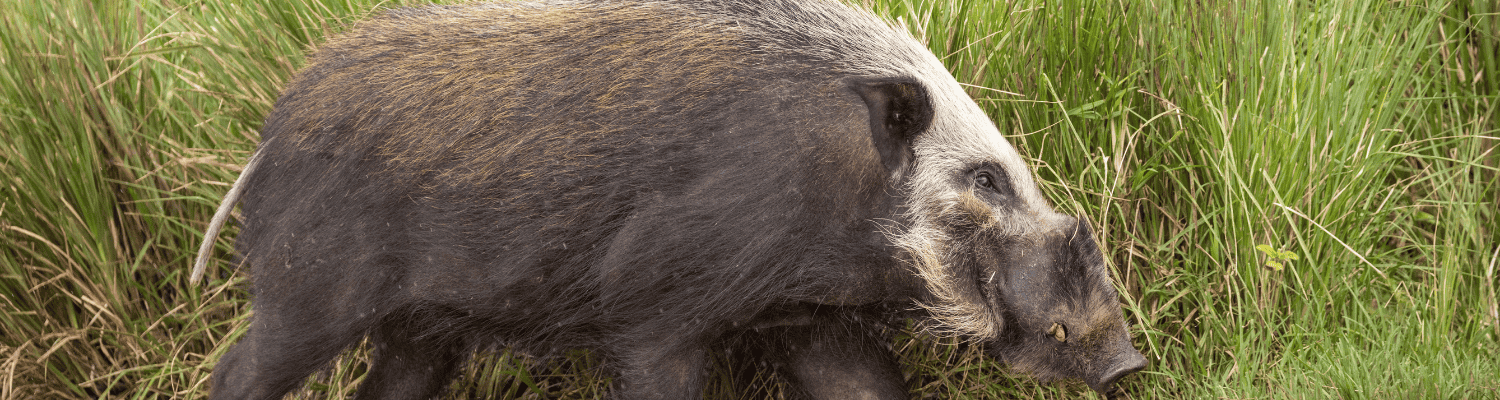
The bushpig is a robust and secretive wild pig, known for its reddish-brown coat, pointed ears, and strong build. It is found across eastern and southern Africa, mainly in dense bush, forests, and areas close to water. Bushpigs are mostly active at night, which makes sightings less common. For travellers, seeing one feels special due to its shy nature and limited visibility during the day. Its behaviour and feeding habits help shape the environment, adding to the diversity of wildlife experiences on safari.









Gallery
Summary
Best Places To See
Bushpig are most reliably seen in dense, well-watered habitats where thick cover and low disturbance allow them to remain active, with Kruger National Park standing out as a strong destination due to regular sightings along riverine thickets, especially at dawn and dusk. Adjacent private reserves such as Sabi Sands Game Reserve offer higher-quality encounters, often supported by expert guides who track their nocturnal movement patterns. In South Africa’s Zululand Region, Hluhluwe-iMfolozi Game Reserve and private reserves like Phinda Private Game Reserve provide consistent opportunities in dense bushveld and forest edge environments where bushpig are most active and predictable.
Best Time Of Year To See
The best time to see bushpigs is during the dry season, when reduced vegetation improves visibility, although they remain elusive and mostly nocturnal. They are more active at night and around water sources. In the wet season, thicker vegetation and abundant food make them harder to locate.
Identification
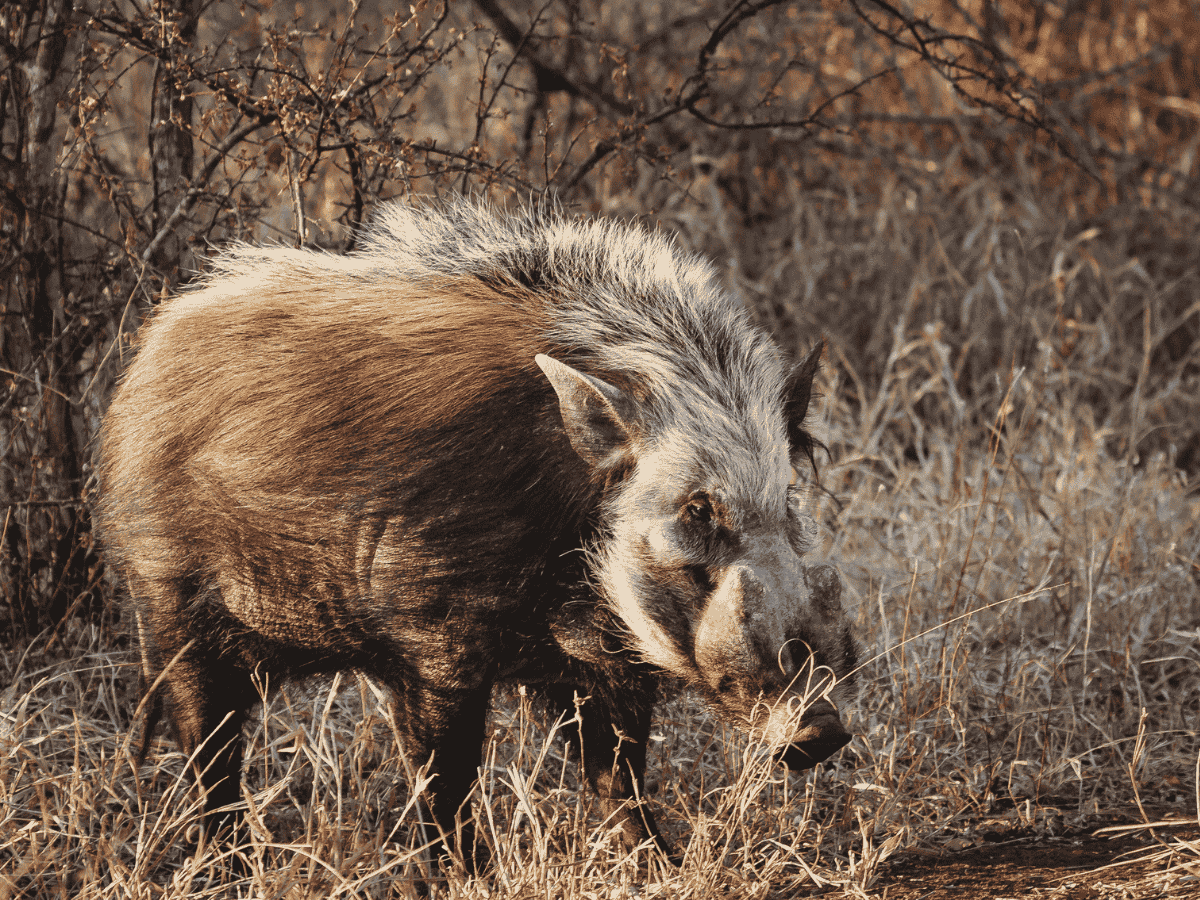
Bushpigs are stocky, dark pigs with reddish-brown fur and white facial markings. They have smaller tusks and pointed ears. They are mostly nocturnal. They may be confused with warthogs, but bushpigs are hairier and live in dense vegetation.
Behaviour
Bushpigs are nocturnal omnivores that feed on roots, fruit, and small animals. They are shy and live in small groups. On safari, sightings are rare and usually at night.
Diet
Bushpigs are omnivores that feed on roots, fruits, crops, small animals, and carrion. They use their snouts to dig in the soil for food, especially at night. They are highly adaptable and feed on whatever is available. During dry periods, they may rely more on roots and underground food. They often feed in dense vegetation. Their feeding behaviour can cause damage to crops. Their diet allows them to survive in a wide range of environments.
Habitat
Bushpigs inhabit dense bush, forest edges, and areas near water where cover is thick and food is abundant. Their habitat allows them to remain hidden during the day and forage at night. They prefer moist environments with access to roots, fruits, and small animals. Terrain is often dense and shaded. Travellers rarely see bushpigs due to their nocturnal habits, but they are most likely encountered in thick vegetation near water sources.
Conservation Status
Bushpigs are listed as least concern, with stable populations across their range. Their main threats include habitat loss and conflict with farmers. They are adaptable and can survive in various environments, including areas near human activity. Strong populations exist in protected areas. Safari tourism supports these ecosystems and helps maintain bushpig populations.
Interesting Facts
Bushpigs are nocturnal and rarely seen, emerging at night to forage for roots, fruits, and small animals. They have a stocky build, reddish coat, and distinctive facial markings. Bushpigs are highly adaptable and can live in a variety of habitats, including forests and farmland. They are known to be aggressive when threatened. Their secretive nature makes sightings uncommon, adding to their intrigue for travellers.
Folklore
Bushpigs are associated with secrecy, strength, and caution. Their nocturnal habits and preference for dense cover have linked them to hidden aspects of the natural world. In some traditions, they represent unpredictability and the importance of awareness. Their presence reinforces respect for animals that operate unseen.