
Cheetah | A Complete Safari Guide
Discover cheetah hunting behaviour and where sightings are most common on safariOverview
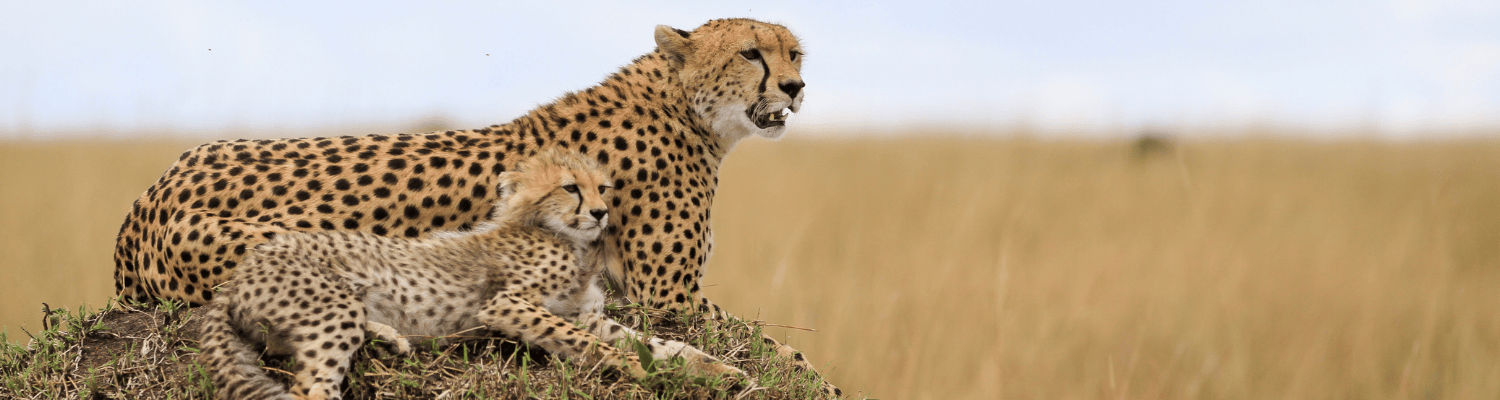
The cheetah is a slender, fast-moving big cat known for its spotted coat, small head, and distinctive black tear lines running from its eyes. It is found mainly in open savannas and grasslands across eastern and southern Africa, where space allows it to run at incredible speeds. Unlike other big cats, cheetahs rely on speed rather than strength, making their hunts exciting to witness. For travellers, they offer some of the most thrilling sightings on safari, with their rare speed and graceful movements making every encounter unforgettable.









Gallery
Summary
Best Places To See
Cheetahs are most reliably seen in open landscapes where visibility is high and prey is abundant, with the Serengeti National Park in Tanzania standing out as a flagship destination due to its vast plains and strong cheetah population. In Kenya, the Masai Mara National Reserve offers consistent sightings, particularly during the migration when prey density increases. In Southern Africa, Kgalagadi Transfrontier National Park provides excellent viewing in sparse, open terrain, while private reserves such as Phinda Private Game Reserve offer high-quality sightings supported by expert tracking and controlled access, making encounters both frequent and well-positioned.
Best Time Of Year To See
The best time to see a black cheetah is during the dry season, when shorter grass and open landscapes improve visibility and make tracking easier. As prey becomes more concentrated around remaining water and grazing areas, cheetahs move more predictably and are easier to locate, especially in the early morning and late afternoon when they are most active. Black cheetahs are extremely rare and sightings are highly dependent on specific regions and guiding expertise. In the wet season, taller grass and dispersed prey reduce visibility and consistency, although conditions are greener and quieter with fewer visitors.
Identification
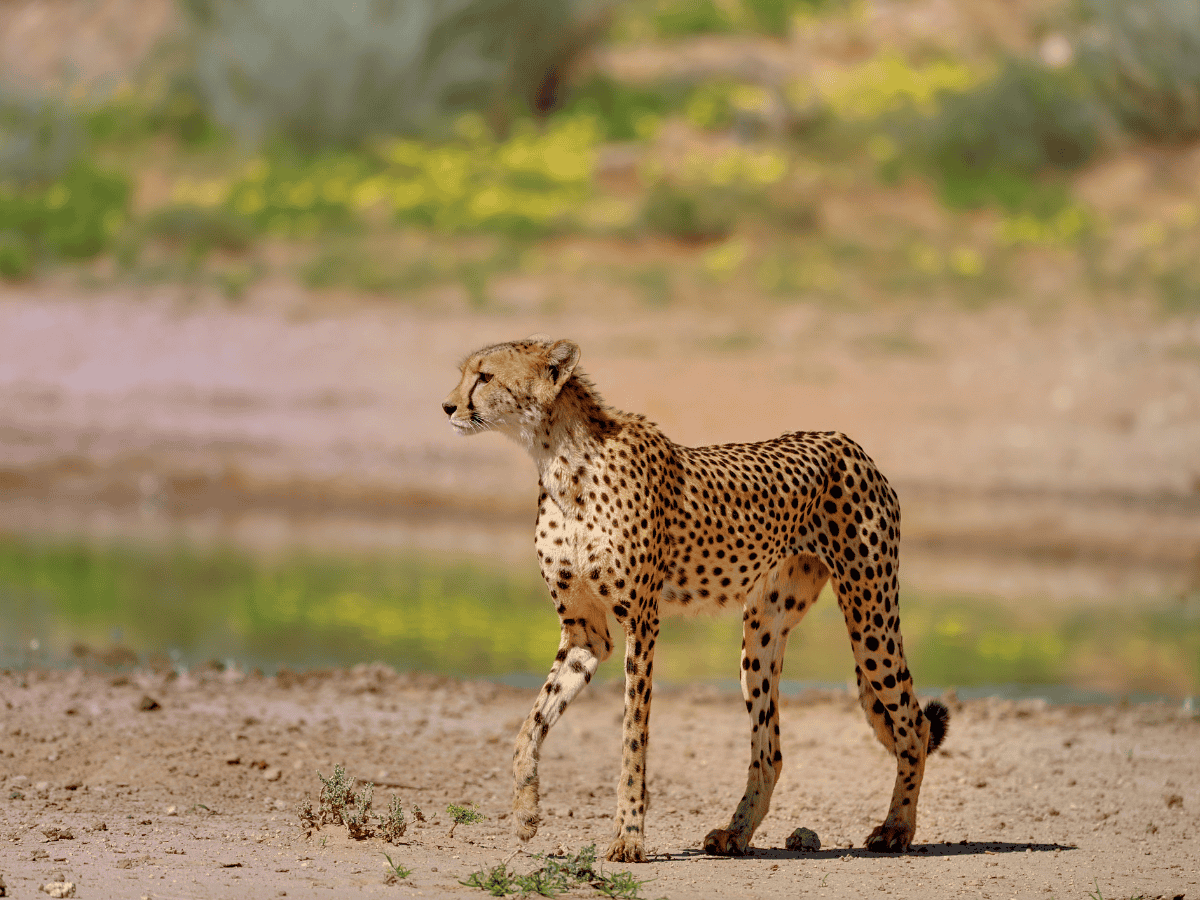
Cheetahs are slim, long-legged cats built for speed, with small heads and distinctive black tear lines running from the eyes to the mouth. Their coats are pale with solid black spots, unlike the rosettes of leopards. They have long tails used for balance when running. Males may form small groups, while females are usually solitary. Cubs have a fluffy mantle along their backs. They are often confused with leopards, but their slimmer build, facial markings, and behaviour set them apart. Their upright posture and daytime activity make them easier to spot.
Behaviour
Cheetahs are fast-moving predators that hunt mainly small to medium antelope using speed rather than strength. They are often seen during the day, especially in open areas where they can spot prey. They are mostly solitary or found in small family groups, with males sometimes forming coalitions. After a chase, they rest to recover energy. On safari, travellers may see them scanning from termite mounds, stalking prey, or resting after a hunt.
Diet
Cheetahs are carnivores that mainly hunt small to medium-sized antelope such as impala and gazelle. They rely on speed rather than strength, using short bursts of high-speed running to chase down prey in open areas. Hunts usually take place during the day to avoid larger predators. After a chase, they must rest before feeding. They eat quickly, as they are often forced off their kills by stronger predators. Their diet depends on availability, and they may target younger or weaker animals to improve their chances of success.
Habitat
Cheetahs prefer open grasslands and lightly wooded savanna where they can use their speed to hunt. Their habitat requires good visibility and space to run, so they avoid dense bush. They are often found in areas with abundant small to medium-sized antelope. Water is less critical, but prey availability is key. Travellers most often see cheetahs in open plains, especially during the day when they are active. Flat, open terrain offers the best chance of spotting them hunting or resting.
Conservation Status
Cheetahs are listed as vulnerable, with populations declining due to habitat loss and fragmentation. They require large territories, making them especially sensitive to human expansion. Conflict with farmers, particularly due to livestock predation, is a major threat. Low genetic diversity also impacts their long-term survival. However, important populations remain in protected areas and private reserves. Conservation programmes focus on habitat protection and reducing conflict with people. Safari tourism supports these efforts by funding conservation and increasing awareness, helping to secure a future for cheetahs in key regions.
Interesting Facts
Cheetahs are the fastest land animals, capable of reaching speeds of over 100 km/h in short bursts. Their bodies are built for speed, with long legs, a flexible spine, and a tail that helps with balance during sharp turns. Unlike other big cats, they cannot roar but instead chirp and purr. Cheetahs rely on daytime hunting to avoid competition with larger predators, using speed rather than strength to catch prey.
Folklore
Cheetahs are commonly associated with speed, focus, and precision. While less prominent in folklore than lions or leopards, they are respected for their hunting skill and efficiency. Some communities view them as symbols of grace and discipline, reflecting the importance of timing and control. Their slender build and calm demeanour contrast with their explosive speed, reinforcing the idea that strength can be expressed through agility and intelligence rather than dominance.