
Common Reedbuck | A Complete Safari Guide
Understand reedbuck behaviour and where to spot them on safariOverview
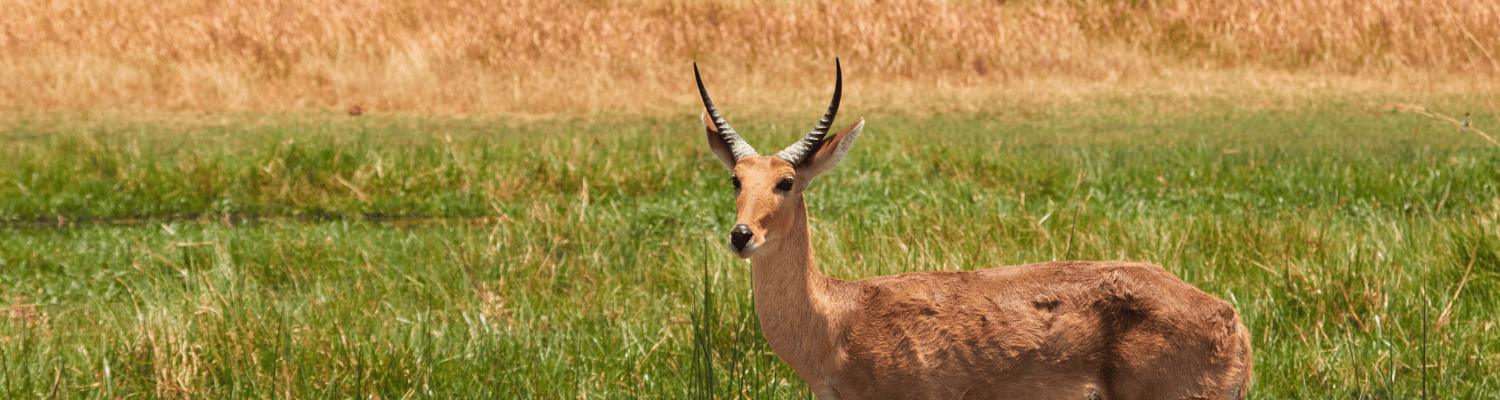
The common reedbuck is a medium-sized antelope known for its soft grey-brown coat, white underside, and the short curved horns of the males. It is found across eastern and southern Africa, usually in grasslands and areas close to water. Reedbuck are often seen resting in open areas during the day or moving quietly through tall grass. For travellers, they offer calm and reliable sightings, often in peaceful settings. Their presence highlights healthy grassland habitats and adds variety to the safari experience.









Gallery
Summary
Best Places To See
Common reedbuck are most reliably seen in grassy areas close to water, particularly in habitats where tall grass meets open floodplains, with Kruger National Park standing out as a strong destination due to consistent sightings in well-watered regions. Adjacent private reserves such as Sabi Sands Game Reserve offer regular encounters, often in quieter, less disturbed areas where reedbuck move predictably. In Botswana, Moremi Game Reserve provides high-quality sightings in floodplain and wetland environments, while in Zimbabwe, Hwange National Park offers additional opportunities in open grassland near water sources where reedbuck are frequently encountered.
Best Time Of Year To See
The best time to see common reedbuck is during the dry season, when shorter grass and reduced vegetation improve visibility in grasslands and near water. They are most active in the early morning and late afternoon. In the wet season, taller grass provides more cover, making sightings less consistent.
Identification
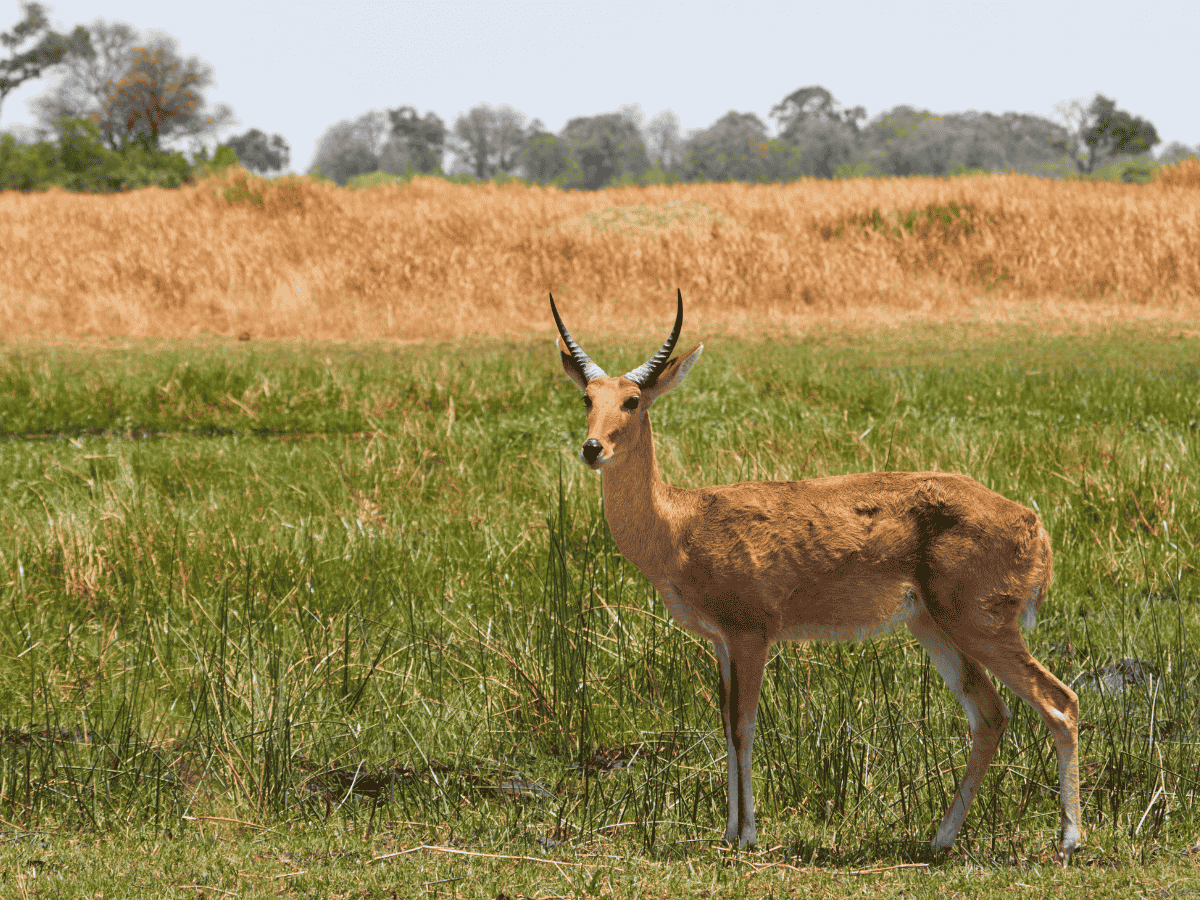
Common Reedbuck are medium-sized antelope with soft brown coats and white underparts. Males have short, forward-curving horns, while females do not. They may be confused with other antelope, but their habitat near wetlands and their posture help distinguish them.
Behaviour
Common reedbuck are grazers that prefer tall grass near water. They are usually seen in pairs or small groups. On safari, they are seen resting or feeding in grassy areas.
Diet
Common reedbuck are grazers that feed mainly on grasses in moist areas such as floodplains and valleys. They prefer taller grasses and often feed in areas with good cover. They are most active during early morning and late afternoon. During dry seasons, they remain near water sources where grass is still available. They are cautious feeders and often stay alert while grazing. Their diet supports their preference for quiet, less disturbed habitats.
Habitat
Common reedbuck prefer moist grasslands, floodplains, and areas near wetlands where vegetation is lush. Their habitat is closely tied to water availability and tall grasses for cover. They often remain hidden during the day. Terrain is usually flat and low-lying. Travellers are most likely to see reedbuck in grassy areas near water, especially in the early morning or late afternoon when they are more active.
Conservation Status
Common reedbuck are listed as least concern, with stable populations across their range. Their main threats include habitat loss and pressure from human activity near wetlands. They rely on tall grass and water sources for survival. Strong populations exist in protected areas. Conservation efforts focus on preserving these habitats. Safari tourism supports these ecosystems and helps ensure reedbuck remain widespread.
Interesting Facts
Common reedbuck prefer tall grasslands near water, where they can remain hidden from predators. They have a greyish coat and a distinctive white underside. Reedbuck are often seen alone or in small groups and rely on camouflage and stillness to avoid detection. When threatened, they emit a high-pitched whistle to alert others. Their preference for dense grass means they are often heard before they are seen.
Folklore
Common reedbuck are associated with calmness, water, and quiet resilience. Their preference for wetland areas links them to life-sustaining environments. In some traditions, they represent subtle strength and the ability to remain hidden when necessary. Their behaviour reinforces themes of patience and awareness.