
Crimson-breasted Shrike | A Complete Birding Guide
Understand Crimson-breasted Shrike identification and where to spot itOverview
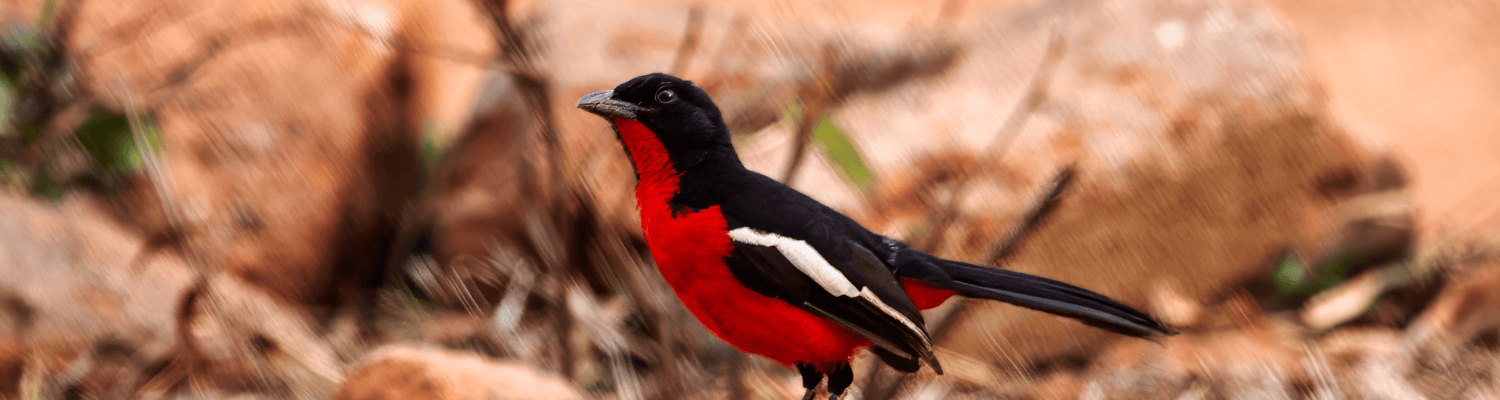
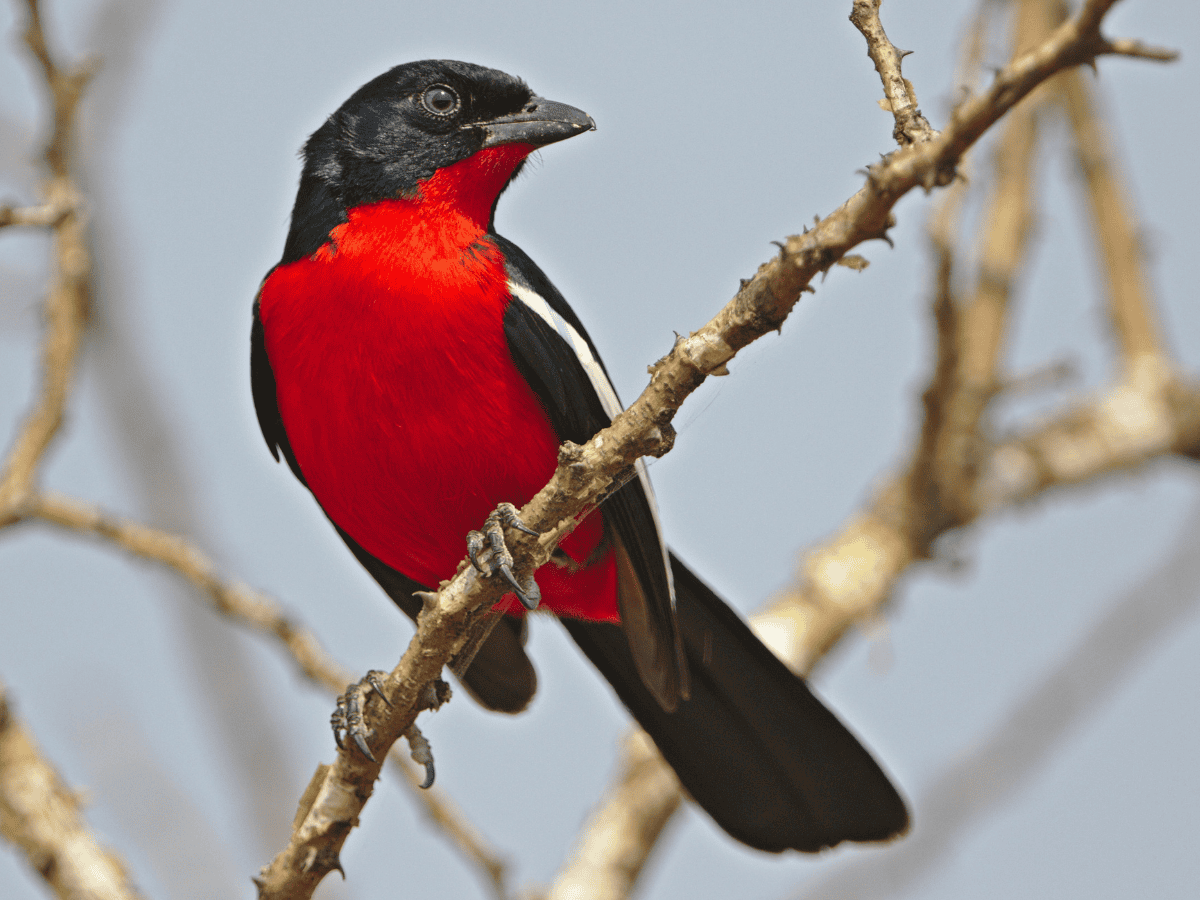
The Crimson-breasted Shrike is a striking bird with glossy black upperparts and a vivid crimson chest. It is found in dry savannas and thornveld across Southern Africa. Often perched prominently on branches, it scans for insects and small prey. Its bold colours and confident behaviour make it one of the most eye-catching and easily recognisable birds in arid safari landscapes.







Gallery
Summary
Best Places To See
Crimson-breasted Shrike is most reliably found in arid savanna and semi-desert where scattered shrubs provide ideal perches and hunting sites. Kgalagadi Transfrontier National Park offers some of the most consistent sightings due to open terrain and excellent visibility, allowing birds to be seen perched in clear view. Tswalu Kalahari provides a strong complementary option with similar habitat and lower vehicle density. These areas are reliable because the species prefers open environments where it can perch conspicuously, making sightings frequent and often at close range.
Best Time Of Year To See
Crimson-breasted Shrike can be seen throughout the year, but sightings are most consistent during warmer months when birds are more active and vocal. Increased insect activity during this time supports more frequent feeding and movement. Breeding season also brings more territorial behaviour, making individuals easier to locate. During cooler months, activity may decrease slightly, although the species remains visible. Summer generally provides the best overall conditions, combining high activity with good visibility in open habitats.
Identification
Crimson-breasted Shrike is a medium-sized bird with bold black upperparts, white markings, and a vivid crimson-red chest that is unmistakable in good light. It has a strong, slightly hooked bill typical of shrikes and a compact body. Males and females are similar, though females may appear slightly less intense in colour. Its habit of perching in open view helps with identification. It can be confused with other shrikes, but the bright red underparts clearly distinguish it.
Behaviour
Crimson-breasted Shrike feeds mainly on insects, which it hunts from exposed perches before making short flights to capture prey. It often returns to the same perch after feeding. The species is usually seen alone or in pairs and is territorial during breeding season. It may flick its tail or shift position while scanning for prey. Travellers are most likely to observe it perched prominently, making short, direct feeding movements.
Diet
Crimson-breasted Shrike feeds primarily on insects and small invertebrates, which it catches from perches or the ground. It hunts by scanning from elevated positions before launching short flights to capture prey. Feeding occurs mainly in open habitats where visibility is high. During warmer months, increased insect availability supports higher feeding activity. Its diet is closely linked to arid ecosystems where prey is easy to spot.
Habitat
Crimson-breasted Shrike prefers arid savanna, semi-desert, and dry woodland where vegetation is sparse and scattered. It is most often found perched on shrubs or small trees, using elevated positions to hunt. This habitat provides both visibility and access to prey. Travellers are most likely to encounter it in open landscapes with low vegetation and good visibility.
Conservation Status
Crimson-breasted Shrike is considered stable and widespread across its range, with no major threats affecting overall populations. Its adaptability to dry environments supports its resilience. However, habitat changes can influence local populations. Protected areas such as Kgalagadi Transfrontier National Park and Tswalu Kalahari help maintain suitable conditions. Conservation of arid ecosystems supports the long-term stability of the species.
Interesting Facts
Crimson-breasted Shrike is one of the most visually striking birds in dry regions, with its bright red chest standing out against sandy landscapes. It often uses the same perch repeatedly while hunting. Its bold colouring contrasts strongly with its surroundings, making it surprisingly easy to spot. Despite living in harsh environments, it remains active and visible throughout the day.
Folklore
Brightly coloured birds are often associated with energy and presence in African folklore. The Crimson-breasted Shrike’s vivid red chest may symbolise vitality and strength. Its habit of perching in open view reflects confidence and awareness. It represents boldness within harsh and open landscapes.