
Crowned Eagle | A Complete Birding Guide
Learn how to identify Crowned Eagle and where to find itOverview
The Crowned Eagle is a powerful forest raptor with a bold crest and striking black and white markings. It is found in dense forests across Africa. Often hidden in the canopy, it hunts mammals such as monkeys and small antelope. Its strength and secretive nature make it one of the most impressive and elusive eagles to encounter.









Gallery
Summary
Best Time Of Year To See
Crowned Eagles can be seen throughout the year, but sightings are most consistent during warmer months when prey activity increases and birds are more vocal during breeding season. Increased calling during this period helps birders locate individuals in dense forest. In cooler months, activity may decrease slightly, although the species remains present. Early morning is often the most productive time, when calls carry clearly and birds are more active in the canopy before retreating deeper into cover.
Identification
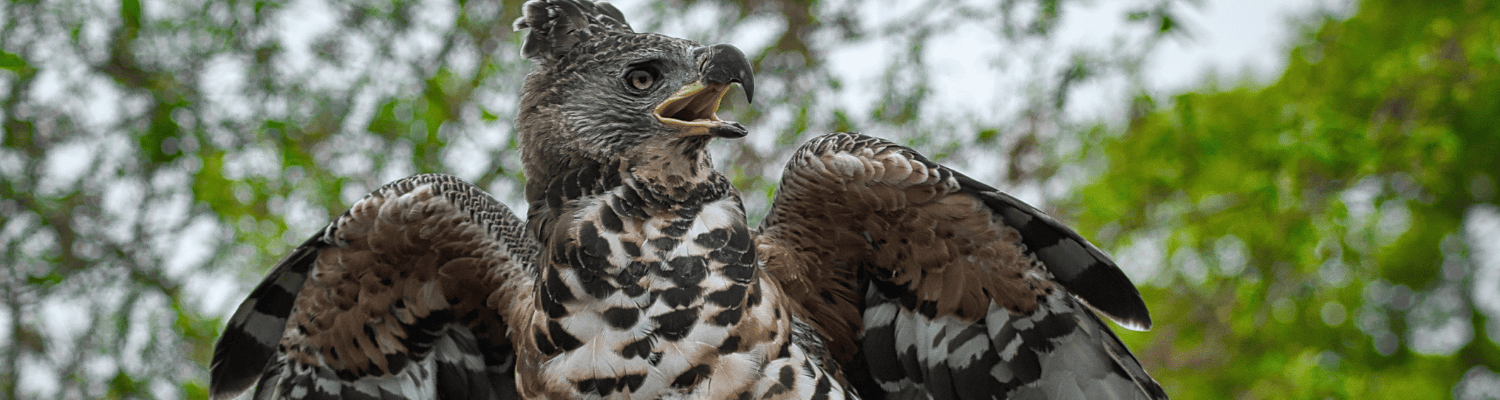
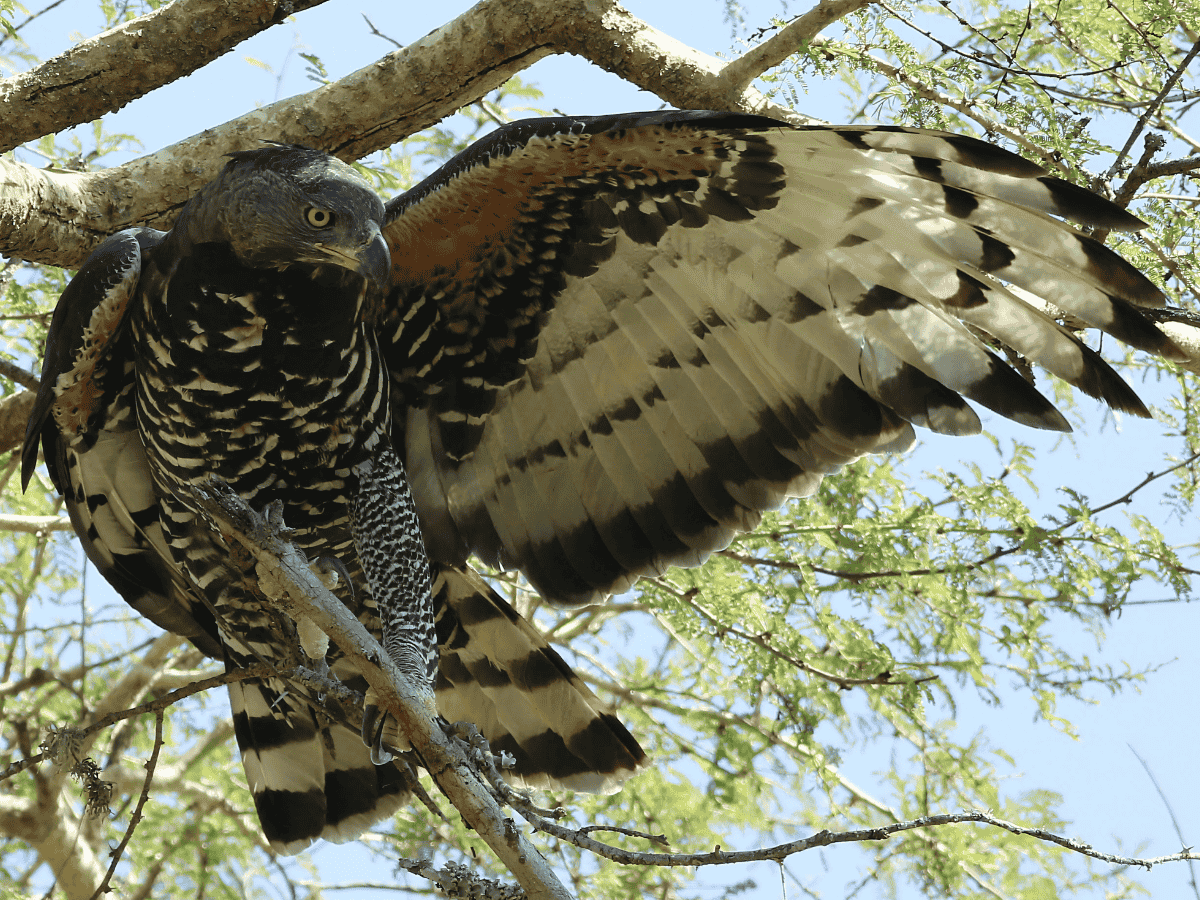
Crowned Eagles are medium to large eagles with a distinctive crest, broad wings, and a relatively long tail. Their underparts are pale with dark barring, while the upperparts are darker. They have strong legs and powerful talons suited for hunting. Their crest can be raised when alert. Males and females are similar, although females are larger. They can be confused with other forest raptors, but their crest and pattern help distinguish them.
Behaviour
Crowned Eagles feed mainly on mammals and birds, often hunting from concealed perches within dense vegetation. They rely on stealth and surprise, launching powerful attacks at prey. The species is usually solitary or seen in pairs and maintains large territories. Their loud, whistling calls are often heard echoing through the forest. Travellers are most likely to hear them before catching brief glimpses as they move through the canopy.
Diet
Crowned Eagles feed primarily on mammals such as monkeys and small antelope, as well as birds and other animals. They hunt using ambush techniques, striking with speed and strength from concealed positions. Feeding activity is linked to prey availability, which is generally stable in forest environments. Their diet reflects their role as apex predators within woodland and forest ecosystems.
Habitat
Crowned Eagles prefer dense forest, riverine woodland, and well-wooded savanna with tall trees and thick canopy cover. They are most often found in areas where vegetation provides both concealment and hunting opportunities. This habitat supports their ambush hunting style and nesting requirements. Travellers are most likely to encounter them in mature forest environments with minimal disturbance.
Conservation Status
Crowned Eagles are considered near threatened, with populations affected by habitat loss and human disturbance. Their reliance on intact forest makes them sensitive to environmental change. Protected areas such as Kruger National Park and iSimangaliso Wetland Park help maintain suitable conditions. Conservation of forest ecosystems and responsible land management are essential for supporting this species.
Interesting Facts
Crowned Eagles are among the most powerful raptors in Africa relative to their size and can take prey larger than themselves. Their loud calls can carry long distances through dense forest. They often remain hidden for long periods, making sightings rare. Their crest can be raised to appear larger when threatened or alert.
Folklore
Large forest predators are often associated with power and mystery in African folklore. Crowned Eagles, with their strength and hidden presence, may symbolise unseen authority and control. Their ability to move quietly through dense environments reflects precision and awareness. In some interpretations, forest raptors represent the hidden forces within nature, reinforcing their connection to strength and balance within complex ecosystems.
Best Places To See
Crowned Eagles are most reliably found in dense forest and well-developed woodland where tall trees provide nesting sites and cover for hunting. Kruger National Park offers consistent sightings, particularly in riverine woodland where mature trees and prey availability support stable territories. iSimangaliso Wetland Park provides a strong complementary option with coastal forest and dense vegetation. These locations are reliable because intact forest structure, abundant prey, and minimal disturbance allow the species to hunt effectively while remaining detectable through calls and occasional movement.