

Double-banded Courser | A Complete Birding Guide
Discover Double-banded Courser behaviour and where to see itOverview
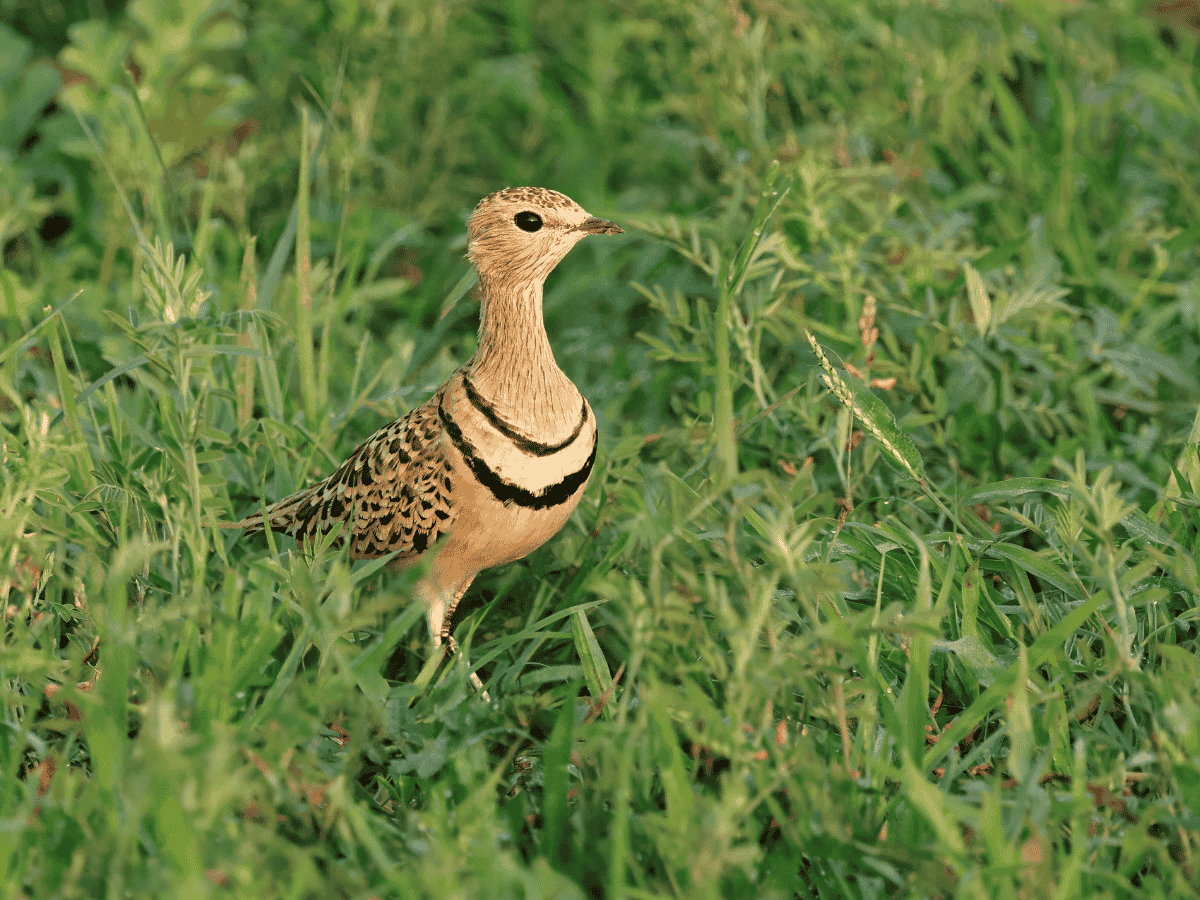
The Double-banded Courser is a ground-dwelling bird with sandy plumage and two bold chest bands. It is found in open grasslands and semi-arid areas in Southern Africa. Often active at dawn and dusk, it blends perfectly into its surroundings. Its camouflage and subtle movements make it a rewarding species for attentive observers.









Gallery
Summary
Best Time Of Year To See
Double-banded Courser can be seen year-round, but sightings are most consistent during drier periods when vegetation is shorter and visibility is improved. Reduced grass cover makes it easier to detect birds that rely heavily on camouflage. During wetter months, taller vegetation can obscure views and make sightings more challenging. Early mornings and late afternoons are the most active times, when birds move more freely. Dry seasons generally provide the best balance of visibility and encounter rates.
Identification
Double-banded Courser is a medium-sized bird with sandy brown plumage, bold black and white facial markings, and a distinctive double band across the chest. It has long legs and a compact body suited for ground movement. Males and females are similar in appearance. Its habit of standing still makes it difficult to spot. It can be confused with other coursers, but the double breast band and facial pattern help distinguish it.
Behaviour
Double-banded Courser feeds mainly on insects, which it picks from the ground in open areas. It moves slowly and deliberately, often pausing to remain still and avoid detection. The species is usually solitary or seen in pairs. It is most active during cooler parts of the day. Travellers are most likely to see it walking quietly across open ground or standing motionless in plain sight.
Diet
Double-banded Courser feeds primarily on insects and small invertebrates found on open ground. It forages by walking slowly and picking prey from the surface. Feeding takes place in dry grassland and semi-arid environments. During warmer months, increased insect activity supports higher feeding rates. Its diet is closely linked to open landscapes where prey is accessible.
Habitat
Double-banded Courser prefers dry grassland, semi-arid plains, and open savanna with sparse vegetation. It is most often found on the ground in open areas where it can rely on camouflage. This habitat allows for easy movement and feeding. Travellers are most likely to encounter it in flat, open landscapes with low vegetation.
Conservation Status
Double-banded Courser is considered stable, with no major threats affecting overall populations. Its preference for open habitats supports its resilience. However, habitat changes can affect local populations. Protected areas such as Kgalagadi Transfrontier National Park and Central Kalahari Game Reserve help maintain suitable conditions. Conservation of open grassland ecosystems supports the species.
Interesting Facts
Double-banded Courser relies heavily on camouflage and can remain almost invisible when standing still. Its bold facial markings contrast with its otherwise subtle colouring. It is often overlooked despite being present in open areas. Its slow, deliberate movements make it a fascinating species to observe closely.
Folklore
Ground-dwelling birds are often associated with awareness and patience in African folklore. The Double-banded Courser’s stillness and reliance on camouflage may symbolise quiet observation. Its ability to remain unnoticed reflects ideas of subtlety and presence. It represents the hidden life within open landscapes.
Best Places To See
Double-banded Courser is most reliably found in open, sparsely vegetated grassland and semi-arid plains where its camouflage is effective but visibility remains high. Kgalagadi Transfrontier National Park offers some of the most consistent sightings due to open terrain and minimal vegetation cover. Central Kalahari Game Reserve provides a strong complementary option with similar habitat and low disturbance. These areas are reliable because reduced vegetation and expansive landscapes make it easier to detect movement, especially during early morning and late afternoon.