
Overview
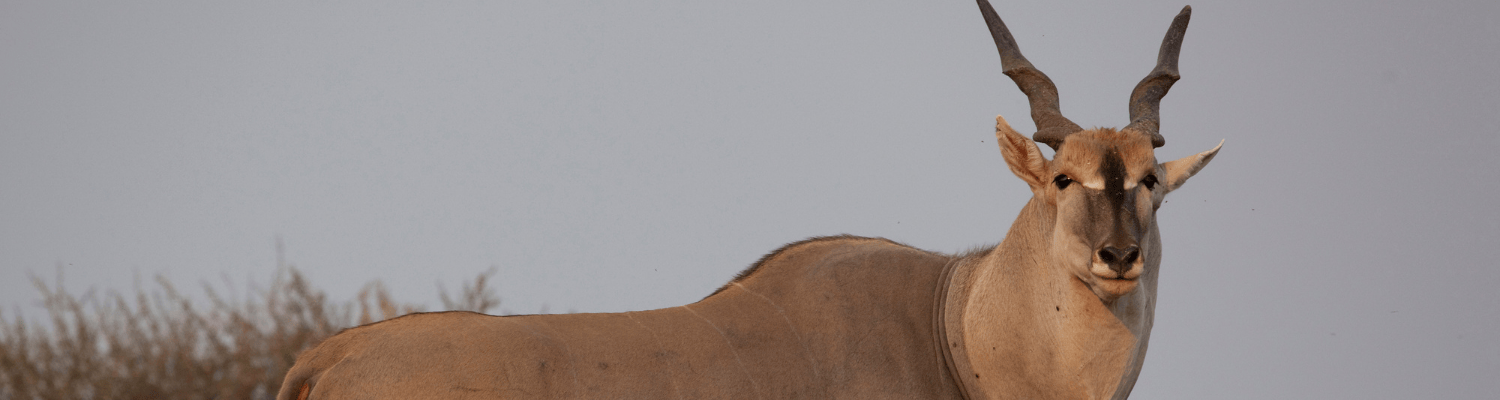
The eland is the largest antelope in Africa, known for its size, light brown coat, and gentle appearance. Both males and females have short, spiral horns, and adults often develop a loose fold of skin along the neck. It is found across eastern and southern Africa, in a range of habitats from open plains to woodland. Despite its size, it moves quietly and can be surprisingly difficult to spot. For travellers, eland offer a sense of scale and calm, playing an important role as large grazers and browsers in the ecosystem.









Gallery
Summary
Best Places To See
Eland are most reliably seen in open woodland and semi-arid environments where large herds can move freely, with Serengeti National Park in Tanzania standing out as a flagship destination due to its vast plains and stable populations. In Southern Africa, Kgalagadi Transfrontier National Park offers excellent sightings in open, sparsely vegetated terrain where eland are easier to locate. In South Africa, Kruger National Park and private reserves such as Timbavati Game Reserve provide regular encounters, particularly in quieter areas, while in Namibia, Etosha National Park delivers consistent sightings around waterholes where eland gather in the dry season.
Conservation Status
Eland are listed as least concern, with widespread populations across Africa. Their biggest threats include habitat loss and hunting pressure in certain regions. As large antelope, they require extensive areas of suitable habitat. Despite this, they remain common in many protected areas. Conservation efforts focus on maintaining large, connected landscapes. Safari tourism supports these ecosystems and contributes to the long-term protection of eland populations across their range.
Best Time Of Year To See
The best time to see eland is during the dry season, when herds move more predictably between feeding areas and limited water sources, making sightings more consistent. Shorter grass and reduced vegetation improve visibility, especially in open woodland and savanna where they are often found. Eland are wide-ranging and can cover large distances, but in drier conditions they tend to concentrate in suitable grazing areas. In the wet season, abundant food and water allow them to spread out across broader landscapes, making sightings less reliable, although conditions are greener and visitor numbers are typically lower.
Identification
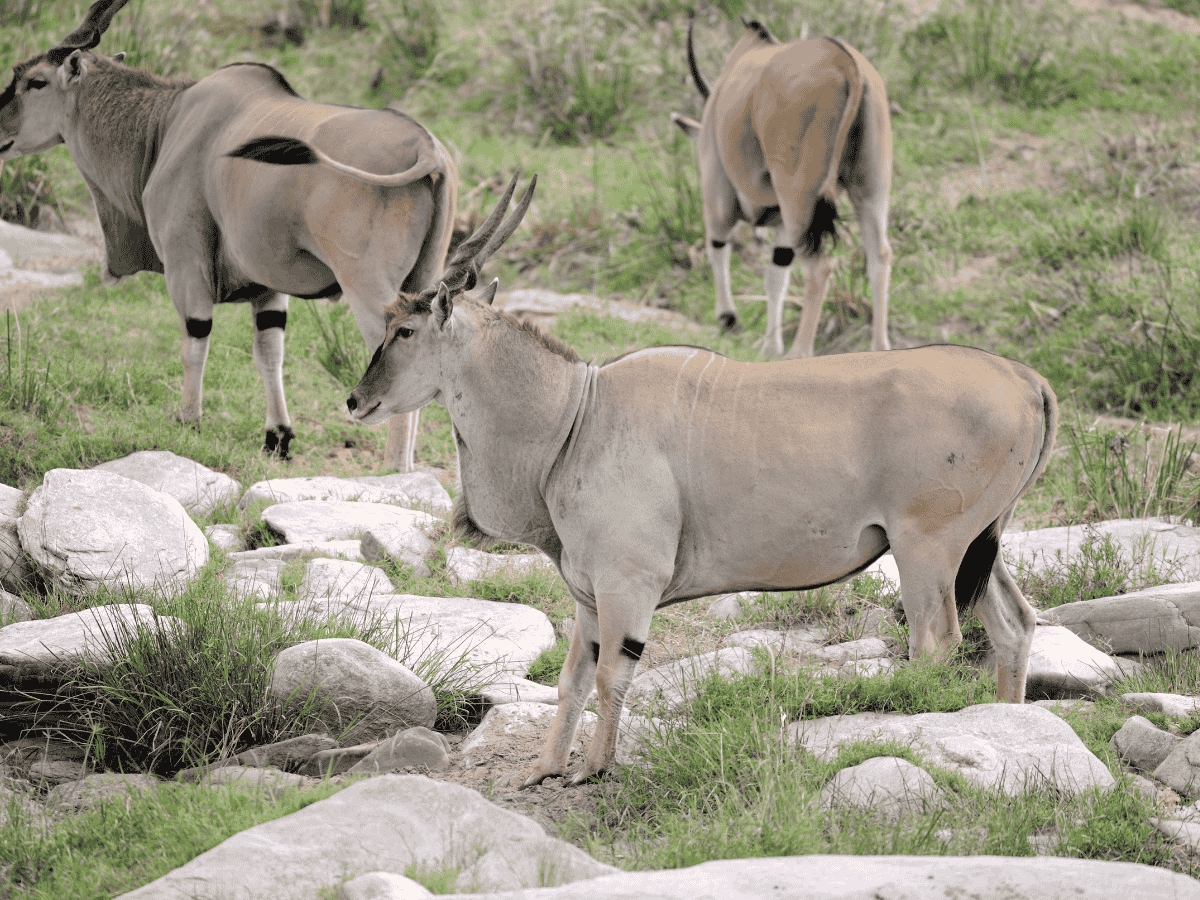
Eland are the largest antelope, with heavy bodies and short spiralled horns. Their coats are light brown, sometimes with faint stripes. Both males and females have horns, though males are larger and develop thicker necks. They may be confused with kudu, but eland are bulkier and lack prominent stripes. Their slow movement and calm nature make them easy to observe.
Behaviour
Eland are large antelope that graze and browse, feeding on grass and leaves. They live in small herds and move over large areas. They are calm and slow-moving. On safari, they are often seen grazing or resting in open woodland.
Diet
Eland are large antelope that both graze and browse, feeding on grasses, leaves, and shrubs. They are flexible feeders and adjust their diet depending on what is available. They often feed during cooler parts of the day and may travel long distances in search of food. During dry seasons, they rely more on browsing. They can survive with little water by obtaining moisture from plants. Their feeding habits allow them to live in a wide range of habitats. They are slow-moving but highly efficient feeders.
Habitat
Eland are highly adaptable and found in savanna, grassland, woodland, and even mountainous areas. Their habitat depends on available vegetation and water, but they can survive in relatively dry conditions. They prefer areas with a mix of open space and cover. Their wide distribution reflects their ability to move across different environments. Travellers may encounter eland in both open plains and wooded areas, often in small groups, where their large size and calm behaviour make them easy to identify.
Interesting Facts
Eland are the largest antelope in Africa, yet they are surprisingly agile and can jump over fences from a standing start. They are known for a clicking sound produced by their joints when walking. Both males and females have spiral horns, although males are larger and more robust. Eland are highly adaptable and can survive in a variety of habitats, often covering large distances in search of food and water.
Folklore
Eland are widely respected as symbols of abundance, endurance, and spiritual significance. Among groups such as the San people, eland hold deep cultural importance and are often featured in rock art and rituals. They are associated with harmony and life force, representing a connection between people and nature. Their calm nature reinforces themes of balance and respect.