

Fiery-necked Nightjar | A Complete Birding Guide
Learn to identify Fiery-necked Nightjar and where to hear itOverview
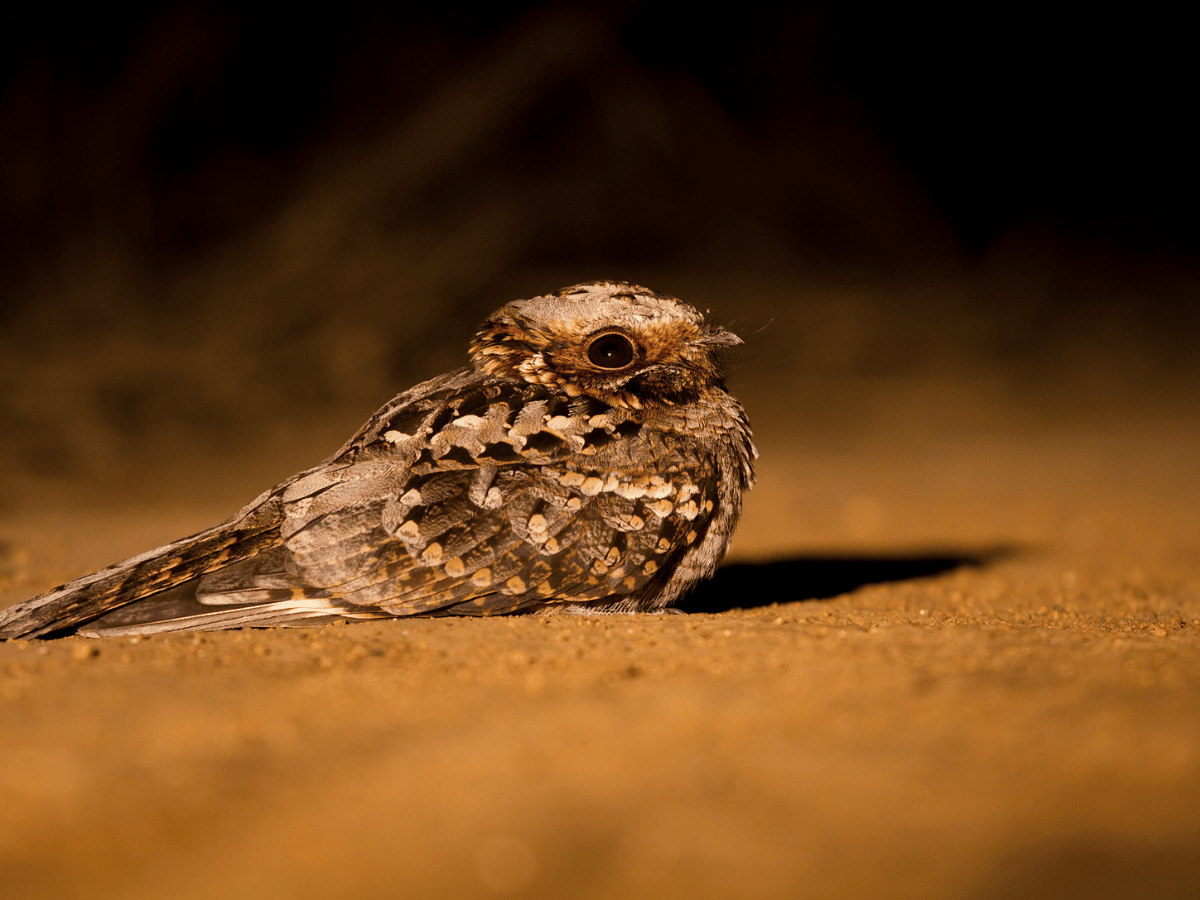
The Fiery-necked Nightjar is a small, cryptic bird with mottled brown plumage that blends perfectly into its surroundings. It is found in savannas and woodlands across Africa. Mostly active at night, it is best known for its repetitive, haunting call. Its camouflage and vocal presence make it a memorable part of the nighttime safari experience.









Gallery
Summary
Best Places To See
Fiery-necked Nightjar is most reliably found in open woodland and savanna where it roosts on the ground and becomes active along roads and clearings at dusk. Kruger National Park offers some of the most consistent sightings, particularly during evening drives when birds are often seen resting on warm road surfaces. Hluhluwe-iMfolozi Game Reserve provides a strong complementary option with similar habitat and good night drive conditions. These locations are reliable because open ground and accessible tracks allow for easier detection of birds as they become active in low light.
Best Time Of Year To See
Fiery-necked Nightjar can be seen throughout the year, but sightings are most consistent during warmer months when birds are more active and vocal during breeding season. Their repetitive calls are heard frequently at dusk and throughout the night, making them easier to locate. Increased insect activity during this time supports more frequent feeding. In cooler months, they remain present but may be less vocal. Evening and night drives during summer provide the best opportunity for both hearing and seeing this species.
Identification
Fiery-necked Nightjar is a medium-sized bird with mottled brown and grey plumage that provides excellent camouflage against the ground. It has a slender body, long wings, and a relatively small head with a wide gape. A key feature is the rufous collar on the back of the neck, although this is not always visible. Males may show white wing patches in flight. It can be confused with other nightjars, but its call and subtle markings help distinguish it.
Behaviour
Fiery-necked Nightjar feeds on flying insects, which it catches in flight at dusk and during the night. It often rests on the ground during the day, relying on camouflage to avoid detection. At dusk, it becomes active and may be seen flying low or perched along roads. The species is usually solitary and highly vocal, producing a continuous, rhythmic call. Travellers are most likely to encounter it during evening drives when it becomes active.
Diet
Fiery-necked Nightjar feeds primarily on flying insects such as moths and beetles, which it catches in flight using agile, twisting movements. It hunts in low light conditions when insect activity is highest. Feeding often takes place over open ground or along clearings. Its wide gape allows it to catch prey efficiently in flight. Seasonal increases in insect populations support higher feeding activity during warmer months.
Habitat
Fiery-necked Nightjar prefers open woodland, savanna, and bushveld where ground cover and open spaces are both available. It is most often found resting on bare ground or low vegetation during the day and becomes active in open areas at night. This habitat supports both camouflage and effective feeding. Travellers are most likely to encounter it in open bushveld, especially along roads and clearings during evening drives.
Conservation Status
Fiery-necked Nightjar is considered stable and widespread, with no major threats affecting overall populations across its range. Its adaptability to different habitats supports its resilience. However, disturbance and habitat changes can impact local populations. Protected areas such as Kruger National Park and Hluhluwe-iMfolozi Game Reserve help maintain suitable conditions. Conservation of woodland ecosystems and responsible tourism support the continued presence of this species.
Interesting Facts
Fiery-necked Nightjar is often heard more than it is seen, with its repetitive call becoming a defining sound of African nights. Its camouflage is so effective that it can be nearly invisible when resting on the ground. It often sits on roads at night, making it easier to spot during drives. Its wide mouth allows it to catch insects efficiently in flight.
Folklore
Nightjars are often associated with the night and mystery in African folklore. The Fiery-necked Nightjar’s repetitive call may symbolise the rhythm of the night or the presence of unseen life. Its ability to remain hidden during the day reflects ideas of invisibility and quiet awareness. It represents the subtle and often overlooked life that becomes active after dark.