
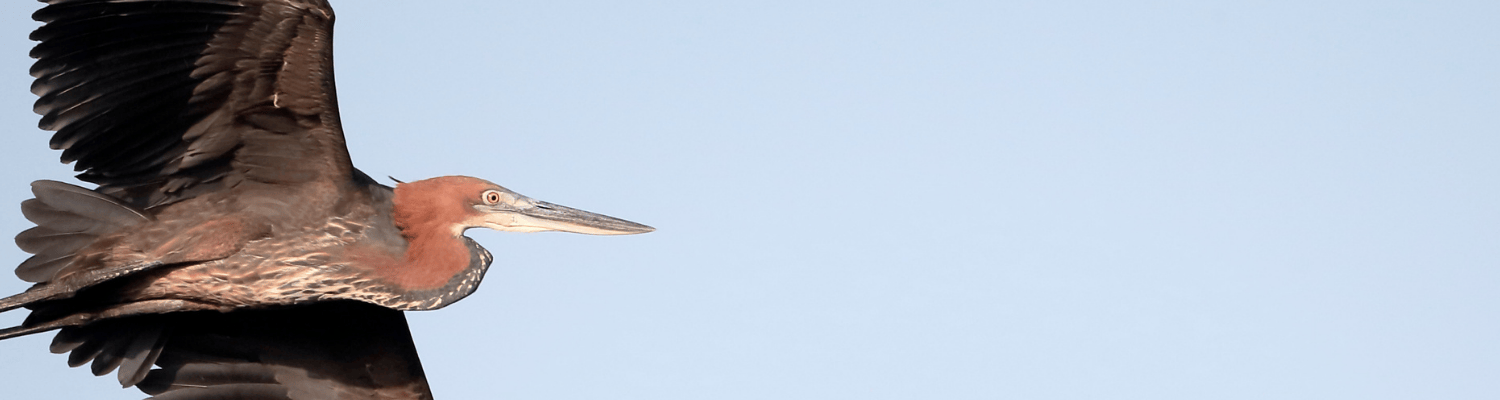
Goliath Heron | A Complete Birding Guide
Learn to identify Goliath Heron and where to spot itOverview
The Goliath Heron is the largest heron in the world, with a massive body, long legs, and a powerful bill. It is found along rivers, lakes, and wetlands across Africa. Often seen standing still before striking at fish, it moves slowly and deliberately. Its size and presence make it a standout species in any wetland setting.







Gallery
Summary
Best Time Of Year To See
The Goliath Heron can be seen throughout the year, but sightings are most consistent during warmer months when water levels stabilise and fish activity increases. During this time, feeding is more frequent, making birds easier to observe as they hunt along the water’s edge. In drier periods, receding water can concentrate prey, sometimes improving visibility. Early morning and late afternoon provide the best viewing conditions, when light is softer and feeding activity is at its peak.
Identification
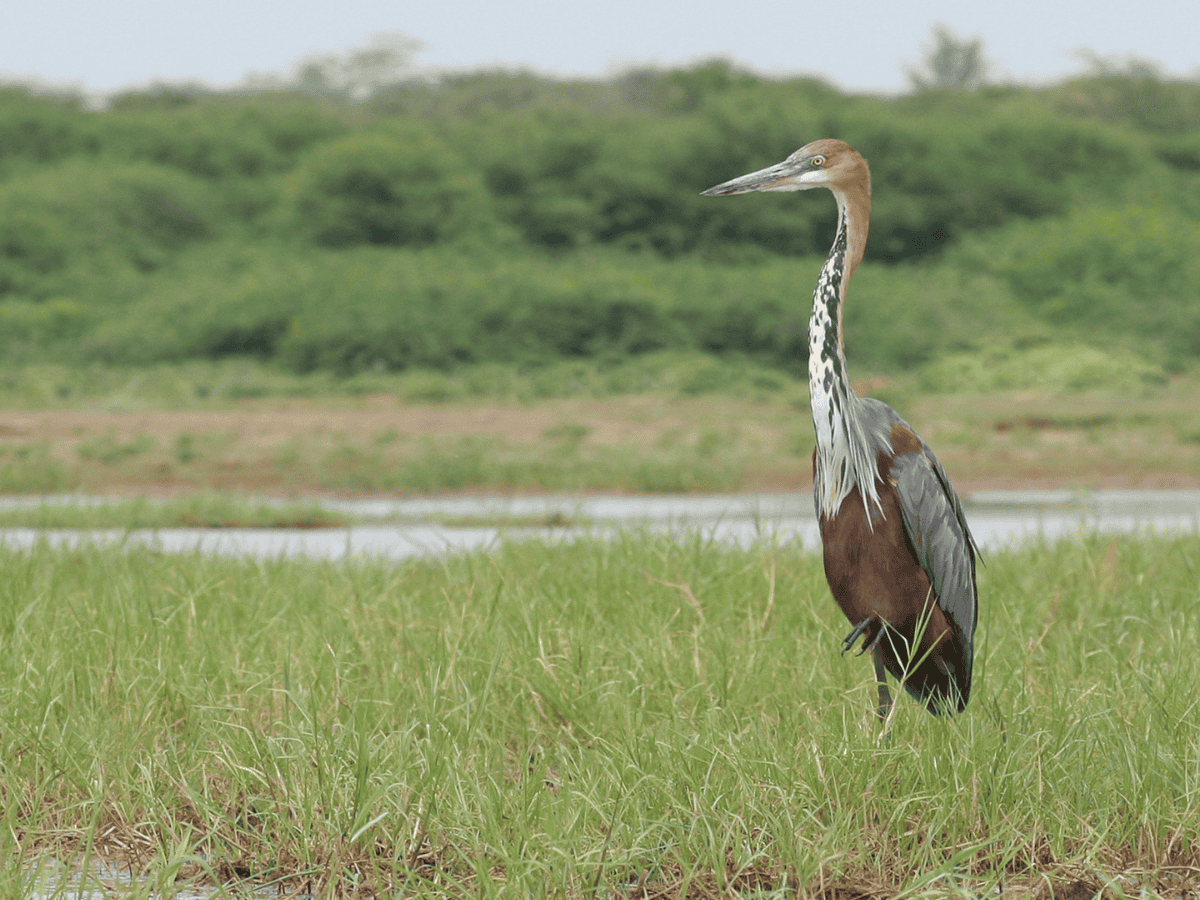
The Goliath Heron is a very large heron with a long neck, long legs, and a heavy, pointed bill. It has a chestnut head and neck, grey wings, and a pale face with a dark stripe. Its size alone makes it unmistakable. In flight, it appears slow and powerful with deep wingbeats. Males and females are similar in appearance. It can be confused with other large herons, but its size and rich colouring clearly distinguish it.
Behaviour
The Goliath Heron feeds mainly on large fish, hunting by standing still in shallow water before striking with speed and precision. It is usually solitary and highly territorial, often occupying the same feeding area. It moves slowly and deliberately, conserving energy between hunting attempts. Travellers are most likely to observe it standing quietly at the water’s edge or making sudden, powerful strikes at prey.
Diet
The Goliath Heron feeds primarily on large fish, but may also take amphibians and other aquatic animals. It hunts by waiting patiently before using its strong bill to spear or grasp prey. Feeding usually takes place in deeper water than that used by smaller herons. Increased fish activity during warmer months supports more frequent feeding. Its diet reflects its size and specialised hunting ability.
Habitat
The Goliath Heron prefers large rivers, lakes, estuaries, and wetlands with deep or slow-moving water. It is most often found along shorelines or standing in shallow water near deeper channels. This habitat supports its preference for larger prey. Travellers are most likely to encounter it along major water systems with open visibility and stable conditions.
Conservation Status
The Goliath Heron is considered stable across its range, although it depends on healthy aquatic ecosystems for survival. Habitat disturbance, water pollution, and changes in water levels can affect local populations. Protected areas such as Chobe National Park and Kruger National Park help maintain suitable conditions. Conservation of wetlands and river systems supports the continued presence of this species.
Interesting Facts
The Goliath Heron is the largest heron in the world and can catch surprisingly large fish. It uses a powerful strike to capture prey, sometimes taking several minutes to handle and swallow it. Unlike many herons, it often hunts alone. Its slow, deliberate movements make it a striking presence along water edges.
Folklore
Large waterbirds are often associated with strength and patience in African folklore. The Goliath Heron’s size and calm hunting style may symbolise power combined with restraint. Its ability to wait for the right moment reflects wisdom and timing. In some interpretations, birds that dominate water edges represent balance between strength and stillness within the natural world.
Best Places To See
The Goliath Heron is most reliably found along large rivers, lakes, and wetlands where deep water supports larger fish prey. Chobe National Park offers some of the most consistent sightings, particularly along riverbanks where birds hunt in open view. Kruger National Park provides a strong complementary option, especially along major rivers and large water bodies with stable conditions. These locations are reliable because abundant fish populations and accessible shorelines allow the species to hunt visibly, often remaining in the same area for extended periods.