
Gorgeous Bushshrike | A Complete Birding Guide
Learn to identify Gorgeous Bushshrike and where to find itOverview
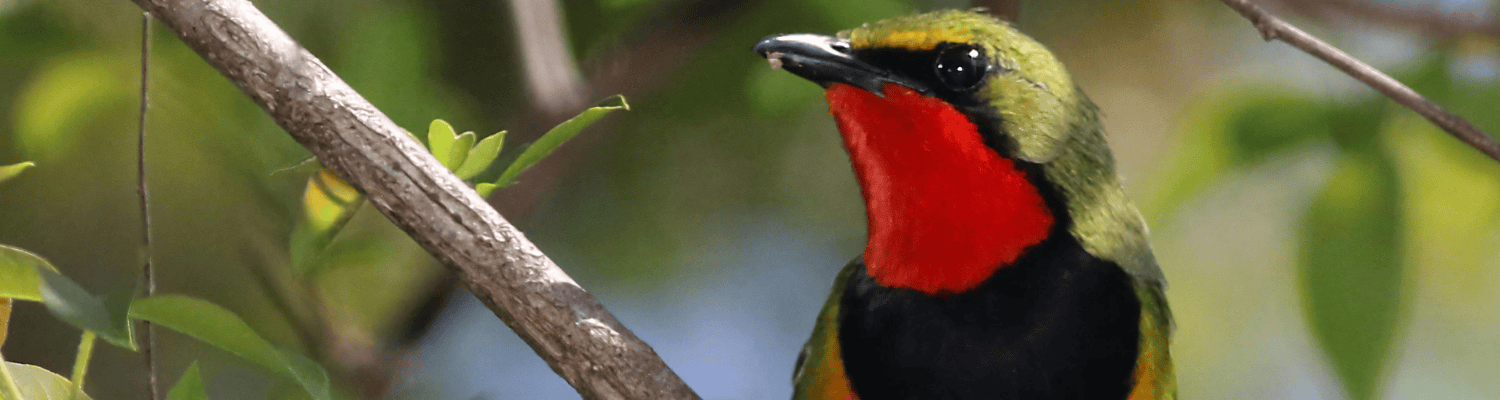
The Gorgeous Bushshrike lives up to its name with bold green, yellow, black, and red plumage that stands out in dense vegetation. It is found in woodland and forest edges across parts of Southern Africa. Usually heard before seen, it produces rich, whistling duets with its mate. Its striking colours and elusive behaviour make it a prized sighting for birders exploring thicker habitats.








Gallery
Summary
Best Places To See
Gorgeous Bushshrike is most reliably found in dense coastal forest and woodland where thick vegetation supports its secretive behaviour. iSimangaliso Wetland Park offers some of the most consistent sightings, particularly in sand forest and forest edge habitats where bird diversity is high. Mkhuze Game Reserve provides a strong complementary option with similar vegetation and accessible birding areas. These locations are reliable because they combine suitable habitat with established birding routes, increasing the chances of detecting the species by call.
Best Time Of Year To See
Gorgeous Bushshrike is most consistently seen during warmer months when birds are more vocal and active, especially during breeding season. Increased calling makes them easier to locate in dense vegetation. During wetter periods, food availability improves, encouraging more movement. In cooler or drier months, they can become quieter and harder to detect. While thick vegetation can make visibility challenging, the higher activity levels in summer generally provide the best overall chances of a sighting.
Identification
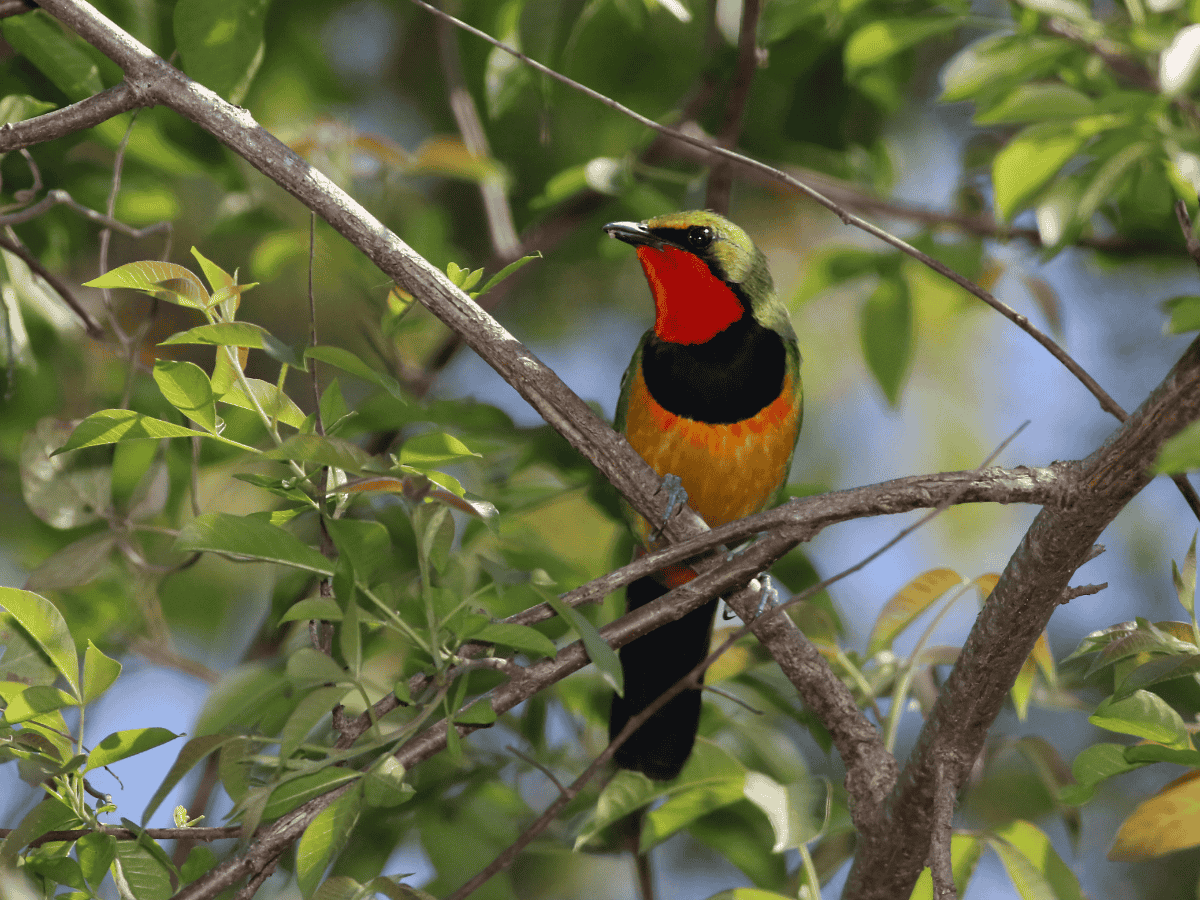
Gorgeous Bushshrike is a medium-sized bird with bold, contrasting colours including bright green upperparts, yellow underparts, a black face, and red throat. Its compact shape and strong bill are typical of bushshrikes. Males and females are similar, though males may appear slightly brighter. It is often identified by its rich, whistling calls before being seen. It can be confused with other bushshrikes, but its intense colour combination makes it unmistakable once visible.
Behaviour
Gorgeous Bushshrike feeds mainly on insects, which it catches by moving through dense foliage and scanning leaves and branches. It is usually found in pairs and often remains hidden in thick vegetation. The species is highly vocal, producing loud, musical calls, especially during breeding season. It may join mixed-species feeding flocks. Travellers are most likely to hear it first, then briefly see it moving through dense cover.
Diet
Gorgeous Bushshrike feeds primarily on insects and small invertebrates, which it hunts in dense vegetation. It searches leaves, branches, and bark for prey, often moving methodically through the canopy. Feeding is usually done within thick cover, making it difficult to observe. During wetter periods, increased insect activity supports higher feeding rates. Its diet is closely linked to forest and woodland ecosystems.
Habitat
Gorgeous Bushshrike prefers dense woodland, coastal forest, and thick thickets where cover is continuous and food is abundant. It is most often found within the middle layers of vegetation, rarely in open areas. This habitat allows it to remain concealed while foraging. Travellers are most likely to encounter it in forest edges, dense bush, or well-vegetated woodland areas.
Conservation Status
Gorgeous Bushshrike is generally considered stable, although local populations depend on the preservation of suitable woodland and forest habitat. Habitat loss and degradation can impact numbers in certain areas. Protected areas such as iSimangaliso and Mkhuze help maintain stable populations. Conservation of forest ecosystems and responsible tourism play an important role in supporting this species.
Interesting Facts
Gorgeous Bushshrike is often considered one of the most colourful birds in its habitat, with a striking combination of green, yellow, black, and red. It is usually heard before it is seen, thanks to its loud and musical calls. Despite its bold colours, it can remain surprisingly well hidden in dense vegetation. Its name reflects both its appearance and the excitement it creates among birders when spotted.
Folklore
Brightly coloured birds like the Gorgeous Bushshrike are often associated with vitality and presence in many African cultures. Its bold colours and strong call can be seen as symbols of energy and expression within the forest. Because it is often hidden yet vocal, it may also represent unseen presence or hidden beauty. Its appearance reinforces the idea that some of the most striking elements of nature are not always immediately visible.