
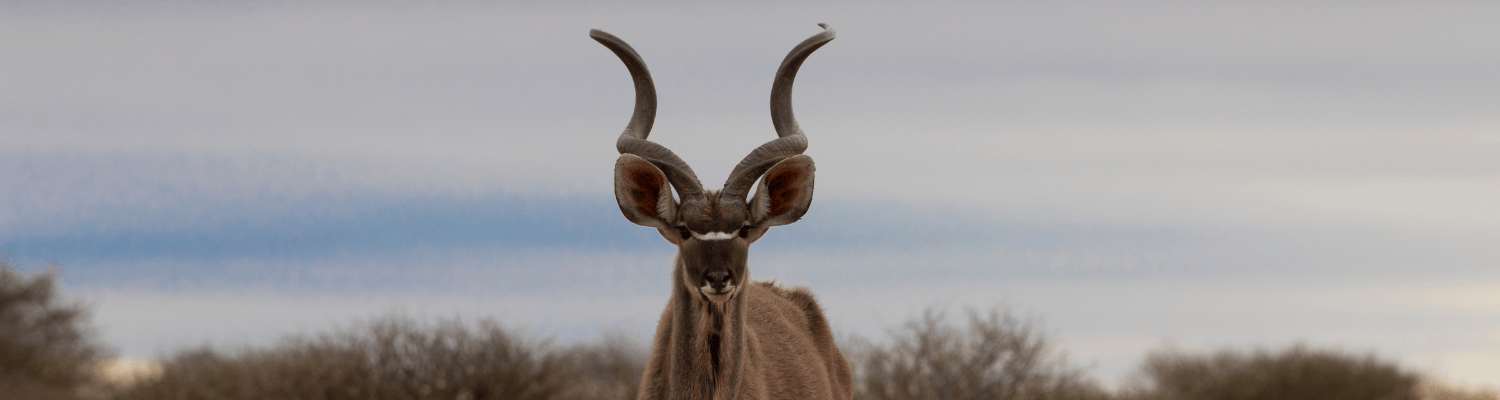
Greater Kudu | A Complete Safari Guide
Discover greater kudu behaviour and where to spot them on safariOverview
The greater kudu is a large and elegant antelope, known for its tall frame, pale stripes, and the long spiral horns of the males. It is found across eastern and southern Africa, mainly in woodlands and bush where it blends easily into its surroundings. Kudus are often shy and move quietly, making sightings feel special and rewarding. For travellers, they are one of the most striking antelope species to encounter. Their beauty and ability to disappear into thick bush make them a memorable part of the safari experience.









Gallery
Summary
Best Places To See
Greater kudu are most reliably seen in woodland and bushveld habitats where cover is dense but visibility remains manageable, with Kruger National Park and adjacent reserves such as Sabi Sands Game Reserve offering consistently strong sightings due to healthy populations and experienced guiding. In Namibia, Etosha National Park provides excellent opportunities around waterholes, where kudu emerge from surrounding bush, especially in the dry season. In South Africa’s Eastern Cape Safari Region, Addo Elephant National Park and private reserves such as Kwandwe Private Game Reserve deliver regular sightings in thicket and open valley systems where kudu move predictably between feeding and watering areas.
Best Time Of Year To See
The best time to see greater kudu is during the dry season, when thinning vegetation makes this normally well-camouflaged species easier to spot in woodlands and bush. As water and fresh browse become more limited, kudu move more predictably between feeding areas and water sources, increasing sighting consistency. They are most active in the early morning and late afternoon, often emerging from thicker cover during cooler hours. In the wet season, dense vegetation and abundant food allow them to remain hidden and spread out, making sightings less reliable, although conditions are greener and quieter with fewer vehicles.
Identification
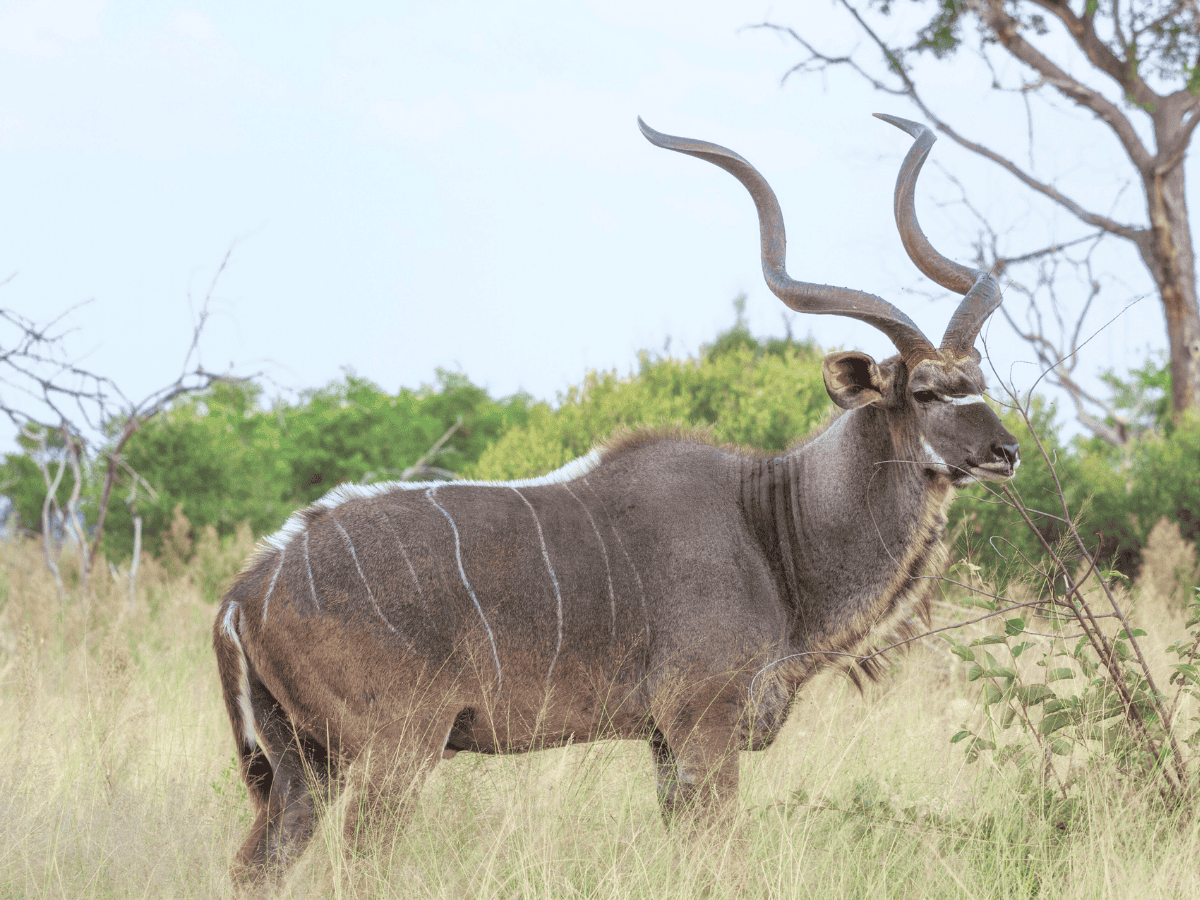
Greater Kudus are large antelope with long legs and distinctive white vertical stripes along their bodies. Males have long, spiral horns, while females do not. Their coats are grey-brown, helping them blend into woodland. Calves are smaller with faint markings. They may be confused with nyala, but kudu are larger and have more pronounced stripes. Their alert posture and habit of standing still in bushy areas make them harder to spot.
Behaviour
Greater kudu are browsers that feed on leaves and shrubs. They are usually found in small groups or alone and are known for their cautious nature. They are most active in early morning and late afternoon. On safari, they are often seen moving quietly through woodland or feeding.
Diet
Greater kudu are browsers that feed on leaves, shoots, and fruits from trees and shrubs. They are selective feeders and often choose nutrient-rich plants. They use their long necks to reach higher vegetation and their lips to pick leaves carefully. Feeding usually occurs in the early morning and late afternoon. During the dry season, they rely more on evergreen plants and pods. They can survive with limited water by getting moisture from their food. Their browsing helps shape vegetation and maintain balance in wooded habitats.
Habitat
Greater kudu are typically found in woodland, bushveld, and areas with dense shrubs and trees. Their habitat provides both food and cover, allowing them to remain hidden. They prefer areas with varied terrain, including hills and valleys. Water availability influences their distribution, but they can survive in relatively dry environments. Travellers most often see kudu in thick bush or along woodland edges, especially in the early morning or late afternoon when they emerge to feed.
Conservation Status
Greater kudu are listed as least concern, with stable populations in many regions. Their main threats include habitat loss and hunting pressure in areas outside protected zones. They rely on woodland and bush habitats, which are increasingly affected by human activity. However, strong populations exist in national parks and private reserves. Conservation efforts focus on habitat protection and sustainable management. Safari tourism helps support these areas, ensuring kudu remain a common and admired species in African bushveld environments.
Interesting Facts
Greater kudu are among the most striking antelope, known for their long spiral horns and elegant grey coats with white stripes. They are shy and often rely on camouflage to avoid predators. Kudus are excellent jumpers and can clear high obstacles with ease. They browse on leaves and shoots rather than grazing, allowing them to thrive in woodland habitats. Their quiet, elusive nature makes sightings feel particularly rewarding.
Folklore
Greater kudu are often associated with elegance, spirituality, and alertness. Their spiral horns are sometimes seen as symbols of growth and connection between the physical and spiritual world. In some African cultures, kudu represent awareness and sensitivity to surroundings. Their cautious behaviour reinforces respect for attentiveness and quiet movement within the natural environment.