
Hippo | A Complete Safari Guide
Discover hippo behaviour, habitats, and where to see them on safariOverview
The hippo is a large, semi-aquatic animal known for its barrel-shaped body, wide mouth, and time spent submerged in water. It is commonly found in rivers, lakes, and wetlands across sub-Saharan Africa, where it gathers in groups during the day and grazes on land at night. Despite its calm appearance in the water, it is one of the most powerful and unpredictable animals in Africa. For travellers, hippos offer fascinating sightings and sounds, especially at dusk, and play an important role in shaping river ecosystems.









Gallery
Summary
Best Places To See
Hippos are most reliably seen in areas with permanent rivers and high water availability, with Chobe National Park in the Chobe Region offering consistently strong sightings along the Chobe River where large pods gather year-round. In Botswana’s Okavango Delta, Moremi Game Reserve provides excellent viewing in channels and lagoons, often from both vehicles and boats. South Africa’s Kruger National Park delivers dependable sightings along major rivers like the Sabie and Olifants, while Zambia-style river systems are mirrored in Mana Pools National Park, where hippos are concentrated in the Zambezi. In East Africa, the Mara River in the Masai Mara National Reserve supports dense populations, especially in well-known crossing areas.
Best Time Of Year To See
The best time to see hippos is during the dry season, when shrinking rivers and waterholes concentrate them into smaller areas, making sightings more consistent and often more dramatic. Lower water levels expose more of their bodies during the day, when they rest in groups to stay cool. At night, they leave the water to graze, with activity peaking in the cooler hours. In the wet season, rising water levels allow hippos to spread out across floodplains and channels, making them slightly harder to locate, although landscapes are greener and less crowded with visitors.
Identification
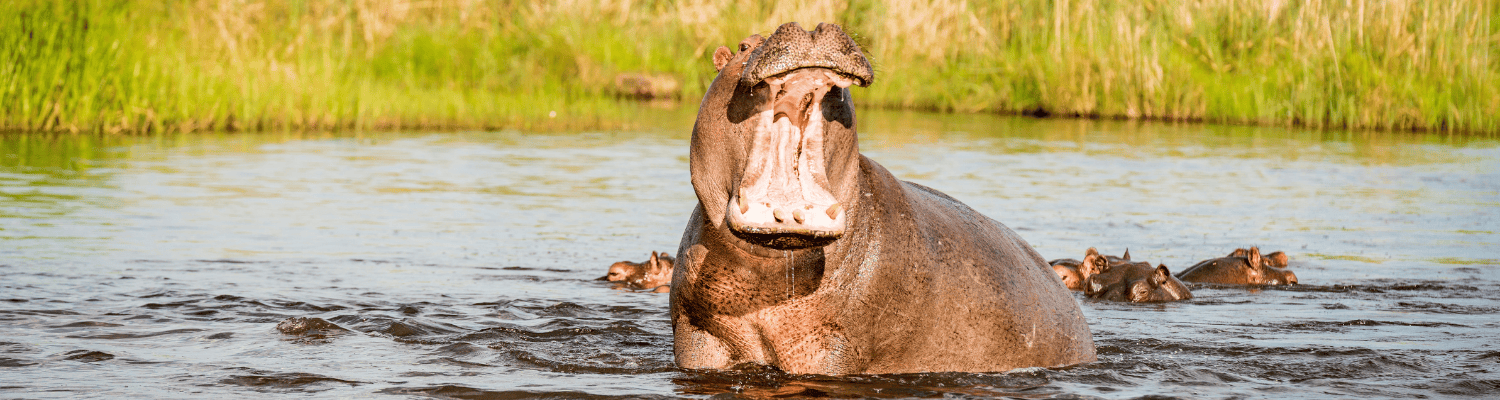
Hippos are large, barrel-shaped animals with thick grey skin and short legs. They have massive heads with wide mouths and prominent tusks that are visible when they yawn. Most of their body is usually submerged in water, with only the eyes, ears, and nostrils visible. Males are larger than females and more aggressive, especially in water. Calves are smaller and often stay close to their mothers. They can be confused with rocks when partially submerged, but their movement and occasional grunts give them away. Their size and aquatic lifestyle make them easy to recognise.
Behaviour
Hippos spend most of the day resting in water to keep cool, emerging at night to graze on grass. They are social animals that live in groups called pods, usually led by a dominant male who controls access to the water territory. They are highly territorial in water and can be aggressive toward intruders. On safari, travellers often see them submerged with only eyes and nostrils visible, yawning widely, or interacting loudly within the group.
Diet
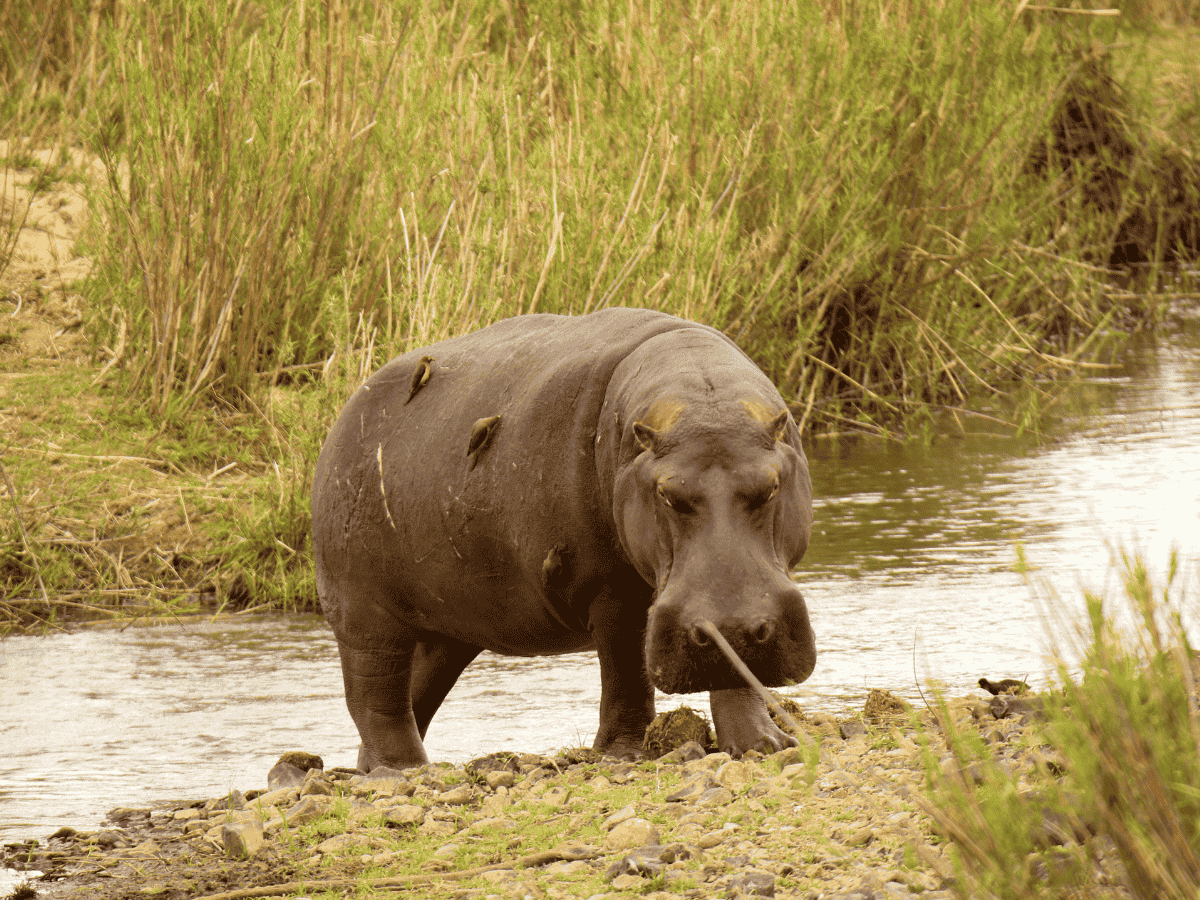
Hippos are grazers that feed mainly on short grasses along riverbanks and floodplains. They leave the water at night to feed and can travel several kilometres in search of good grazing areas. Using their broad lips, they crop grass close to the ground. They spend several hours feeding before returning to water at sunrise. In the dry season, grazing areas may shrink, forcing them to travel further. Despite their size, they eat relatively simple food. Their nightly movements create clear paths and impact grass growth patterns.
Habitat
Hippos are closely tied to water and are found in rivers, lakes, and large pools with nearby grasslands. During the day, they remain in the water to stay cool, emerging at night to graze on land. Their habitat depends on permanent water sources and access to grazing areas. In dry seasons, they concentrate in shrinking water bodies, making them easier to find. Travellers most often see hippos in rivers and dams, where they rest in groups during the day and occasionally surface or move along the banks.
Conservation Status
Hippos are currently listed as vulnerable, with populations declining in parts of Africa. Their main threats include habitat loss along rivers and lakes, as well as conflict with people when they damage crops or come into contact with communities. Illegal hunting for meat and ivory from their teeth also contributes to population pressure. Despite this, healthy populations remain in many protected areas. National parks and reserves provide safe habitats, and conservation efforts focus on protecting waterways. Safari tourism helps support these areas financially, encouraging the long-term protection of hippos and their habitats.
Interesting Facts
Hippos spend most of their day submerged in water to keep cool, even though they cannot swim—they move by walking or bouncing along riverbeds. At night, they leave the water to graze, sometimes traveling several kilometres. Despite their bulky appearance, they can run surprisingly fast on land. Hippos have one of the strongest bites in the animal kingdom and are considered one of Africa’s most dangerous animals due to their territorial nature.
Folklore
Hippos hold a complex place in African folklore, often representing both creation and danger. In some riverine communities, they are linked to water spirits and are believed to guard rivers and lakes. Their ability to move between land and water has made them symbols of duality and balance. While respected for their strength, they are also feared due to their aggression. This dual perception reflects the broader understanding of nature as both life-giving and potentially dangerous.