
Honey Badger | A Complete Safari Guide
Discover honey badger behaviour and why they are rare to see on safariOverview
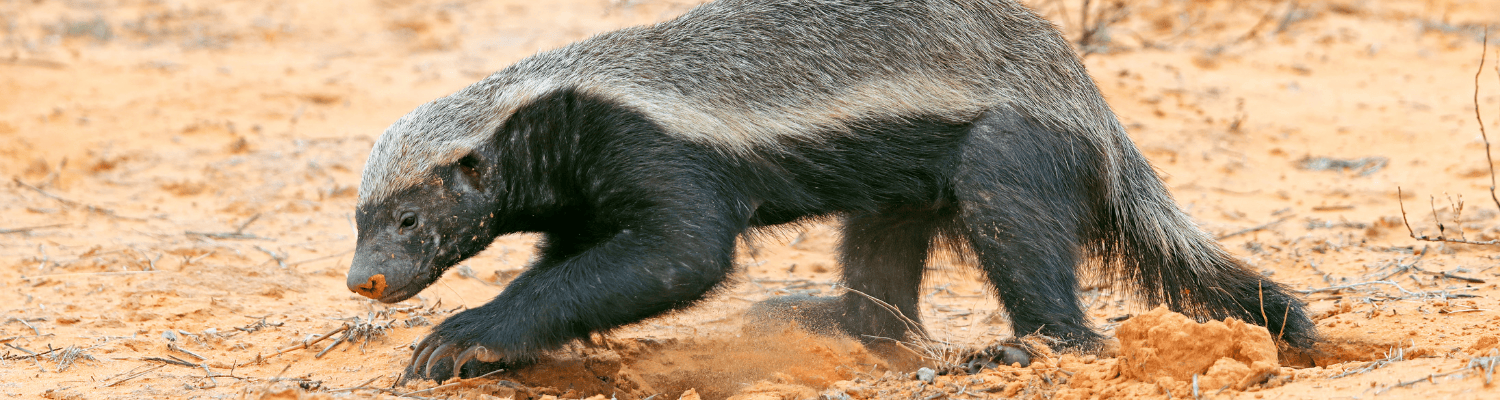
The honey badger is a small but fearless predator, known for its black body, grey back, and tough, loose skin. It is found across much of sub-Saharan Africa in a variety of habitats, from savannas to woodlands. Honey badgers are solitary and often active at night, which makes sightings rare. They are famous for their bold behaviour and willingness to take on much larger animals. For travellers, seeing one is a memorable highlight, adding a sense of unpredictability and excitement to the safari experience.










Gallery
Summary
Best Time Of Year To See
The best time to see honey badgers is during the dry season, when reduced vegetation improves visibility and they move more widely in search of food. They are active both during the day and at night, depending on conditions. In the wet season, thicker vegetation makes sightings less consistent, although they remain active.
Best Places To See
Honey badgers are most reliably seen in arid and semi-arid environments where open terrain and low vegetation improve visibility, with Kgalagadi Transfrontier National Park standing out as a flagship destination due to regular sightings, including during daylight hours along dry riverbeds. In South Africa, Tswalu Kalahari offers exceptional opportunities, supported by expert tracking and low tourism density that increases encounter quality. In Namibia, Etosha National Park provides occasional sightings around quieter areas and waterholes, while in Botswana, parts of the Central Kalahari Game Reserve deliver remote, high-quality encounters where patient tracking can produce rewarding sightings.
Identification
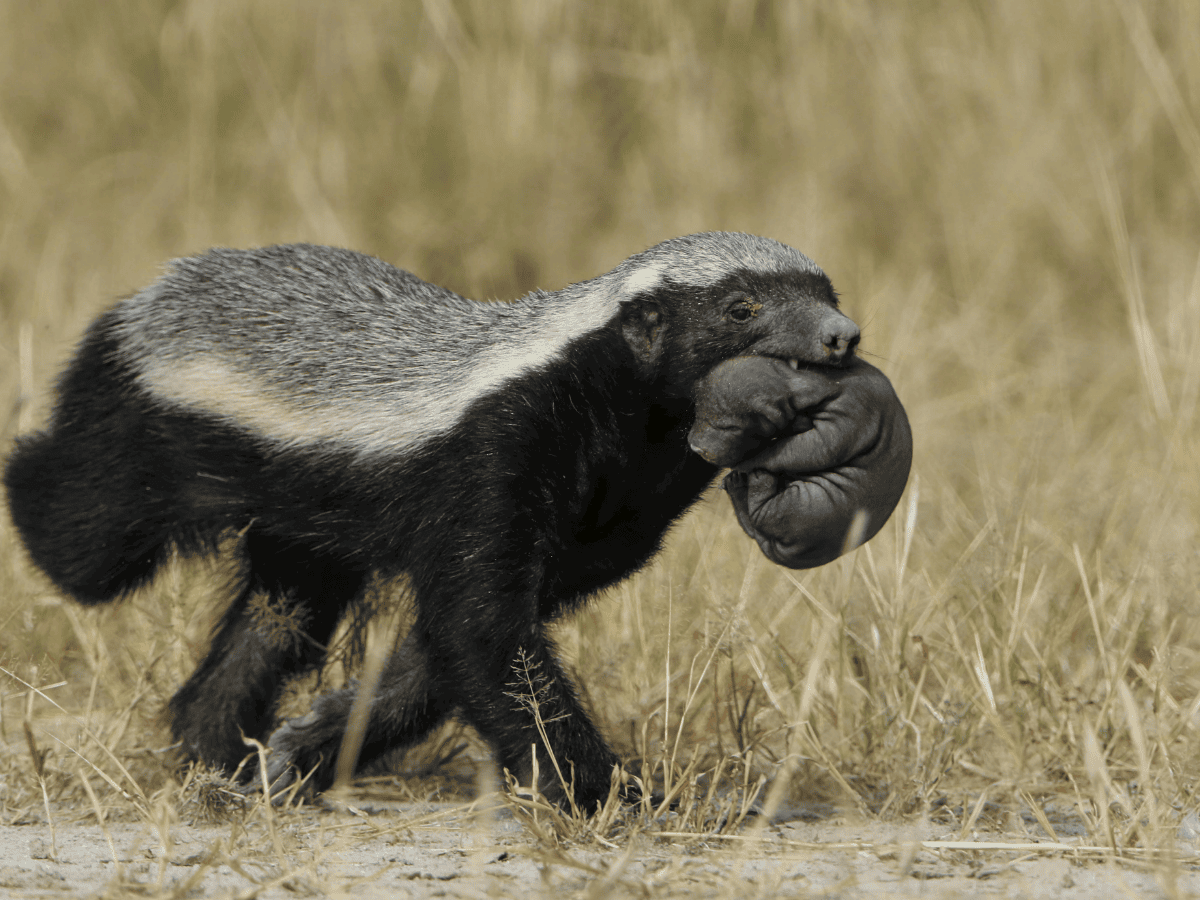
Honey Badgers are small, tough animals with black bodies and a white stripe across the back. They have short legs and strong claws. Both sexes look similar. They may be confused with civets, but their bold colouring sets them apart.
Behaviour
Honey badgers are solitary omnivores that feed on small mammals, insects, reptiles, and honey. They are opportunistic and will dig, climb, or break into nests to find food. They are known for their bold and persistent behaviour, often ignoring threats. They are active both day and night, depending on conditions. They maintain loose territories and only come together to mate. On safari, travellers may see a honey badger moving steadily through bush, digging for food, or investigating burrows, often with a determined and fearless attitude.
Diet
Honey badgers are omnivores with a varied diet that includes small animals, insects, birds, fruit, and honey. They are known for digging into beehives and feeding on honey and larvae. They use their strong claws to dig for food and break into nests. They are fearless and will take on a wide range of prey. Their diet changes depending on availability. They are mostly active at night. Their adaptability allows them to survive in many environments.
Habitat
Honey badgers are highly adaptable and found in savanna, woodland, and semi-arid areas. Their habitat is shaped by food availability rather than specific terrain. They prefer areas where they can dig for prey and find shelter. Water is not essential daily. Travellers rarely see honey badgers due to their solitary and wide-ranging behaviour, but sightings are most likely in quieter reserves where they move freely across different habitats.
Conservation Status
Honey badgers are listed as least concern, with stable populations. Their main threats include habitat loss and persecution. They are highly adaptable and survive in many environments. Strong populations exist in protected areas. Safari tourism supports conservation and helps maintain honey badger populations.
Interesting Facts
Honey badgers are famous for their fearlessness and tough reputation. Despite their small size, they will confront much larger predators if threatened. They have thick skin that helps protect them from bites and stings, allowing them to raid beehives and hunt dangerous prey like snakes. Honey badgers are highly intelligent and resourceful, often using tools or problem-solving skills. Their bold behaviour makes them one of Africa’s most legendary animals.
Folklore
Honey badgers are widely associated with fearlessness, determination, and resilience. Their reputation for standing their ground has made them symbols of courage. In some African stories, they are seen as stubborn and unstoppable, reinforcing themes of persistence. Their presence highlights the value of determination.