
Kgalagadi Transfrontier National Park | A Complete Travel Guide
Plan your safari with wildlife, routes, and insights for Kgalagadi Transfrontier National ParkOverview
Kgalagadi Transfrontier National Park lies in the arid far north of South Africa along the borders with Botswana and Namibia, forming part of a vast protected desert ecosystem. It is best known for its striking red sand dunes, dry riverbeds, and strong predator sightings, particularly lions adapted to desert conditions. The landscape is dominated by open Kalahari plains, sparse vegetation, and seasonal grasslands that attract antelope, raptors, and other wildlife adapted to arid environments. Travellers typically visit for its remote atmosphere, dramatic desert scenery, and the opportunity to experience a quieter style of safari focused on predators and wide open landscapes.





Gallery
Summary
Summary
Why Visit
Kgalagadi Transfrontier National Park offers a remote desert safari experience in the southern Kalahari. Travellers visit for its vast open landscapes, dramatic red sand dunes, and excellent predator sightings. The park spans the border between South Africa and Botswana and protects large wilderness areas where wildlife moves freely across international boundaries. Kgalagadi is distinctive for its dry river valleys and open terrain, which often allow clear wildlife sightings in a setting that feels wild and uncrowded.
Pros & Cons
⊕ Outstanding predator sightings including lions and cheetahs
⊕ Dramatic Kalahari landscapes with red dunes and open plains
⊕ Remote wilderness atmosphere with few visitors
⊕ Excellent opportunities for photography and scenic wildlife viewing
⊕ Good visibility for wildlife in open desert habitats
⊖ Remote location requiring long travel times
⊖ Limited accommodation and visitor facilities
⊖ Extreme summer temperatures
Highlights
Kgalagadi Transfrontier National Park protects a vast section of the southern Kalahari Desert along the South Africa–Botswana border. The park is known for its red sand dunes, sparse vegetation, and dry riverbeds such as the Nossob and Auob. These river valleys attract wildlife and form the main safari routes through the park. Kgalagadi is one of the largest transboundary conservation areas in southern Africa.
› More About Highlights
Wildlife
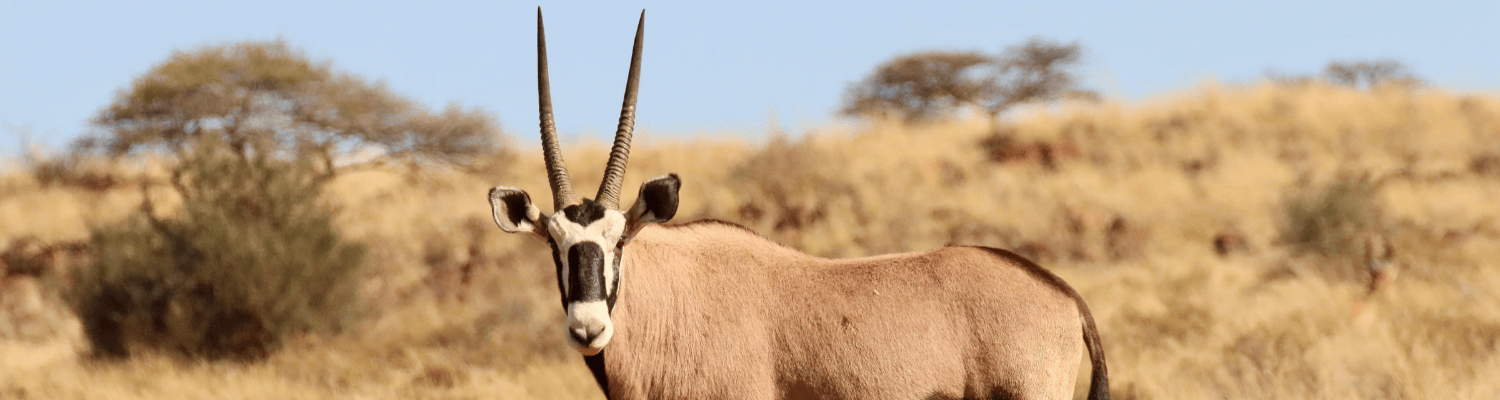
Kgalagadi is famous for its predators, particularly the black-maned Kalahari lions. Cheetahs, leopards, and brown hyenas are also regularly seen. Herbivores include gemsbok, springbok, eland, and blue wildebeest. The open terrain often allows excellent visibility for wildlife sightings across long distances.
› More About Wildlife
Birding
Kgalagadi offers exceptional birding, especially for raptors. Species such as martial eagle, tawny eagle, pygmy falcon, and secretarybird are frequently seen across the open plains. The dry riverbeds and grasslands attract both resident desert species and seasonal migrants during the wetter months.
› More About Birding
Activities
Visitors typically explore the park through self-drive safaris along the river valleys. Guided wilderness trails and 4x4 routes offer deeper exploration into remote areas of the Kalahari. Wildlife photography and birdwatching are popular due to the open landscapes and dramatic scenery.
› More About Activities & Experiences
Best Time To Visit
Wildlife viewing is good throughout the year. The cooler winter months from May to September offer comfortable temperatures and clear conditions for game viewing. Summer from October to April can be extremely hot but may bring occasional rainfall that attracts animals to greener areas and increases bird activity.
› Explore Best Time To Visit
Access & Getting There
Kgalagadi Transfrontier National Park is located in South Africa’s Northern Cape near the Botswana border. The main access points are through the gates at Twee Rivieren and Mata Mata. Most visitors reach the park by road from Upington, which has a regional airport with flights from major South African cities.
› Explore Access & Getting There
Health & Safety
Kgalagadi lies outside South Africa’s main malaria risk areas, making it a malaria-free safari destination. Visitors should remain inside their vehicles except in designated areas. Temperatures can become extremely hot in summer, so adequate water and preparation are important. Standard travel precautions are recommended when travelling through remote desert areas.
› Explore Health & Safety
Highlights
Kgalagadi Transfrontier National Park protects a vast desert ecosystem where South Africa and Botswana meet in the Kalahari. The park is known for its striking red sand dunes, dry riverbeds, and exceptional predator sightings. Wildlife concentrates along the Auob and Nossob river valleys, creating excellent opportunities to observe lions, cheetahs, leopards, and raptors. With long distances between camps and minimal development, the park offers one of the most remote and visually dramatic safari experiences in southern Africa.
Black-Maned Kalahari Lions
The park is famous for its black-maned Kalahari lions, one of the most iconic predator populations in Africa. These powerful lions often move along the dry riverbeds where prey animals gather. Their dark manes and commanding presence against the red dunes of the Kalahari create one of the most recognisable wildlife scenes in southern Africa.
› More About Black-Maned Kalahari Lions
Auob River Valley
The Auob River Valley is one of the main wildlife corridors within the park. Although the river rarely flows, the ancient riverbed supports grasses and camelthorn trees that attract large numbers of herbivores. Predators follow this concentration of prey, making the valley one of the best areas in the park for consistent wildlife sightings.
› More About Auob River Valley
Nossob River Valley
The Nossob River Valley lies deeper within the park and offers a quieter, more remote safari experience. The landscape is characterised by open plains, scattered trees, and a series of waterholes that attract wildlife throughout the year. Visitors travelling along this route often encounter large predators, antelope, and raptors in a stark desert environment.
› More About Nossob River Valley
Red Kalahari Sand Dunes
The red sand dunes of the Kalahari define the park’s landscape. These parallel ridges stretch across the horizon and change colour throughout the day as the light shifts. The dunes create a dramatic setting for wildlife viewing, especially at sunrise and sunset when the deep red sand contrasts with the pale sky and golden grasses.
› More About Red Kalahari Sand Dunes
Remote Desert Wilderness
Kgalagadi Transfrontier National Park offers one of the most remote safari environments in South Africa. Long distances between camps and limited visitor numbers create a strong sense of isolation. Travellers often spend hours exploring the park’s quiet roads without seeing another vehicle, allowing them to experience the vast scale and silence of the Kalahari desert.
› More About Remote Desert Wilderness
Wildlife
Kgalagadi Transfrontier National Park offers a dry, desert-adapted wildlife experience. Gemsbok, springbok, and blue wildebeest are commonly seen across open dunes and riverbeds. Predators are a key feature, with lion, cheetah, and brown hyena regularly encountered in this sparse but highly visible landscape.
Wildlife Highlights
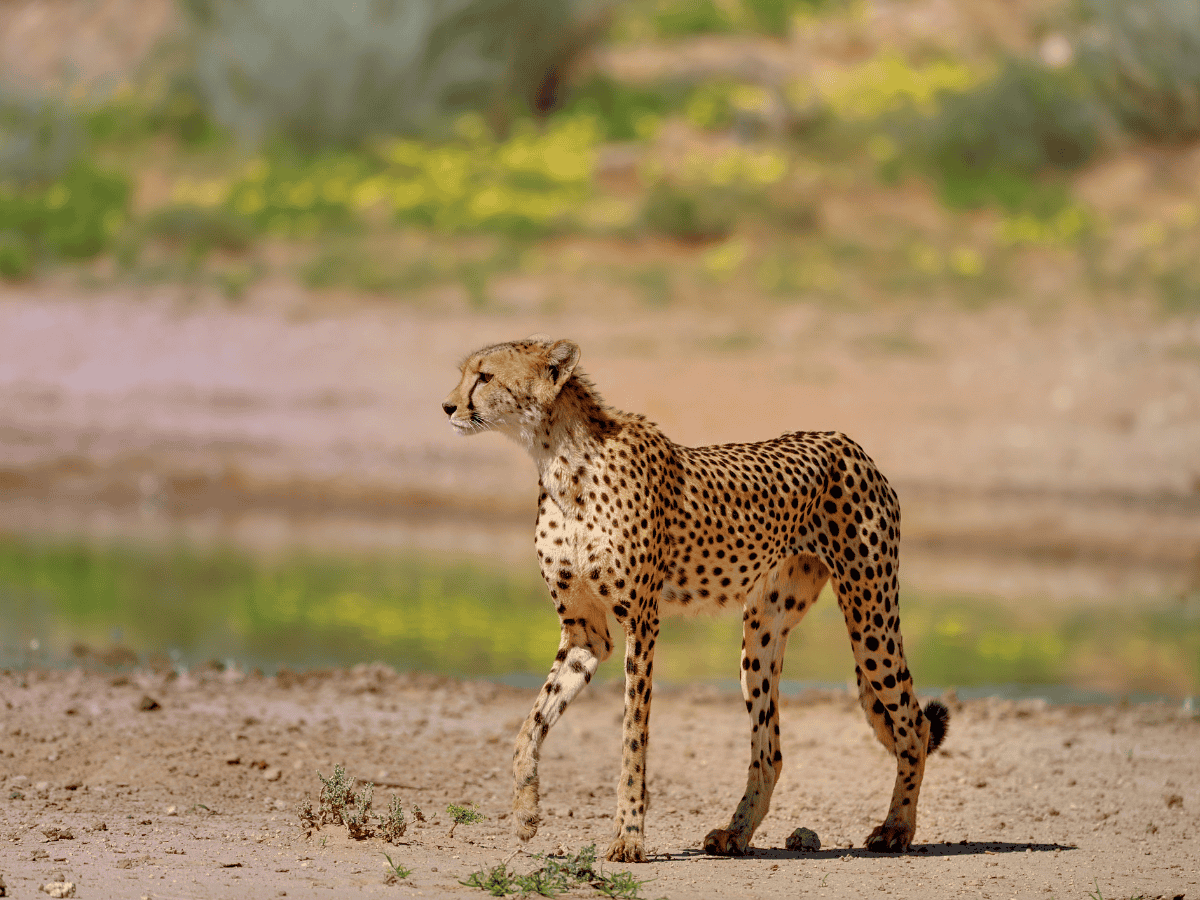
Kgalagadi is one of Africa’s best predator destinations. Black-maned lions dominate the region, often seen along dry riverbeds. Cheetah sightings are frequent in open terrain, while brown hyena are regularly encountered. The park’s open landscapes make wildlife viewing clear and uninterrupted.
When To Go For Wildlife Viewing
Wildlife viewing is strong year-round due to open terrain. The dry winter months from May to September offer the best conditions, with animals concentrating around waterholes. Summer brings migratory herds and increased predator activity, though heat can limit daytime movement.
Wildlife Viewing By Month | ||
Jan | Feb | Mar |
Apr | May | Jun |
July | Aug | Sep |
Oct | Nov | Dec |
= Excellent = Good = Fair = Poor
Iconic Wildlife & Your Chances Of Finding Them
Wildlife Occurrence & Viewing Likelihood
🔵 Abundant here; 🟢 Common here; 🟡 Occassional here; 🔴 Rare here; ⚫ Does not occur
Lion | Leopard | Elephant |
🔵 Abundant here | 🟡 Occasional here | ⚫ Does not occur here |
Buffalo | White Rhino | Black Rhino |
⚫ Does not occur here | ⚫ Does not occur here | ⚫ Does not occur here |
Giraffe | Wild Dog | Cheetah |
🟡 Occasional here | 🔴 Rare here | 🟢 Common here |
Spotted Hyena | Brown Hyena | Hippo |
🟢 Common here | 🟢 Common here | ⚫ Does not occur here |
Zebra | Wildebeest | Meerkat |
🟢 Common here | 🔵 Abundant here | 🟢 Common here |
Other Notable Wildlife
Other notable wildlife found in this country
- Springbok
Gemsbok (Oryx)
Eland
Red Hartebeest
Warthog
Bat-eared Fox
Aardvark
Caracal
Honey Badger
African Civet
Black-backed Jackal
Birds
Kgalagadi Transfrontier National Park offers specialised desert birding across open savannah, red dunes, and dry riverbeds. Bird diversity is lower than wetter regions but highly distinctive. The park is one of southern Africa’s best areas for raptors and arid-adapted species, with excellent visibility and consistent sightings.
Birding Highlights
Highlights include classic Kalahari species such as Sociable Weaver, Pygmy Falcon, and Crimson-breasted Shrike. Raptors are a major draw, including Martial Eagle and Bateleur. Open areas support Northern Black Korhaan and sandgrouse, while dry riverbeds attract birds to limited water sources.
When To Go For Birding
Birding is best from October to March after summer rains when breeding activity increases and birds are more active. Migrants may be present during this period. Winter offers excellent visibility and strong raptor sightings, though overall bird activity is lower.
Birding By Month | ||
Jan | Feb | Mar |
Apr | May | Jun |
July | Aug | Sep |
Oct | Nov | Dec |
= Excellent = Good = Fair = Poor
Iconic Birds & Your Chances Of Finding Them Here
Table showing the top parks and reserves where you will have the best chance at findig the birds you want to see:
🔵 Abundant here; 🟢 Common here; 🟡 Occasional here; 🔴 Rare here; ⚫ Does not occur here
Sociable Weaver | Pygmy Falcon | Crimson-breasted Shrike |
🔵 Abundant here | 🟢 Common here | 🟢 Common here |
Northern Black Korhaan | Namaqua Sandgrouse | Spotted Sandgrouse |
🟢 Common here | 🟢 Common here | 🟢 Common here |
Kori Bustard | Secretarybird | Martial Eagle |
🟢 Common here | 🟢 Common here | 🟢 Common here |
Other Notable Birds
Other notable birds found in this country
- Brown Snake Eagle
Black-chested Snake Eagle
African Hawk-Eagle
Verreaux Eagle Owl
Gabar Goshawk
White-browed Sparrow-Weaver
Arrow-marked Babbler
Lilac-breasted Roller
Square-tailed Nightjar
Fiery-necked Nightjar
Activities & Experiences
Kgalagadi Transfrontier National Park is defined by its remote desert wilderness, exceptional predator sightings, and vast open landscapes. Travellers visit for raw, self-drive safari experiences where wildlife is often seen along dry riverbeds and waterholes. The park offers a slower, more patient style of safari, rewarding those who spend time observing behaviour. With minimal infrastructure and low visitor density, the focus is on solitude, photography, and immersive desert exploration.
Self Driving in Parks
Self-driving is the defining experience in Kgalagadi Transfrontier National Park. Visitors navigate long stretches of sandy riverbeds and remote tracks at their own pace, often spending extended time at sightings. The open terrain makes predators such as lions, cheetahs, and leopards easier to spot, and the lack of crowds allows for uninterrupted viewing.
› More About Activity
Full Day Game Drive
Full day game drives are central to exploring the vastness of the Kgalagadi. Due to the park’s size and distances between key areas, travellers spend extended periods driving between waterholes and river systems. This increases the likelihood of encountering predators and observing natural behaviour in a quiet, undisturbed environment.
› More About Activity
Morning game drives
Morning game drives offer some of the best wildlife viewing conditions in the Kgalagadi. Cooler temperatures encourage predator movement, particularly along the Auob and Nossob riverbeds. The soft morning light also enhances visibility and photography, making it a key time to explore the park.
› More About Activity
Birding
Birding is a standout experience in Kgalagadi, especially for raptors. The open desert environment makes it easier to spot birds such as eagles, falcons, and vultures, often seen perched or soaring overhead. Seasonal migrations also bring additional species, adding to the diversity of birdlife in the park.
› More About Activity
Other Notable Activities & Experiences
Other notable activities & experiences in this country
- Afternoon game drives
Guided Nature Walks
Sleepout Experiences
Conservation Activities
Animal Tracking on Foot
When To Go
Kgalagadi Transfrontier National Park offers a dramatic desert safari experience shaped by extreme seasonal contrasts. Winter brings cool, dry conditions and excellent wildlife visibility, while summer is defined by intense heat, dramatic storms, and unique predator activity. The park remains quiet and remote year-round, with low visitor density compared to other destinations. Expect a raw, self-driven experience where timing affects comfort and behaviour more than overall quality.
Best Time To Visit
The best time to visit Kgalagadi is from May to September during the cooler winter months. Temperatures are mild, vegetation is sparse, and wildlife is easier to spot along dry riverbeds. Predator activity is often more visible during the day, and conditions are far more comfortable for extended drives. This period offers the most reliable and enjoyable overall experience.
Jan | Feb | Mar |
Apr | May | Jun |
July | Aug | Sep |
Oct | Nov | Dec |
= Excellent = Good = Fair = Poor
Understanding The Seasons
Kgalagadi follows an arid desert climate with very limited and unpredictable rainfall. Winter (May to September) is dry and cool, with clear skies and excellent visibility. Summer (October to April) brings extreme heat and occasional thunderstorms, transforming the landscape briefly. Wildlife concentrates along riverbeds year-round, but behaviour shifts with the seasons. Visitor numbers remain low throughout the year due to the park’s remote and self-drive nature.
| Best Time To Visit | May to September |
| High Season | June to August |
| Low Season | November to February |
| Best Weather | May to August |
| Worst Weather | November to January |
| Dry Season | May to September |
| Rainy Season | January to March |
Pros & Cons For Travel Seasons Here
May to September - Dry Season - Winter - ☀️ ⊕ Excellent visibility along dry riverbeds | October to April - Green Season - Summer - 🌧️ ⊕ Dramatic thunderstorms and skies |
❄️ Winter - May to September
May - Shoulder Season
Temperatures begin to cool, and conditions become more comfortable. Wildlife is active along riverbeds, and visibility improves. Visitor numbers are low, and the park feels vast and quiet.
June, July & August - Peak Season
Cool, dry conditions dominate. Wildlife sightings are strong, especially predators using open riverbeds. Mornings and evenings are cold, but daytime conditions are ideal. The park remains uncrowded and remote.
September - Peak Season
Dry conditions continue, and temperatures begin to rise slightly. Wildlife remains concentrated and easy to locate. The landscape is stark, offering excellent visibility and consistent sightings.
🔥 Summer - October to April
October - Peak Season
Temperatures rise quickly, and conditions become hotter. Wildlife is still visible along riverbeds, but activity shifts earlier and later in the day. The landscape remains dry and open.
November - Shoulder Season
Extreme heat dominates, making conditions challenging. Wildlife activity is reduced during the day, and sightings require careful timing. Visitor numbers are very low, and the environment feels harsh and remote.
December (1 to 19) - Green Season
Temperatures remain high, with occasional storms beginning to appear. Wildlife remains present, but conditions can be intense. The landscape may start to show small signs of change after rainfall.
December & January (20 Dec to 5 Jan) - Peak Season (Festive)
Visitor numbers increase slightly, though the park still feels quiet. Conditions are extremely hot, with occasional storms. The atmosphere is dramatic, but travel can be demanding.
January, February & March - Green Season
Thunderstorms bring brief bursts of greenery. The landscape becomes more dynamic, and birdlife improves. Wildlife remains along riverbeds, though conditions remain hot and unpredictable.
April - Shoulder Season
Temperatures begin to ease, and conditions become more comfortable. The landscape retains some greenery, and visibility improves. The park feels balanced, offering a transition into the cooler dry season.
How To Get Here
Kgalagadi Transfrontier National Park is a remote destination best accessed via Upington, with international travellers typically arriving in South Africa through Johannesburg or Cape Town before connecting on a domestic flight. From Upington, the park is reached by road in around two and a half to four hours depending on the entry gate. Self-drive is the most common way to explore the park, with long distances and limited infrastructure making it a more adventurous and independent safari experience.
Main Access Airports
Upington Airport (UTN) – Upington
This is the primary and most practical airport for accessing Kgalagadi Transfrontier National Park. It offers domestic flights from Johannesburg and Cape Town. From here, travellers continue by road to the park, with transfer times typically between two and a half and four hours depending on the chosen entry point.
Getting To Lodges & Camps
Travellers typically reach lodges and camps within Kgalagadi via self-drive from Upington. The park is vast and remote, with long distances between camps and limited services. Roads are mainly sand and gravel, often requiring a high-clearance or 4x4 vehicle. Lodge transfers are uncommon, and there are no regular airstrip transfers within the park, making self-drive the primary method of access and exploration.
Find Flights To Kgalagadi Transfrontier National Park
Travellers typically fly into Johannesburg or Cape Town from international destinations before connecting to Upington via domestic flight. From there, they continue by road to the park. Travellers can use the links below to compare routes, airlines, and pricing based on their preferred departure point and travel schedule.
› www.skyscanner.com
› www.travelstart.co.za
Domestic Airlines & Charter Flights
Domestic airlines operate routes from Johannesburg and Cape Town to Upington, providing the main access into the Kgalagadi region. Due to the park’s remote location, light aircraft networks are not commonly used for lodge access. Most travellers rely on scheduled flights followed by long-distance self-drive journeys into the park.
› Airlink – (Commercial) – Connects Johannesburg and Cape Town with Upington on regular schedules
› FlySafair – (Commercial) – Operates domestic routes between major cities, supporting connections via Johannesburg or Cape Town
› CemAir – (Commercial) – Flies between Johannesburg and regional airports including Upington
Travel Information
Kgalagadi Transfrontier National Park offers a remote and immersive safari experience across vast red dunes and open desert landscapes. Travellers can enjoy self-drive safaris and guided activities in select areas, with simple but comfortable camps and lodges. Wildlife moves freely throughout the park, so awareness is important. With its quiet atmosphere and well-managed routes, Kgalagadi provides a safe and deeply rewarding wilderness experience.
Staying Safe On Safari
Safety on safari in Kgalagadi is based on awareness and simple rules. Always remain in your vehicle unless at designated areas and follow all park regulations. Keep movements calm and avoid disturbing wildlife. Animals are well adapted to the environment, and sightings can be close, so maintaining distance is important. By respecting these guidelines, you can enjoy the experience comfortably and safely.
Staying Safe During Activities
Guided activities, such as wilderness walks in designated zones, are led by trained professionals who prioritise safety. Listen carefully to all briefings and stay close to your guide at all times. Remain aware of your surroundings and follow instructions closely. These activities are designed to offer a deeper connection to the environment while maintaining a structured and safe approach.
Staying Safe At The Lodge
Many camps and lodges in Kgalagadi are unfenced, allowing wildlife to move naturally through the area. Always follow camp guidelines, especially after dark, and remain within designated spaces. Use lighting provided and stay aware of your surroundings when moving around. Facilities are well organised, and with simple awareness, staying in these remote environments is both comfortable and enjoyable.
Malaria Information
Kgalagadi Transfrontier National Park is not located in a malaria-prone area. Travellers do not usually require malaria medication when visiting. It is still recommended to use basic protection against insect bites, such as repellent and suitable clothing in the evenings. With these simple precautions, visitors can enjoy the park with confidence and peace of mind.
LGBTQ + Safety Guidance
Kgalagadi Transfrontier National Park and its lodges are generally welcoming and inclusive for all travellers. The focus is on shared experiences in nature, with a calm and respectful atmosphere. As with travel anywhere, it is helpful to remain aware of broader cultural norms in public areas. Within camps and guided settings, travellers can expect a comfortable and positive environment.