
Kori Bustard | A Complete Birding Guide
Discover how to identify Kori Bustard and where to see itOverview
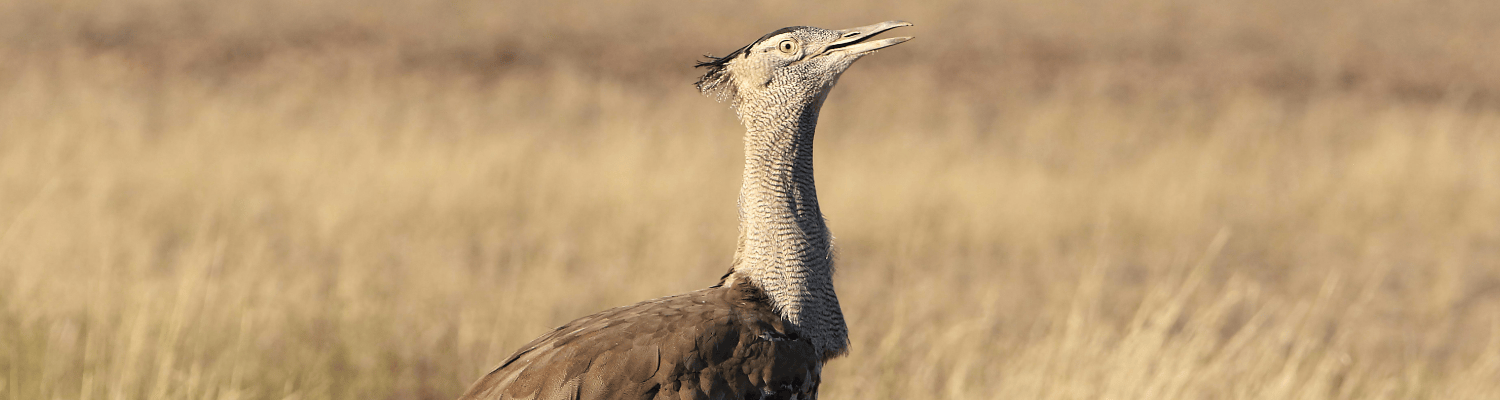
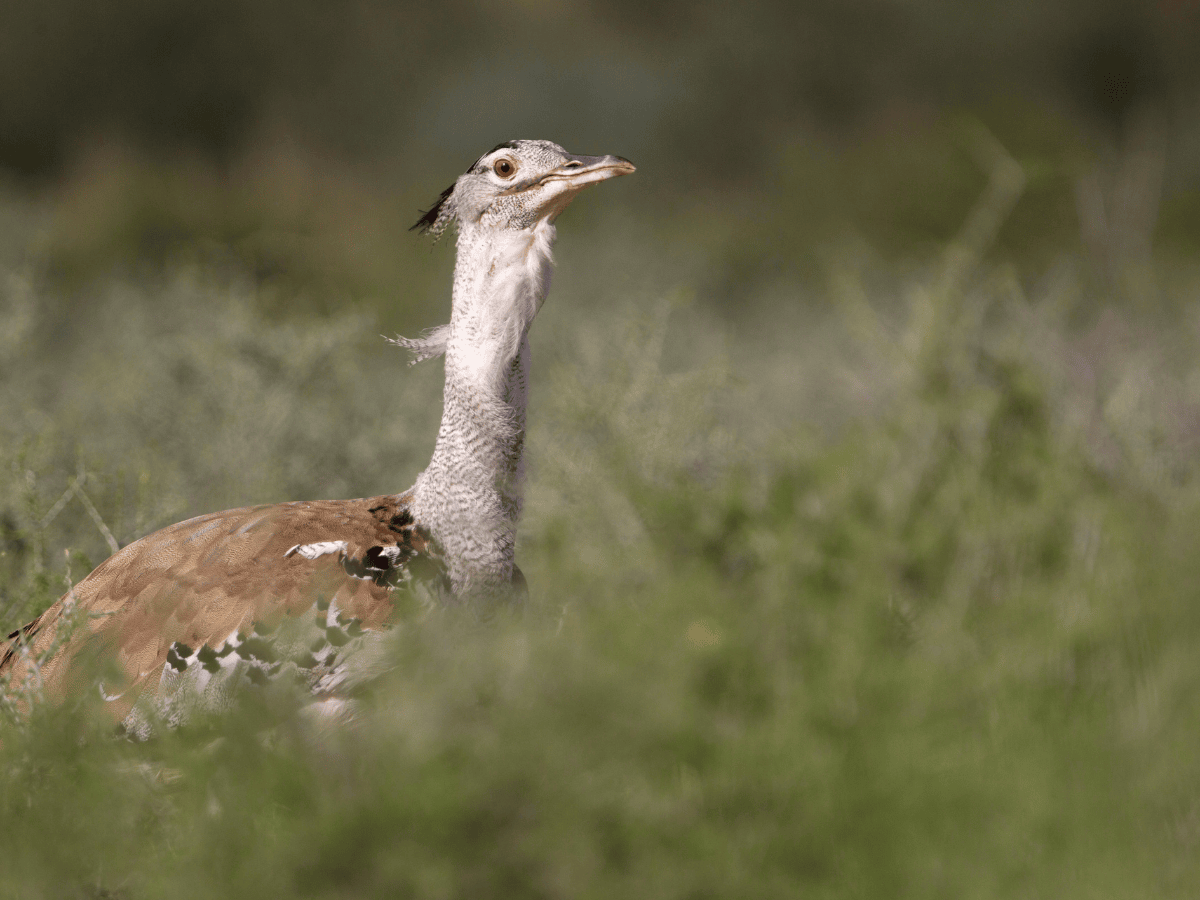
The Kori Bustard is one of the heaviest flying birds in the world, with a large body and patterned brown and grey plumage. It is found in open grasslands and savannas across Africa. Often seen walking slowly, it feeds on insects and small animals. Its size and calm presence make it a standout species on safari.




Gallery
Summary
Best Places To See
Kori Bustards are most reliably found in open grassland and savanna where wide, unobstructed landscapes allow for easy detection. Kruger National Park offers some of the most consistent sightings, particularly in open plains where birds can be seen walking and feeding. Kgalagadi Transfrontier National Park provides a strong complementary option with expansive terrain and excellent visibility. These locations are reliable because low vegetation, stable food availability, and minimal disturbance allow the species to move freely while remaining highly visible to observers.
Best Time Of Year To See
Kori Bustards can be seen throughout the year, but sightings are most consistent during warmer months when feeding activity increases and birds are more active during cooler parts of the day. During this time, insect and small prey availability improves, supporting regular foraging. Breeding season may also bring display behaviour, increasing visibility. In cooler months, activity may be reduced slightly. Early morning and late afternoon are often the most productive periods, when birds are actively feeding and temperatures are manageable.
Identification
Kori Bustards are very large birds with a heavy body, long neck, and relatively small head. Their plumage is finely patterned in brown, grey, and white, providing excellent camouflage. They have strong legs adapted for walking and a slow, deliberate gait. Males are significantly larger than females. In flight, they appear powerful with broad wings. They are unlikely to be confused with other species due to their size and structure.
Behaviour
Kori Bustards feed mainly on insects, small vertebrates, and plant material, foraging slowly while walking through open terrain. They are usually seen alone or in small groups and spend most of their time on the ground. During breeding season, males may perform display behaviour to attract females. Travellers are most likely to observe them walking steadily across plains or pausing to feed.
Diet
Kori Bustards have a varied diet that includes insects, small reptiles, rodents, and plant material such as seeds and berries. They forage by walking and picking prey from the ground. Feeding activity increases during warmer months when insect populations are higher. Their flexible diet allows them to adapt to a range of open habitats.
Habitat
Kori Bustards prefer open grassland, savanna, and semi-arid plains where visibility is high and movement is unrestricted. They are most often found in flat, open areas with sparse vegetation. This habitat supports both feeding and movement. Travellers are most likely to encounter them in wide, open landscapes with minimal cover.
Conservation Status
Kori Bustards are considered near threatened, with populations declining due to habitat loss, disturbance, and collisions with power lines. Their large size and slow reproductive rate make recovery difficult. Protected areas such as Kruger National Park and Kgalagadi Transfrontier National Park help support populations. Conservation efforts focus on habitat protection and reducing human-related threats. Responsible tourism and awareness are important for their survival.
Interesting Facts
Kori Bustards are among the heaviest birds capable of flight, with males weighing significantly more than females. They rarely fly unless disturbed, preferring to walk. Their camouflage makes them difficult to spot despite their size. They often rely on stillness and blending into their surroundings for protection.
Folklore
Large ground birds are often associated with strength and endurance in African folklore. Kori Bustards, with their size and slow movement, may symbolise patience and resilience. Their ability to remain grounded reflects stability and connection to the land. In some interpretations, they represent balance between strength and stillness within natural systems.