
Lappet-faced Vulture | A Complete Birding Guide
Learn to identify Lappet-faced Vulture and where to spot itOverview
The Lappet-faced Vulture is a massive bird with a powerful bill and bare, wrinkled head. It is found in arid and semi-arid regions across Africa. Often dominant at carcasses, it can tear through tough hides. Its size and strength make it one of the most impressive vultures to observe.








Gallery
Summary
Best Places To See
The Lappet-faced Vulture is most reliably found in arid and semi-arid savanna where large mammals and open landscapes support scavenging behaviour. Kgalagadi Transfrontier National Park offers some of the most consistent sightings, particularly in open desert and savanna where visibility is excellent and carcasses are easily located. Etosha National Park provides a strong complementary option with expansive terrain and reliable wildlife concentrations. These locations are effective because low vegetation, wide sightlines, and stable prey availability allow vultures to locate food quickly and remain visible both in flight and on the ground.
Best Time Of Year To See
The Lappet-faced Vulture can be seen throughout the year, but sightings are often most rewarding during dry periods when food sources become more concentrated and easier to locate. During these times, reduced vegetation improves visibility and increases the likelihood of observing feeding behaviour. Warmer months also provide strong thermal currents, allowing birds to soar at height for extended periods. Midday is particularly productive, when vultures are most active in the air and scanning for carcasses across large distances.
Identification
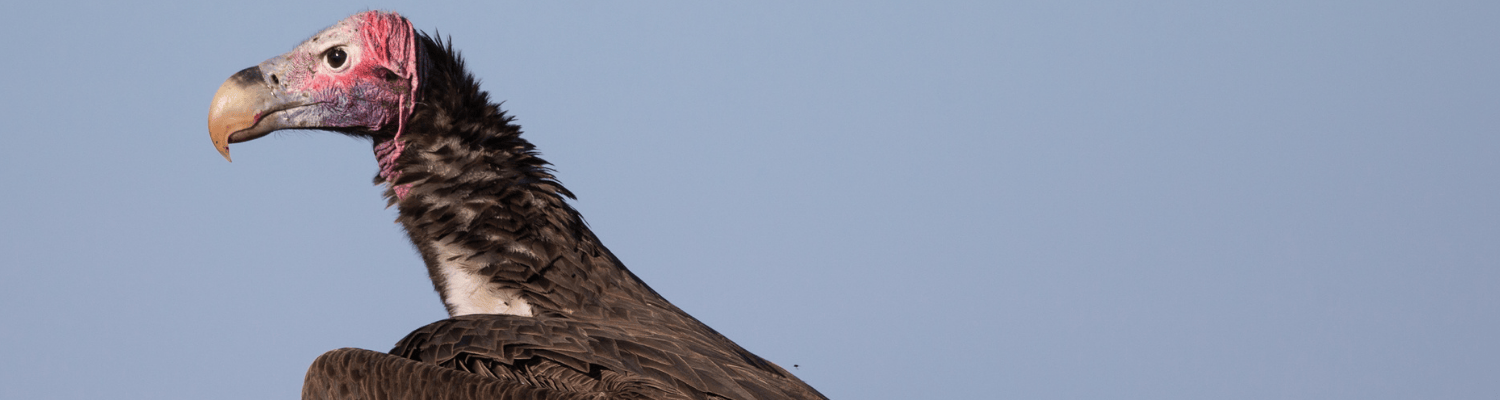
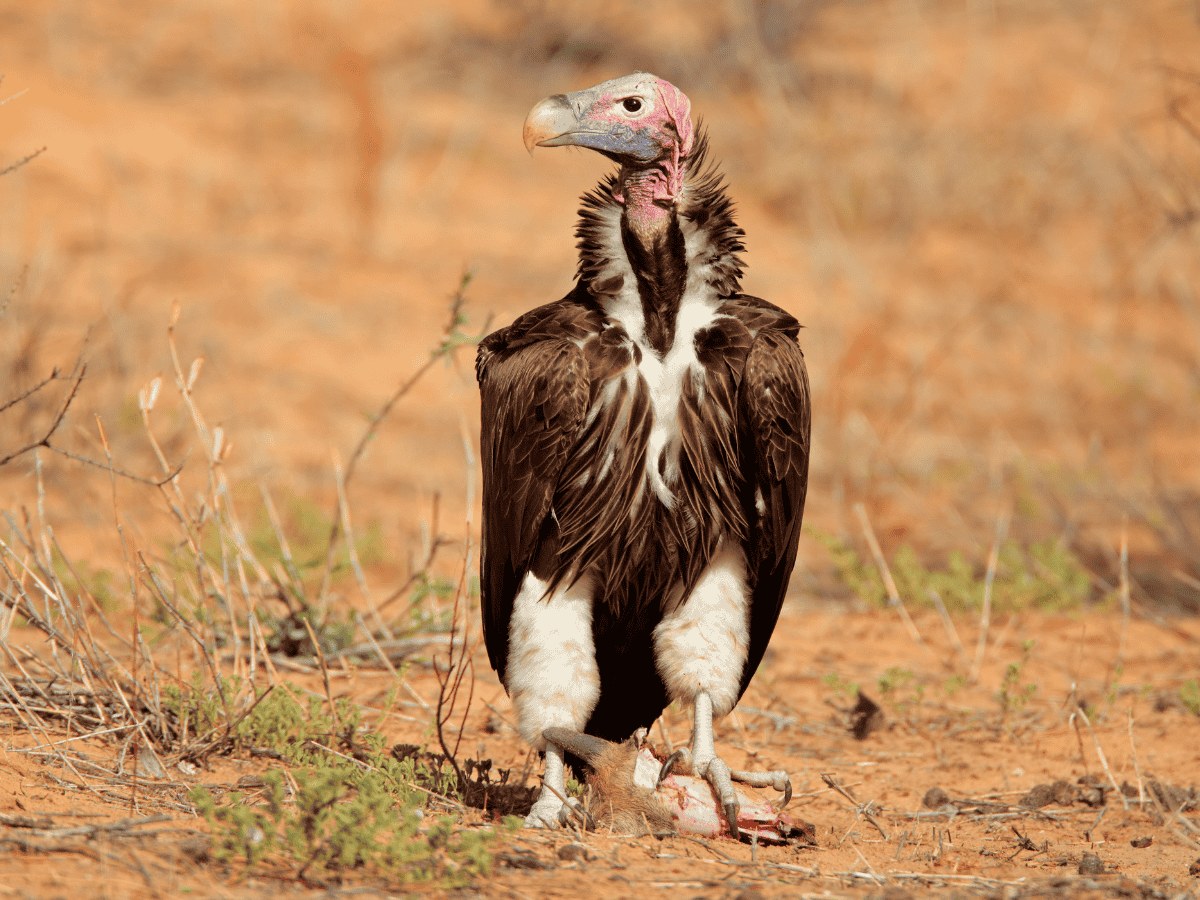
The Lappet-faced Vulture is a very large bird with dark brown plumage, broad wings, and a powerful, heavy bill. Its most distinctive feature is the bare head with loose folds of skin around the face, giving it a rugged appearance. It has a pale eye and a strong, upright posture when on the ground. Males and females are similar, although females are larger. It can be confused with other vultures, but its size, dark colouring, and facial structure clearly distinguish it.
Behaviour
The Lappet-faced Vulture feeds mainly on carrion and is often one of the first vultures to arrive at a carcass due to its strength and ability to open tough hides. It is more solitary than many other vultures and may feed alone or dominate smaller scavengers. It spends much of the day soaring at great heights, scanning for food. Travellers are most likely to observe it either circling overhead or feeding at carcasses in open areas.
Diet
The Lappet-faced Vulture feeds exclusively on carrion, including large carcasses that other scavengers cannot easily access. Its powerful bill allows it to tear through thick skin and muscle, making it a key species in opening carcasses for others. Feeding activity is consistent throughout the year, although dry conditions may concentrate food sources. Its diet plays a crucial role in maintaining ecosystem health by removing dead animals efficiently.
Habitat
The Lappet-faced Vulture prefers arid savanna, semi-desert, and open woodland where visibility is high and large mammals are present. It is most often seen soaring over open landscapes or feeding on the ground at carcasses. This habitat supports its wide-ranging movement and scavenging strategy. Travellers are most likely to encounter it in dry, open environments with minimal vegetation and good sightlines.
Conservation Status
The Lappet-faced Vulture is considered endangered, with populations declining due to poisoning, habitat loss, and human-related threats. Its reliance on large, undisturbed areas makes it particularly vulnerable. Protected areas such as Kgalagadi Transfrontier National Park and Etosha National Park play an important role in supporting remaining populations. Conservation efforts focus on reducing poisoning and protecting critical habitats. Responsible tourism and awareness are essential for supporting this species.
Interesting Facts
The Lappet-faced Vulture has one of the strongest bills among vultures and can open carcasses that other species cannot. It often feeds alone or dominates feeding sites due to its size. It can soar for long periods without flapping its wings. Its presence is often an early indicator of a carcass in the area, even before other vultures arrive.
Folklore
Large scavenging birds are often associated with strength and transformation in African folklore. The Lappet-faced Vulture’s ability to break open carcasses may symbolise power and renewal. Its solitary nature reflects independence and dominance. In some interpretations, vultures represent the cycle of life and death, reinforcing this species’ role in maintaining balance within natural systems.