
Laughing Dove | A Complete Birding Guide
Discover Laughing Dove behaviour and where to see itOverview
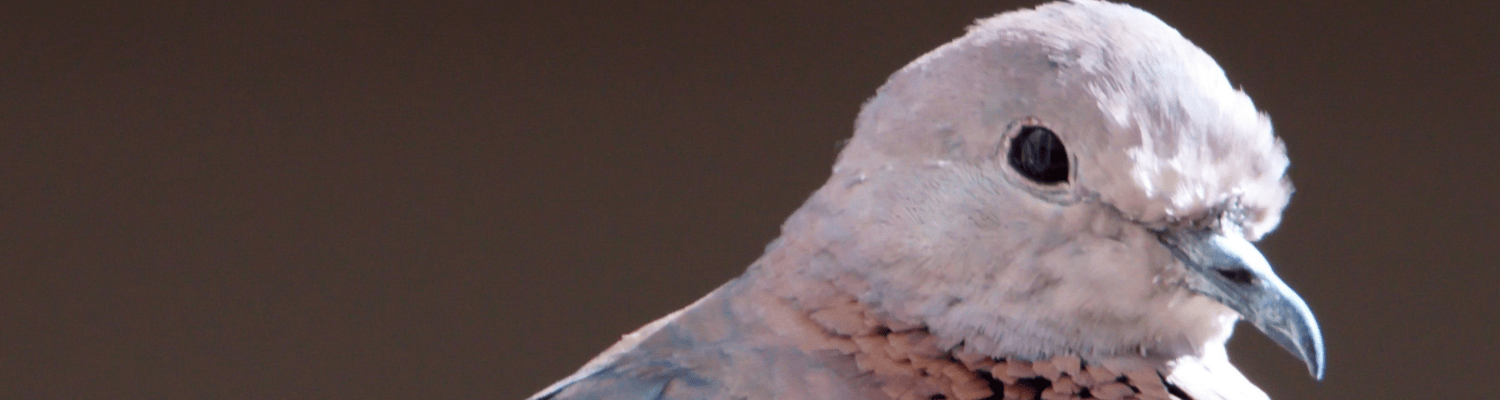
The Laughing Dove is a slender, long-tailed dove with warm brown plumage and a distinctive spotted neck patch. It is widely found across Africa in open woodlands, gardens, and savannas. Its soft, rhythmic “laughing” call is a familiar sound in many safari settings. Easy to spot and often seen in pairs or small groups, it adds a sense of calm and familiarity to both wild and more settled environments.








Gallery
Summary
Best Places To See
Laughing Dove is widespread and easily seen, but the most consistent sightings come in open savanna and woodland areas around camps, roads, and water points. Kruger National Park offers reliable daily encounters due to high density and varied habitat. Chobe National Park provides a strong complementary option, particularly around riverine areas and lodges. These environments are ideal because the species thrives in both wild and semi-developed areas, making sightings frequent and predictable.
Best Time Of Year To See
Laughing Dove can be seen throughout the year, with consistently high visibility across seasons. Sightings are often best during warmer months when birds are more vocal and active, especially during breeding periods. In wetter seasons, increased food availability encourages movement and calling. During drier months, birds remain visible around water sources. There are few seasonal limitations, making it one of the most reliably observed birds at any time of year.
Identification
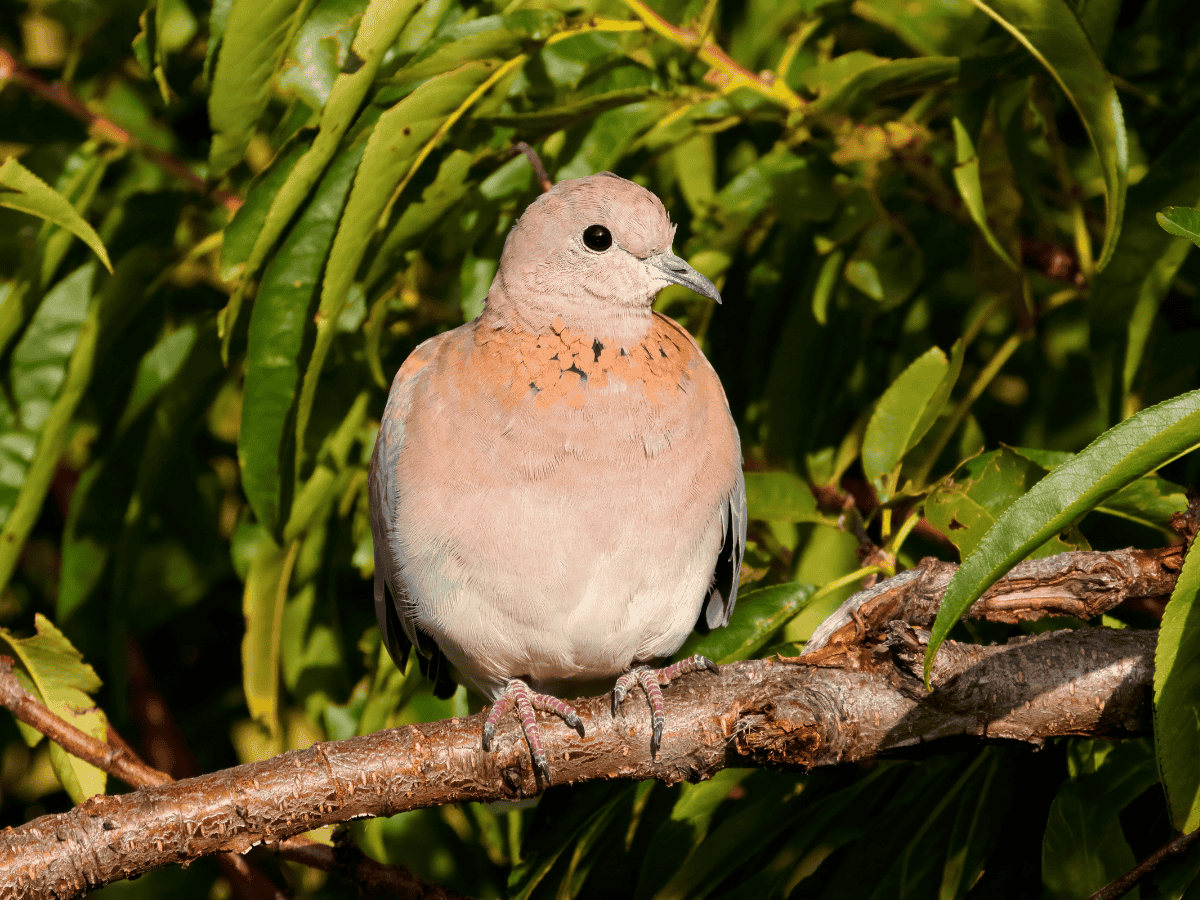
Laughing Dove is a slender dove with warm brown plumage, a long tail, and a distinctive patch of dark spots on the side of its neck. It has a soft, pinkish chest and a gentle overall appearance. Males and females are similar, with no strong differences. Its rhythmic, cooing call is a key identifying feature. It can be confused with other small doves, but the spotted neck and long tail help distinguish it.
Behaviour
Laughing Dove feeds mainly on seeds, foraging on the ground in open areas. It is often seen in pairs or small groups and moves with a relaxed, steady pace. The species is highly vocal, producing its well-known “laughing” call throughout the day. It breeds regularly and adapts well to different environments. Travellers are most likely to see it feeding on the ground, perched in open areas, or moving calmly through camps and roadsides.
Diet
Laughing Dove feeds primarily on seeds, which it collects from the ground in open habitats. It may also take small grains and occasional plant material. Feeding is usually done in open areas where visibility is good. During wetter periods, food becomes more abundant, supporting higher activity levels. Its simple diet and adaptability allow it to thrive in a wide range of environments.
Habitat
Laughing Dove prefers open woodland, savanna, and areas with scattered trees, but it is also common around camps, lodges, and human settlements. It is most often seen on the ground or perched in low trees. Its adaptability allows it to use both natural and modified environments. Travellers are likely to encounter it in almost any open safari setting.
Conservation Status
Laughing Dove is widespread and stable, with no significant threats to its population. Its adaptability to different habitats, including human-modified areas, supports its continued success. Protected areas help maintain natural populations, but the species also thrives outside reserves. It remains one of the most common and resilient doves across Africa.
Interesting Facts
Laughing Dove is named after its soft, rhythmic call, which sounds like gentle laughter echoing through the bush. It is one of the most adaptable doves, often living comfortably alongside humans. Despite its delicate appearance, it is highly resilient and able to thrive in a wide range of conditions. Its calm behaviour and frequent presence make it one of the most familiar birds on safari.
Folklore
Doves are widely seen as symbols of peace and harmony across many African cultures, and the Laughing Dove strongly reflects this association. Its gentle call is often linked to calm and continuity in the natural environment. Because it is commonly found near people, it is sometimes seen as a sign of comfort and familiarity. Its presence reinforces themes of balance and quiet coexistence in both wild and settled landscapes.