
Malachite Kingfisher | A Complete Birding Guide
Understand Malachite Kingfisher identification and where to see itOverview
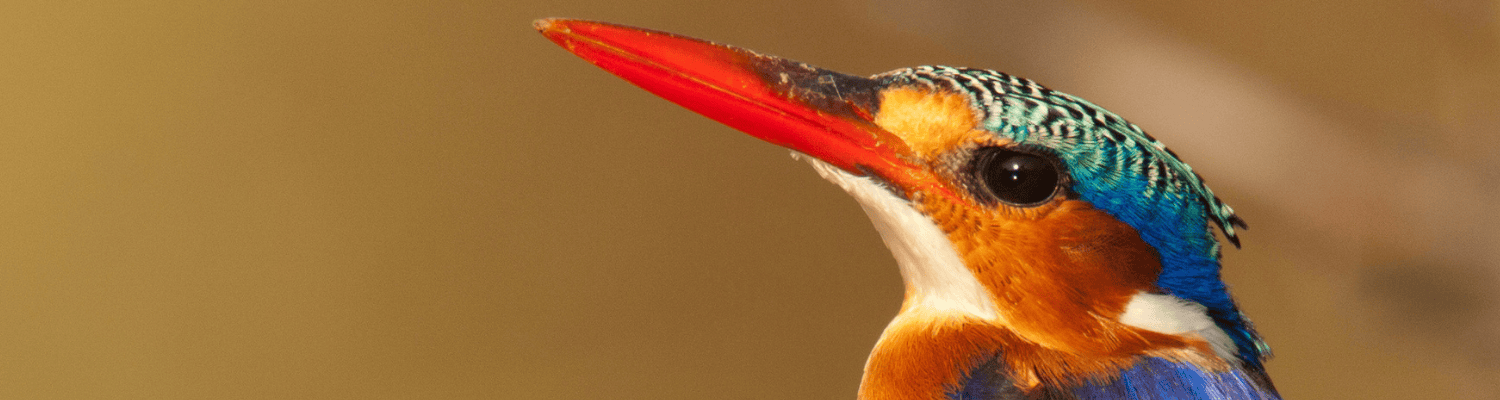
The Malachite Kingfisher is a small, brilliant bird with bright blue upperparts and a vivid orange belly. It is found near rivers, lakes, and wetlands across Africa. Often perched low over water, it dives quickly to catch fish. Its striking colours and quick movements make it a favourite among photographers and birders.








Gallery
Summary
Conservation Status
The Malachite Kingfisher is considered stable and widespread, with no major threats affecting overall populations across its range. Its dependence on healthy freshwater systems means that water quality and habitat condition are important for long-term survival. Protected areas such as Kruger National Park and iSimangaliso Wetland Park help maintain suitable conditions. Conservation of wetlands and responsible tourism practices support the continued presence of this species.
Interesting Facts
The Malachite Kingfisher is one of the smallest and most colourful kingfishers in Africa, often appearing like a flash of blue and orange along water edges. It can dive with remarkable precision despite its small size. After catching prey, it often beats it against a perch before swallowing. Its bright colours make it highly visible, yet its small size and quick movements mean it can easily be missed.
Folklore
Bright water-associated birds are often linked to life, clarity, and renewal in African folklore. The Malachite Kingfisher’s vivid colours and close connection to water may symbolise freshness and vitality. Its precise hunting behaviour reflects focus and patience. In some interpretations, birds near water represent balance and flow, and this species’ presence reinforces its connection to life-giving environments and the rhythm of natural systems.
Best Places To See
The Malachite Kingfisher is most reliably found along calm freshwater systems where clear, shallow water supports feeding activity. Kruger National Park offers some of the most consistent sightings, particularly along rivers and waterholes where birds perch low over the water’s edge. iSimangaliso Wetland Park provides a strong complementary option with extensive wetland systems and dense aquatic vegetation. These locations are reliable because stable water sources and good visibility allow the species to hunt from exposed perches, making sightings both frequent and rewarding.
Best Time Of Year To See
The Malachite Kingfisher can be seen throughout the year, but sightings are most consistent during warmer months when water levels stabilise and prey such as small fish and aquatic insects are abundant. During this period, birds are more active and feed frequently, increasing visibility. Breeding season may also bring more territorial behaviour, making individuals easier to locate. In cooler months, activity may decrease slightly, although the species remains present. Calm, clear mornings during summer provide the best conditions for observing its hunting behaviour.
Identification
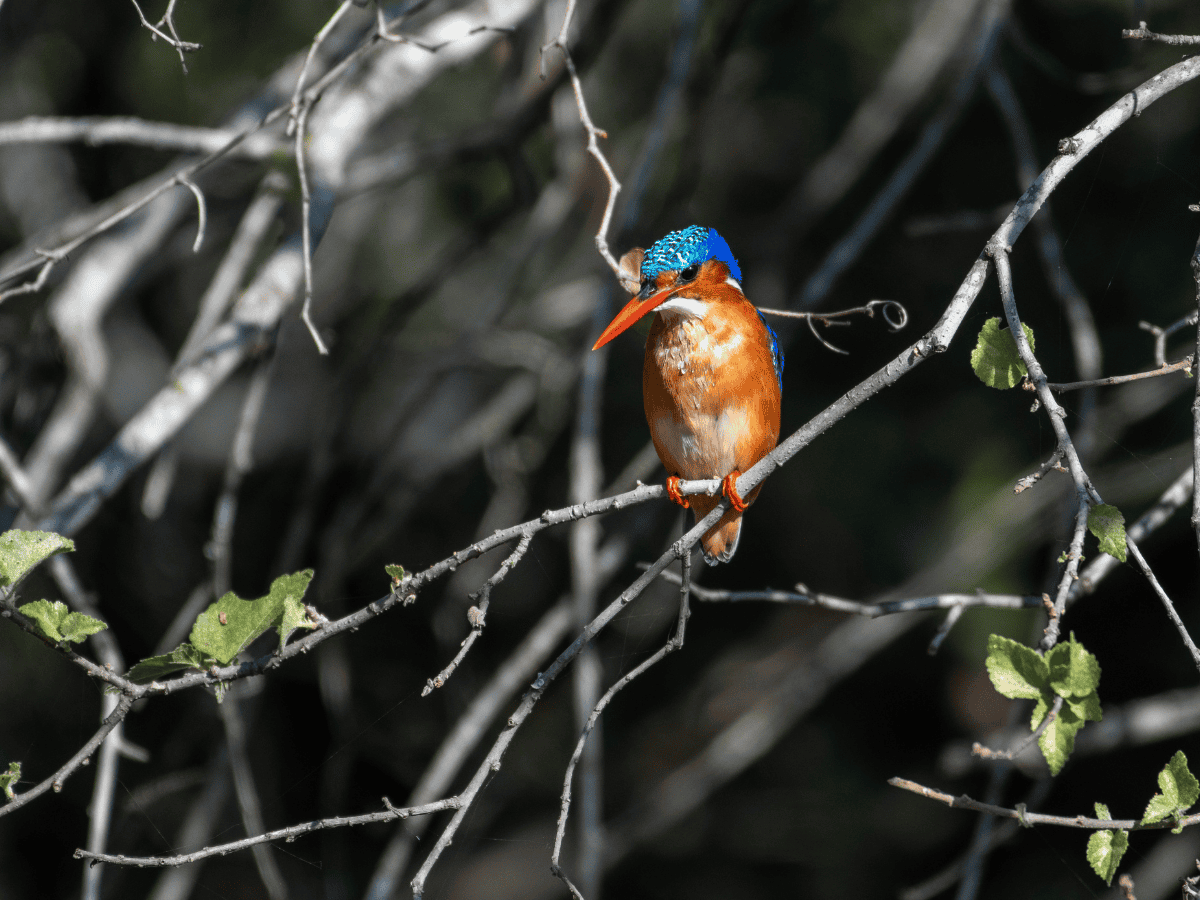
The Malachite Kingfisher is a very small kingfisher with bright turquoise-blue upperparts, deep orange underparts, and a long, slender red bill. It has a short tail and a compact, rounded body. Its colours are vivid and highly reflective in sunlight. Males and females are similar in appearance. It can be confused with other small kingfishers, but its size, bill length, and strong colour contrast make it easy to distinguish when seen clearly.
Behaviour
The Malachite Kingfisher feeds mainly on small fish and aquatic insects, hunting from low perches close to the water. It often sits still, watching carefully before diving quickly to capture prey. After a successful dive, it returns to a perch to handle its catch. The species is usually solitary and highly territorial, especially during breeding season. Travellers are most likely to observe it perched quietly near water or making rapid, precise diving movements.
Diet
The Malachite Kingfisher feeds primarily on small fish, aquatic insects, and other tiny aquatic organisms. It hunts by watching from a perch before diving into the water to capture prey with its bill. Feeding is most effective in calm, shallow water where visibility is high. During warmer months, increased prey availability supports more frequent feeding. Its diet is closely linked to freshwater ecosystems and water clarity.
Habitat
The Malachite Kingfisher prefers freshwater habitats such as rivers, streams, lakes, and wetlands with calm water and abundant vegetation. It is most often found perched low over the water on reeds, branches, or rocks. This habitat provides both feeding opportunities and shelter. Travellers are most likely to encounter it along quiet water edges with clear sightlines and active aquatic life.