

Overview
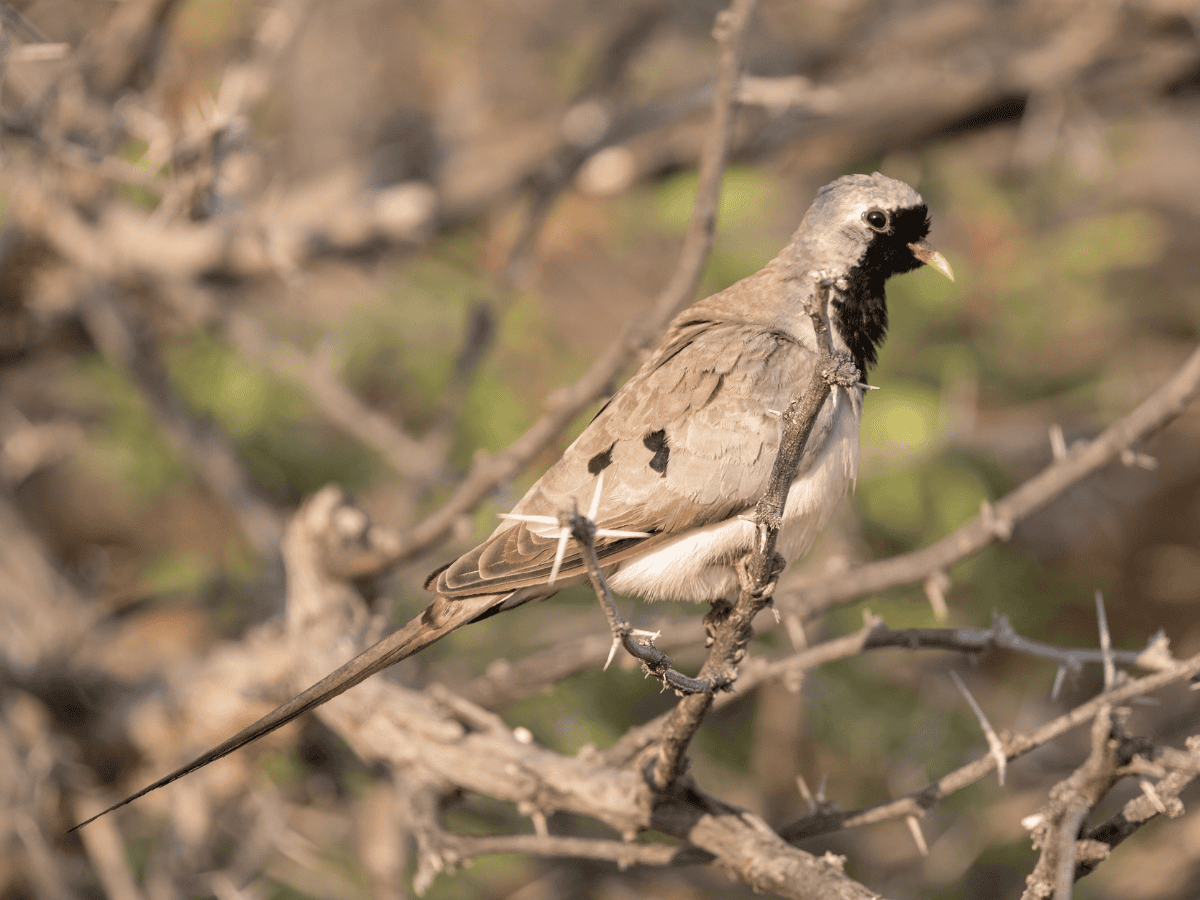
The Namaqua Dove is a small, elegant dove with a long tail and soft grey body, with males showing a striking black face and red eye ring. It is common in dry savannas and semi-arid regions across Southern Africa. Often seen in pairs around waterholes, it has a gentle, fluttering flight. Its delicate appearance and regular presence in open landscapes make it a charming and easily recognisable species for travellers on safari.







Gallery
Summary
Best Places To See
Namaqua Dove is most reliably seen in dry, open savanna and semi-arid regions where water sources attract regular bird activity. Kgalagadi Transfrontier National Park offers some of the most consistent sightings, particularly around waterholes where birds gather to drink. Tswalu Kalahari provides a strong complementary option with similar habitat and excellent visibility. These environments are reliable because sparse vegetation and predictable water access concentrate birds, making sightings frequent and often at close range.
Best Time Of Year To See
Namaqua Dove can be seen year-round, but sightings are most consistent during dry periods when birds gather regularly at water sources. In these conditions, reduced water availability concentrates individuals into predictable areas, making them easier to locate. During wetter months, they are more dispersed and less dependent on specific water points. Early mornings and late afternoons are typically the most active times. While summer offers good activity, drier seasons generally provide more reliable and repeatable sightings.
Identification
Namaqua Dove is a small, slender dove with a long, pointed tail and soft grey body. Males are distinctive, with a black face, red eye ring, and slightly richer colouring, while females are more muted and lack the bold facial contrast. Its delicate shape and graceful flight are key features. It can be confused with other small doves, but the long tail and male’s striking facial pattern make it easy to identify in open habitats.
Behaviour
Namaqua Dove feeds mainly on seeds, foraging on open ground in dry areas. It is usually seen in pairs or small groups and moves with a gentle, deliberate pace. The species often visits waterholes regularly, especially during dry conditions. Its flight is light and fluttering, often low to the ground. Travellers are most likely to see it walking in open areas or arriving at water to drink, where it remains briefly before moving off again.
Diet
Namaqua Dove feeds primarily on seeds, which it gathers from the ground in open, dry environments. It may also take small plant material and occasional insects. Feeding usually takes place in exposed areas where seeds are easy to find. During dry periods, access to water becomes more important, and birds visit waterholes regularly. Its diet is closely tied to arid conditions, where seed availability is stable and predictable.
Habitat
Namaqua Dove prefers dry savanna, semi-arid plains, and open woodland where vegetation is sparse and visibility is high. It is most often found on the ground, especially in areas near water sources. This habitat allows for easy movement and access to food. Travellers are most likely to encounter it in open landscapes, along roads, or around waterholes where bird activity is concentrated.
Conservation Status
Namaqua Dove is considered stable and widespread across its range, with no major threats currently impacting overall populations. Its adaptability to dry environments and ability to use a variety of open habitats support its resilience. Protected areas such as Kgalagadi and Tswalu help maintain suitable conditions. Continued conservation of arid ecosystems and responsible land use ensure the species remains a common and reliable presence in these landscapes.
Interesting Facts
Namaqua Dove is one of the few doves well adapted to arid environments, thriving in conditions where water is limited. Males have a striking black face and red eye ring, which stands out against their otherwise soft colouring. Their long tail gives them a graceful, almost delicate appearance in flight. Despite living in dry regions, they regularly travel to waterholes, creating predictable viewing opportunities for travellers.
Folklore
In many African cultures, doves are seen as symbols of peace and gentleness, and the Namaqua Dove reflects this through its calm behaviour and soft presence. Its quiet movements and frequent visits to water are sometimes associated with persistence and survival in harsh environments. In dry landscapes, its presence can also be linked to the idea of resilience, as it thrives in conditions where many other species struggle.