
Namaqua Sandgrouse | A Complete Birding Guide
Understand Namaqua Sandgrouse behaviour and where to find itOverview
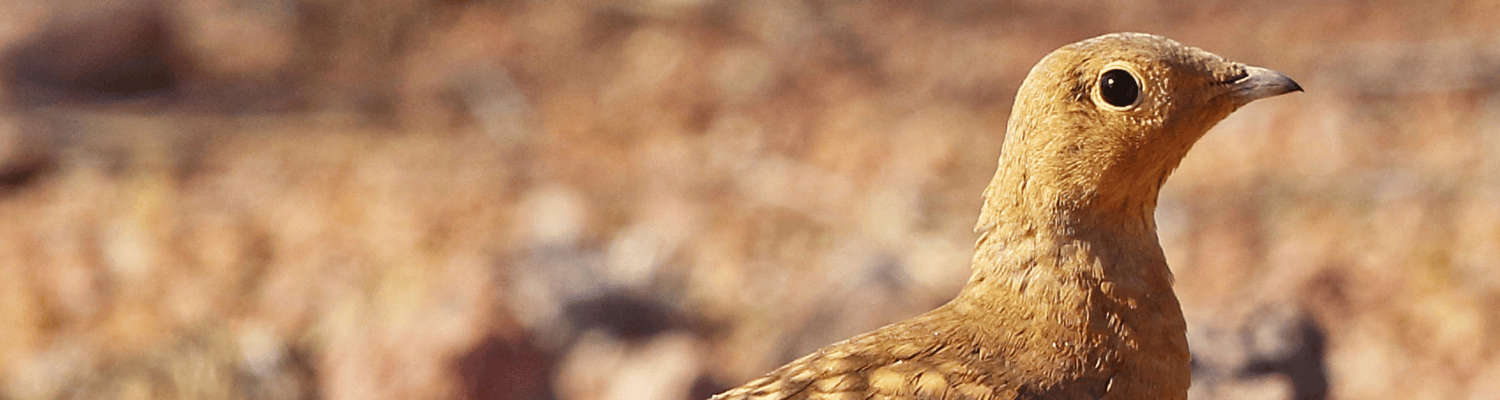
The Namaqua Sandgrouse is a beautifully marked desert bird with intricate patterns and long central tail feathers. It is common in arid regions of Southern Africa. Males travel long distances to waterholes, carrying water in their feathers for chicks. This unique behaviour makes it one of the most interesting birds to watch in dry environments.









Gallery
Summary
Best Time Of Year To See
Namaqua Sandgrouse can be seen year-round, but sightings are most consistent during dry periods when birds rely heavily on waterholes. Reduced water availability concentrates flocks into predictable areas, making them easier to locate. During wetter months, they disperse more widely and are less tied to specific sites. Early mornings are particularly productive, as flocks arrive to drink. While summer offers good activity, dry seasons provide the most reliable viewing conditions.
Identification
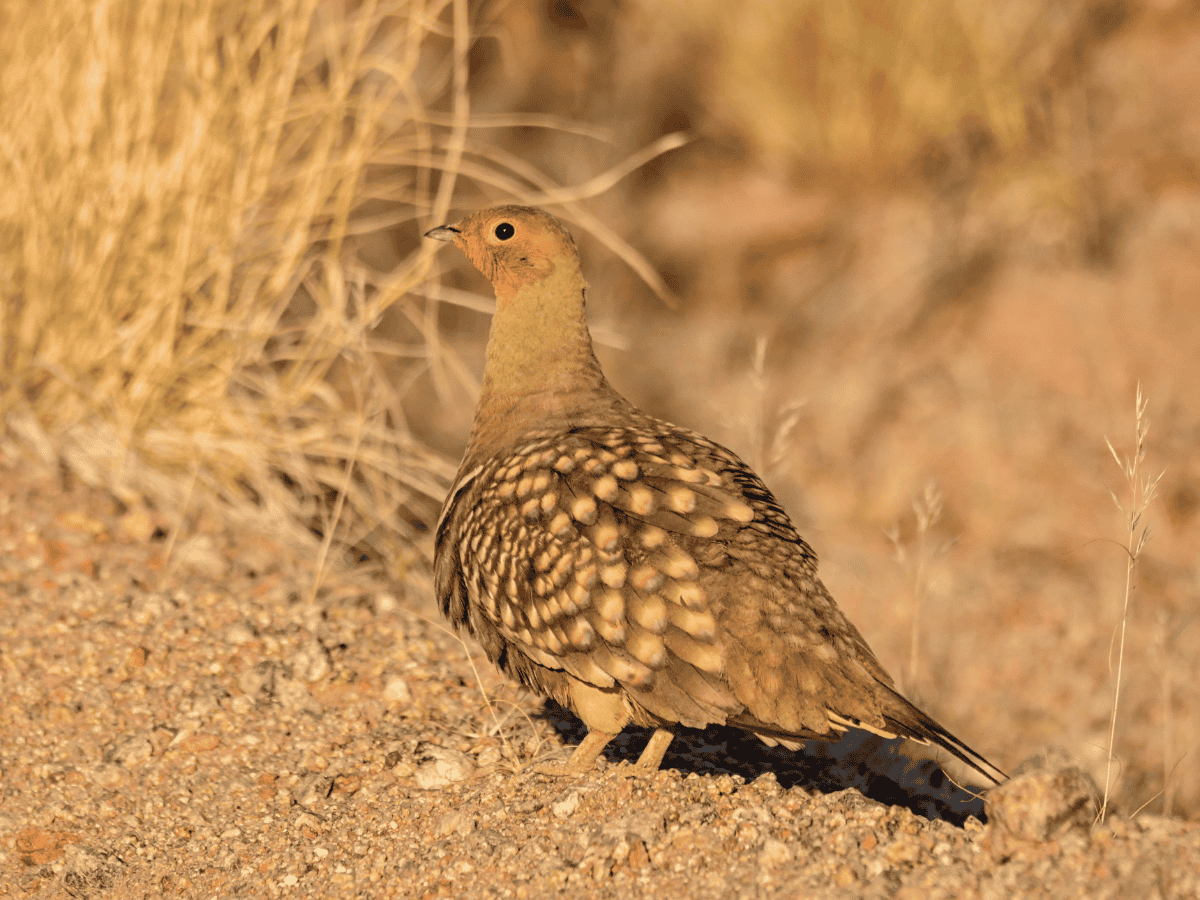
Namaqua Sandgrouse is a medium-sized bird with intricate patterns of buff, brown, and black that blend into desert landscapes. Males have long central tail feathers and more striking markings, while females are slightly duller. It has a compact body and pointed wings. Its fast, direct flight and flocking behaviour help with identification. It can be confused with other sandgrouse, but its tail shape and detailed patterning distinguish it.
Behaviour
Namaqua Sandgrouse feeds mainly on seeds, foraging on open ground in dry habitats. It is usually seen in flocks and moves cautiously while feeding. The species travels long distances to waterholes, often arriving in groups at dawn. Its flight is fast and direct. Travellers are most likely to observe it during these water visits, where behaviour is predictable and highly visible.
Diet
Namaqua Sandgrouse feeds primarily on seeds found in arid environments. It forages on the ground, picking seeds from sparse vegetation and open soil. Feeding takes place in open areas where visibility is high. During dry periods, access to water becomes essential, and birds travel regularly to drink. Its diet is closely adapted to desert ecosystems.
Habitat
Namaqua Sandgrouse prefers arid plains, desert, and semi-desert environments with sparse vegetation and sandy soils. It is most often found on the ground in open areas near water sources. This habitat allows for easy movement and feeding. Travellers are most likely to encounter it in dry landscapes, open plains, and around waterholes.
Conservation Status
Namaqua Sandgrouse is considered stable, with populations supported by its adaptation to dry environments. However, changes in land use and water availability can impact local populations. Protected areas such as Kgalagadi Transfrontier National Park and Tswalu Kalahari help maintain suitable conditions. Conservation of arid ecosystems supports the species’ long-term survival.
Interesting Facts
Namaqua Sandgrouse is known for its unique behaviour of travelling long distances to waterholes each day. Males can carry water in specialised belly feathers to bring back to chicks. Its intricate plumage provides excellent camouflage in desert environments. Large flocks gathering at water create one of the most impressive birding spectacles in arid regions.
Folklore
Desert birds are often associated with resilience and endurance in African folklore. The Namaqua Sandgrouse, thriving in harsh conditions, may symbolise survival and adaptation. Its daily journeys to water reflect persistence and the importance of sustaining life in difficult environments. It represents strength in the face of scarcity.
Best Places To See
Namaqua Sandgrouse is most reliably seen in arid regions where birds travel to waterholes in predictable daily patterns. Kgalagadi Transfrontier National Park offers some of the strongest sightings due to excellent visibility and concentrated water sources. Tswalu Kalahari provides a complementary option with similar habitat and consistent activity. These areas are reliable because birds gather in large numbers at waterholes, especially at dawn, creating regular and highly visible viewing opportunities.