
Northern Black Korhaan | A Complete Birding Guide
Learn to identify Northern Black Korhaan and where to find itOverview
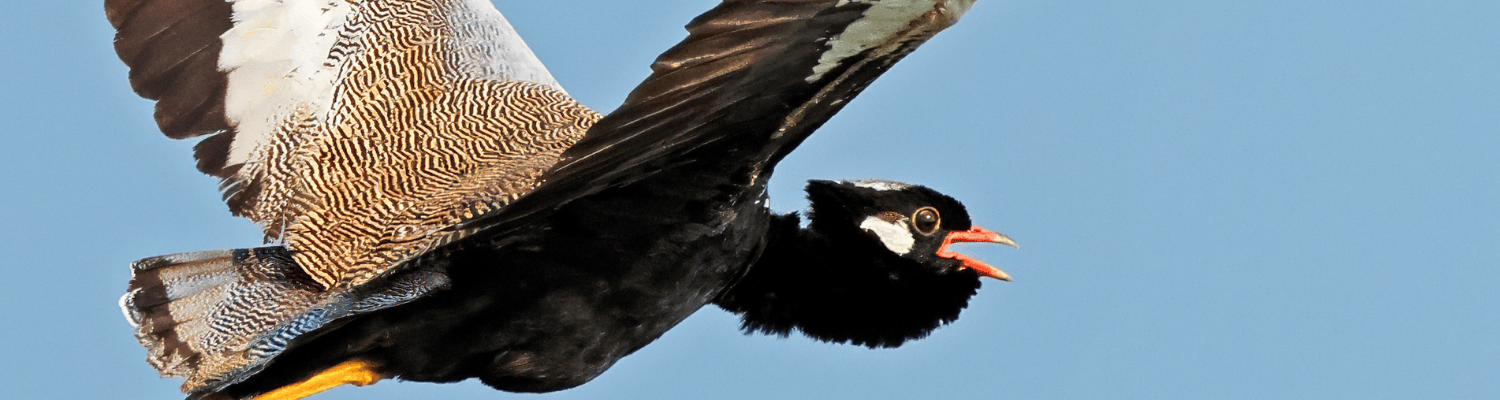
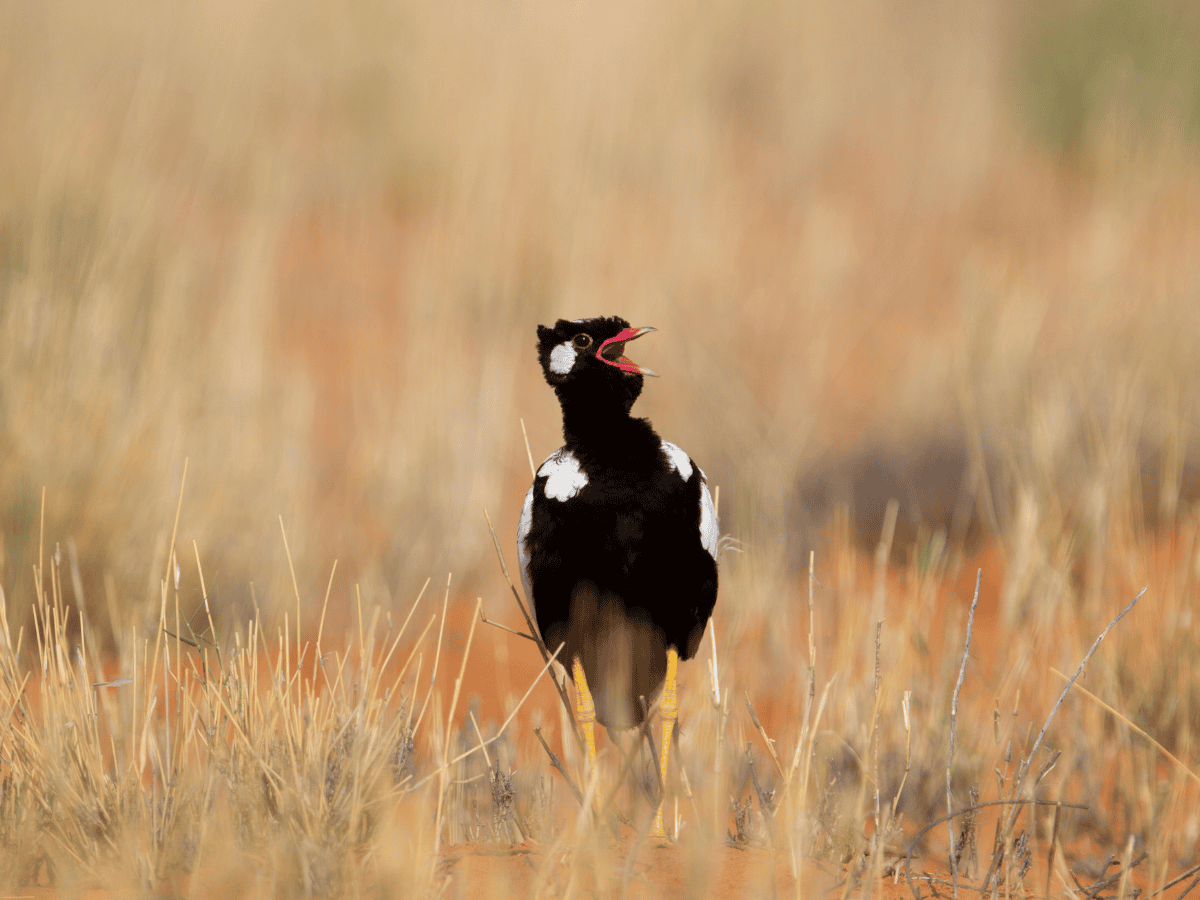
The Northern Black Korhaan is a medium-sized bustard with striking black and white plumage in males and more camouflaged females. It is found in grasslands and open savannas across Southern Africa. Males perform short, fluttering display flights during breeding season. Its contrasting colours and behaviour make it a standout species in open landscapes.







Gallery
Summary
Best Time Of Year To See
Northern Black Korhaan is most consistently seen during warmer months when breeding activity increases and males perform display flights. These displays make the species highly visible and easier to locate across open landscapes. During wetter periods, increased food availability supports higher activity levels. In cooler months, display behaviour decreases and birds can be harder to detect. Summer generally provides the best opportunity, as behaviour and visibility combine to create more frequent sightings.
Identification
Northern Black Korhaan is a medium-sized bird with bold black, white, and brown plumage. Males have more striking black and white patterns, while females are more muted and better camouflaged. It has a compact body and strong legs suited for walking. Its display flight and loud calls are key identifying features. It can be confused with other korhaans, but its pattern and behaviour help distinguish it.
Behaviour
Northern Black Korhaan feeds mainly on insects and small prey, which it finds while walking through open grassland. It is usually seen alone or in pairs and moves steadily across the ground. Males perform aerial display flights during breeding season, accompanied by loud calls. Travellers are most likely to observe it walking in open areas or displaying in flight.
Best Places To See
Northern Black Korhaan is most reliably found in open grassland and savanna where visibility is high and display behaviour is easily observed. Kgalagadi Transfrontier National Park offers consistent sightings due to expansive open terrain and low vegetation. Central Kalahari Game Reserve provides a strong complementary option with similar habitat and wide open spaces. These areas are reliable because birds are often visible over long distances, especially when males perform display flights during the breeding season.
Diet
Northern Black Korhaan feeds primarily on insects, small reptiles, and seeds. It forages on the ground, picking food from grass and soil. Feeding is most active during warmer periods when prey is abundant. Its diet is varied and reflects its adaptability to open environments.
Habitat
Northern Black Korhaan prefers open grassland and savanna with low vegetation and wide visibility. It is most often found on the ground, moving through open areas. This habitat allows for display behaviour and easy feeding. Travellers are most likely to encounter it in flat, open landscapes.
Conservation Status
Northern Black Korhaan is considered stable, although habitat changes can affect local populations. Its adaptability supports resilience across its range. Protected areas such as Kgalagadi Transfrontier National Park and Central Kalahari Game Reserve help maintain suitable conditions. Conservation of grassland ecosystems supports the species.
Interesting Facts
Northern Black Korhaan is known for its dramatic display flights, where males rise into the air while calling loudly. It spends most of its time on the ground, relying on camouflage when not displaying. Its behaviour makes it one of the more noticeable bustards in open landscapes.
Folklore
Open grassland birds are often associated with visibility and presence in African folklore. The Northern Black Korhaan’s display behaviour may symbolise expression and communication. Its calls and flight reflect openness and energy. It represents the life and activity of open landscapes.