
Overview
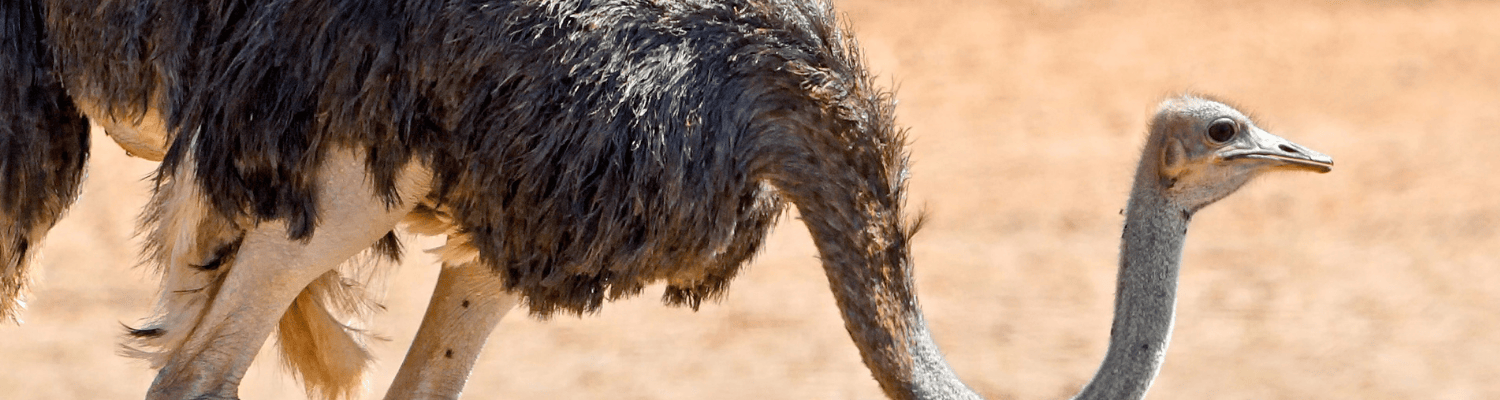
The Ostrich is the world’s largest bird, with long legs, a powerful build, and distinctive black and white plumage in males. It is found in open savannas and semi-arid regions across Africa. Unable to fly, it relies on speed and strong legs for survival. Its size, behaviour, and presence make it one of the most iconic and unforgettable birds on safari.








Gallery
Summary
Best Places To See
Ostrich is most reliably found in open savanna and semi-arid landscapes where wide visibility allows for easy detection. Kgalagadi Transfrontier National Park offers some of the most consistent sightings due to expansive open terrain and low vegetation. Etosha National Park provides a strong complementary option with similar conditions and large open plains. These locations are reliable because ostriches prefer open habitats, making them visible over long distances and frequently encountered during game drives.
Best Time Of Year To See
Ostrich can be seen throughout the year, with consistently high visibility due to its large size and preference for open habitats. Sightings are particularly active during warmer months when breeding behaviour increases movement and display activity. During wetter periods, food availability improves, supporting higher activity levels. In cooler months, birds remain present and visible. Because it is highly conspicuous, it is easy to observe at any time, although summer offers more dynamic behaviour.
Identification
Ostrich is a very large, flightless bird with long legs, a long neck, and a powerful body. Males have striking black and white plumage, while females are grey-brown and more subdued. It has a small head and large eyes. Its size and shape make it unmistakable. It cannot be confused with any other species.
Behaviour
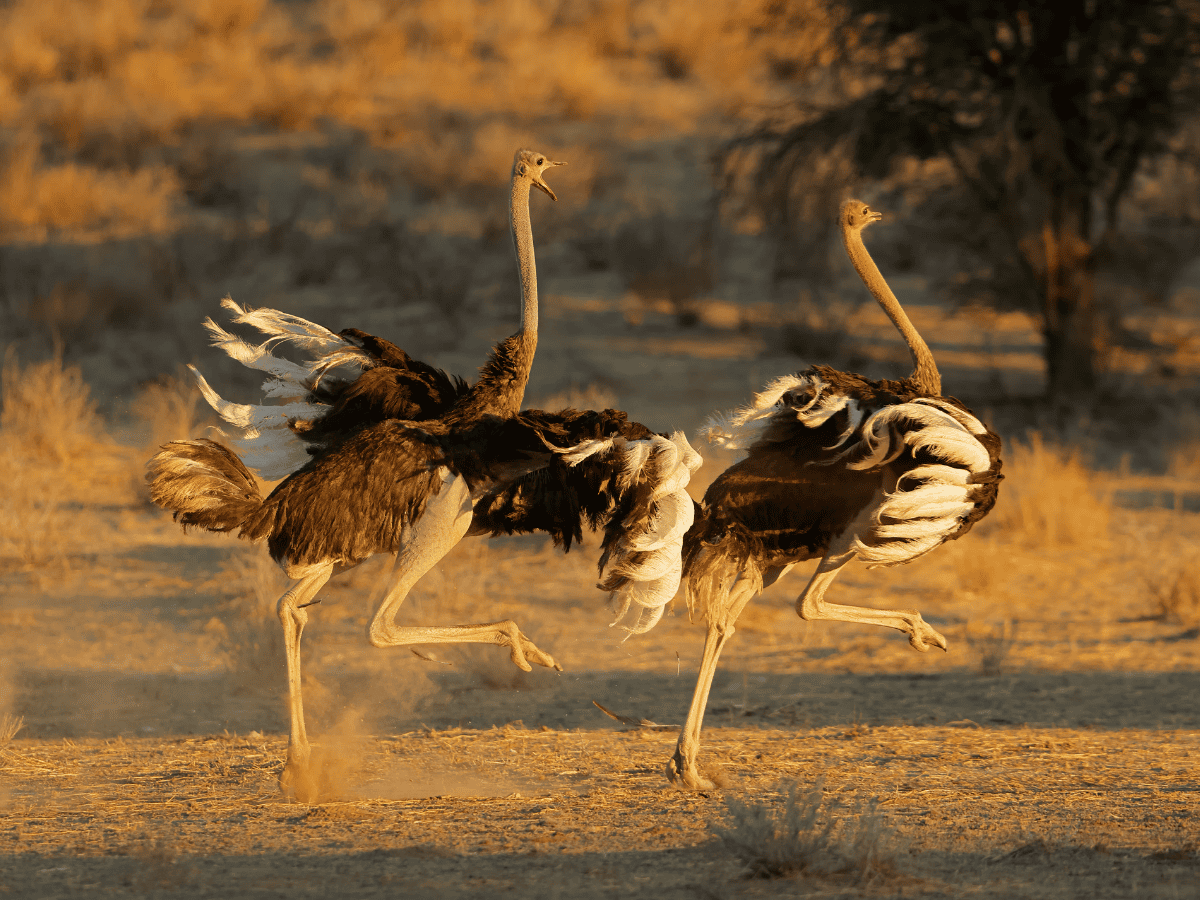
Ostrich feeds mainly on plant material, seeds, and small insects, foraging on the ground in open areas. It is usually seen in small groups and moves steadily across the landscape. The species is known for its speed and strong legs. During breeding season, males perform displays. Travellers are most likely to observe it walking or running across open plains.
Diet
Ostrich feeds primarily on plants, seeds, and small insects. It forages on the ground, picking food from grass and soil. Feeding occurs throughout the day in open habitats. Its diet is varied and reflects its adaptability to different environments.
Habitat
Ostrich prefers open savanna, grassland, and semi-arid environments where visibility is high. It is most often found on the ground in wide, open areas. This habitat allows for movement and predator detection. Travellers are most likely to encounter it in open landscapes.
Conservation Status
Ostrich is considered stable and widespread, with no major threats affecting wild populations. It is well adapted to a range of environments. Protected areas such as Kgalagadi Transfrontier National Park and Etosha National Park support healthy populations. Conservation of open ecosystems ensures its continued presence.
Interesting Facts
Ostrich is the fastest running bird in the world and can reach impressive speeds. Its eggs are the largest of any bird species. It has powerful legs that can deliver strong kicks. Despite being flightless, it is highly adapted to life on land.
Folklore
Large animals are often associated with strength and presence in African folklore. The Ostrich, with its size and speed, may symbolise power and endurance. Its ability to survive in harsh environments reflects resilience. It represents strength within open landscapes.