
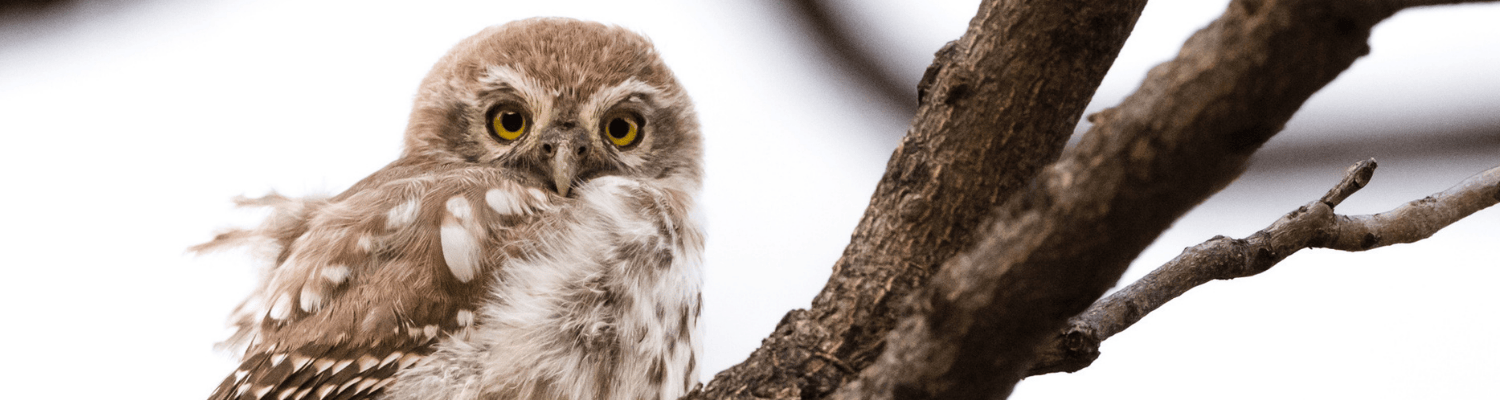
Pearl Spotted Owlet | A Complete Birding Guide
Discover Pearl Spotted Owlet calls and where to find itOverview
The Pearl-spotted Owlet is a small, active owl with brown plumage marked by white spots and distinctive false eye markings on the back of its head. It is found in savannas and open woodlands across Africa. Unlike many owls, it is often active during the day. Its bold behaviour and frequent calls make it one of the easiest owls to spot on safari.









Gallery
Summary
Best Places To See
Pearl-spotted Owlet is most reliably found in open savanna and woodland where scattered trees provide ideal perches and visibility. Kruger National Park offers some of the most consistent sightings, particularly in areas with mixed woodland and active birdlife where owlets often perch in the open. Madikwe Game Reserve provides a strong complementary option with similar habitat and excellent viewing conditions. These locations are reliable because the species is both diurnal and conspicuous, regularly using exposed perches that allow for clear, repeat sightings throughout the day.
Best Time Of Year To See
Pearl-spotted Owlet can be seen throughout the year, but sightings are most consistent during warmer months when birds are more active and vocal. Breeding season increases calling behaviour and territorial activity, making them easier to locate. During wetter periods, increased prey availability supports more frequent hunting and movement. In cooler months, they remain present but may be slightly less active. Early mornings and late afternoons provide the best viewing conditions, although daytime sightings are still common due to their unusual activity pattern.
Identification
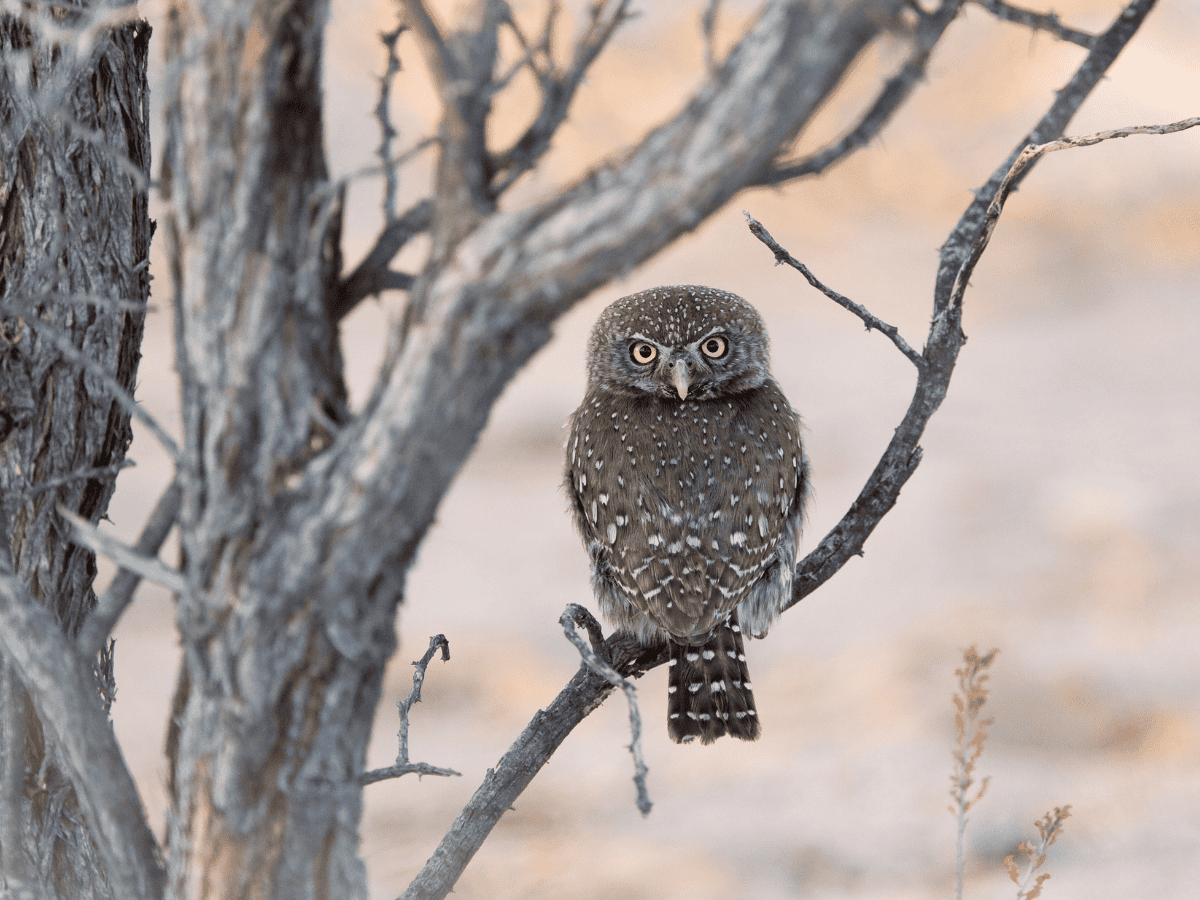
Pearl-spotted Owlet is a small owl with grey-brown plumage marked by distinctive pale spots across the body, giving it a “pearl-spotted” appearance. It has bright yellow eyes, a rounded head, and no ear tufts. A key feature is the pair of dark false eye spots on the back of its head, which may help deter predators. Males and females are similar in appearance. It can be confused with other small owls, but its spotting pattern and daytime activity make it easy to identify.
Behaviour
Pearl-spotted Owlet feeds on insects, small mammals, reptiles, and birds, hunting from exposed perches where it scans for movement below. It is often active during the day as well as at dawn and dusk, which is unusual for an owl. The species is usually solitary and may call frequently during breeding season. It often sits upright and alert before making short, direct flights to capture prey. Travellers are most likely to observe it perched prominently or actively hunting in daylight.
Diet
Pearl-spotted Owlet feeds primarily on insects, small mammals, reptiles, and occasionally small birds. It hunts by watching from a perch and then launching a quick, controlled flight to capture prey on the ground or in low vegetation. Feeding activity increases during warmer months when prey is more abundant. Its varied diet allows it to adapt to different environments and maintain a strong presence across a wide range of habitats.
Habitat
Pearl-spotted Owlet prefers open savanna, woodland, and bushveld with scattered trees that provide perching and nesting opportunities. It is most often found perched in exposed positions, allowing it to scan for prey efficiently. This habitat supports both visibility and hunting success. Travellers are most likely to encounter it in open woodland areas where bird activity is high and visibility is good.
Conservation Status
Pearl-spotted Owlet is considered stable and widespread, with no major threats affecting overall populations across its range. Its adaptability to different habitats and ability to hunt a wide variety of prey support its resilience. Protected areas such as Kruger National Park and Madikwe Game Reserve help maintain suitable conditions. Conservation of savanna ecosystems and responsible tourism practices support the continued success of this species in key safari regions.
Interesting Facts
Pearl-spotted Owlet has distinctive false eye spots on the back of its head, which can confuse predators and other birds. It is one of the few owls regularly active during the day, making it easier to observe than many other species. Despite its small size, it is a bold and capable hunter. Its constant alert posture and sharp gaze give it a highly expressive appearance that birders often remember.
Folklore
Owls are often associated with awareness, mystery, and hidden knowledge in African folklore. The Pearl-spotted Owlet’s ability to be active during both day and night may symbolise heightened perception and vigilance. Its false eye markings can be seen as a sign of watchfulness or protection. In some traditions, owls are viewed as messengers or indicators of change, and this species’ visible and alert nature reinforces its connection to observation and awareness in the natural world.