
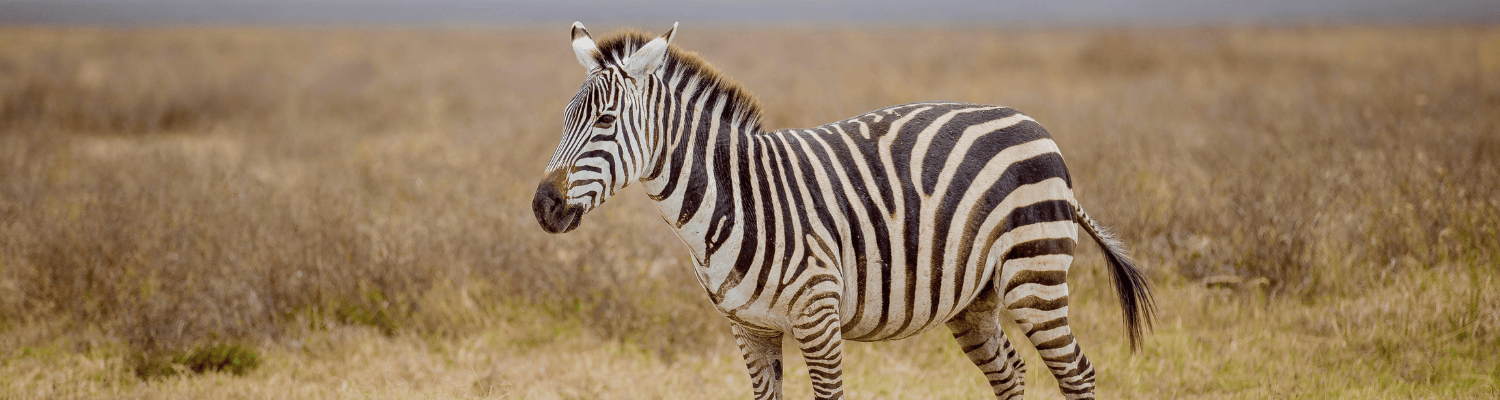
Plains Zebra | A Complete Safari Guide
Learn how to identify plains zebras and where to see them on safariOverview
The plains zebra is a striking and widely recognised animal, known for its bold black and white stripes and strong herd behaviour. It is found across much of eastern and southern Africa, especially in open grasslands and savannas. Zebras are often seen grazing in groups, sometimes alongside other herbivores, creating classic safari scenes. For travellers, they are easy to spot and highly photogenic. Their movements, including seasonal migrations in some regions, and their role as grazers make them an important and iconic part of the safari experience.








Gallery
Summary
Best Places To See
Plains zebra are most reliably seen in open grassland and savanna ecosystems with strong grazing conditions, with Serengeti National Park in Tanzania standing out as a flagship destination due to vast herds that form part of the Great Migration. In Kenya, the Masai Mara National Reserve offers equally consistent sightings, especially during migration periods when zebra numbers peak. In Southern Africa, Kruger National Park and adjacent reserves such as Sabi Sands Game Reserve provide year-round sightings supported by stable resident populations, while in Botswana, Chobe National Park and Moremi Game Reserve deliver regular encounters across floodplains and open woodland where grazing is abundant.
Best Time Of Year To See
The best time to see plains zebra is during the dry season, when large herds gather around reliable water sources and open grazing areas, making sightings consistent and often in high numbers. Shorter grass improves visibility and allows for clear views across plains and savanna. In regions with seasonal migrations, movement patterns are often driven by rainfall, meaning timing can shift depending on the year. During the wet season, abundant grass and water allow herds to spread out, making them less concentrated, although the landscape is greener and conditions are quieter with fewer vehicles.
Identification
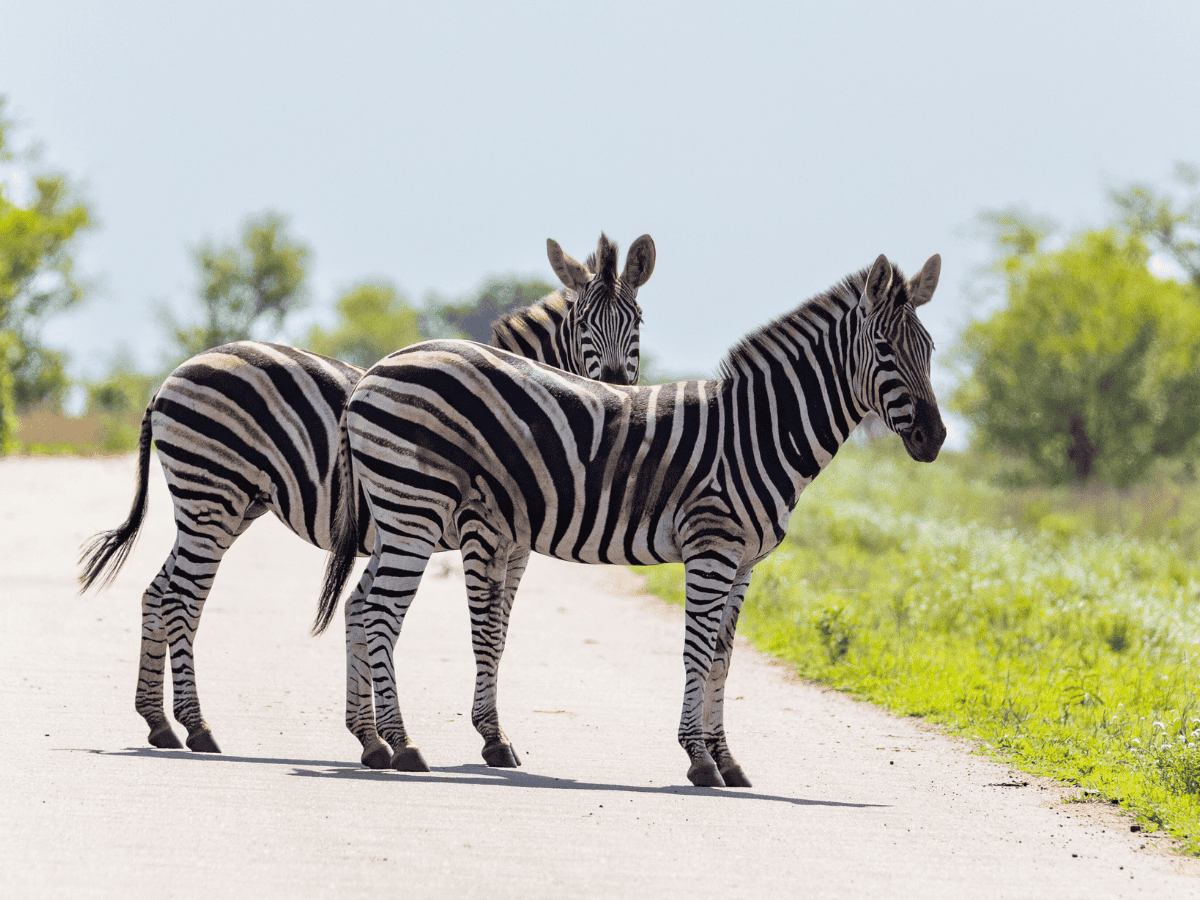
Plains Zebras have bold black-and-white stripes that extend across the body and belly. Their stripes are wide and more evenly spaced compared to mountain zebras. They have a stocky build and a short mane that stands upright. Both males and females look similar. Foals are smaller with brownish stripes at birth. They may be confused with mountain zebras, but plains zebras lack the grid-like pattern on the rump. Their large herds and open grassland habitat make them easy to identify.
Behaviour
Plains zebras are grazers that feed on grass and live in structured family groups led by a dominant stallion. They often form larger herds with multiple families. They are highly alert and rely on group vigilance for protection. On safari, they are commonly seen grazing, moving in herds, or interacting socially.
Diet
Plains zebras are grazers that feed mainly on grasses, often preferring longer and more fibrous growth than many other grazers. They move in herds and spend much of the day feeding while walking slowly across open plains. They are often among the first grazers to enter an area, preparing the grass for other species. During the dry season, they may travel long distances in search of better grazing. They drink water regularly. Their feeding patterns play a key role in maintaining grassland ecosystems and supporting other herbivores.
Habitat
Plains zebras prefer open grasslands and savanna where grazing is easy. Their habitat is linked to grass availability and water access. They often move in herds across wide areas, following seasonal changes in vegetation. During dry seasons, they gather near water sources. Travellers are most likely to see plains zebras in open plains and near waterholes, often in large groups alongside other grazing animals.
Conservation Status
Plains zebras are listed as near threatened, with generally stable populations in protected areas. Their main threats include habitat loss and competition with livestock in areas outside reserves. Migration routes are also affected by fencing and development. Despite this, they remain widespread and abundant in many regions. National parks and private reserves provide safe habitats where populations are thriving. Safari tourism supports these ecosystems and helps maintain open landscapes, ensuring plains zebras continue to play a key role in Africa’s grassland environments.
Interesting Facts
Plains zebras are known for their striking black-and-white stripes, which are unique to each individual. These patterns may help confuse predators or regulate body temperature. They are highly social and often form large herds, sometimes mixing with other species like wildebeest. Zebras have excellent hearing and eyesight, acting as early warning systems for other animals. Their strong bonds and group vigilance improve survival in open savannahs.
Folklore
Plains zebras are often associated with balance, harmony, and community. Their distinctive stripes are sometimes interpreted as symbols of unity within diversity. In some African traditions, zebras represent cooperation and awareness, as their herd behaviour relies on vigilance and group protection. Their presence in large numbers also reflects abundance and movement, reinforcing themes of migration and seasonal change.