

Overview
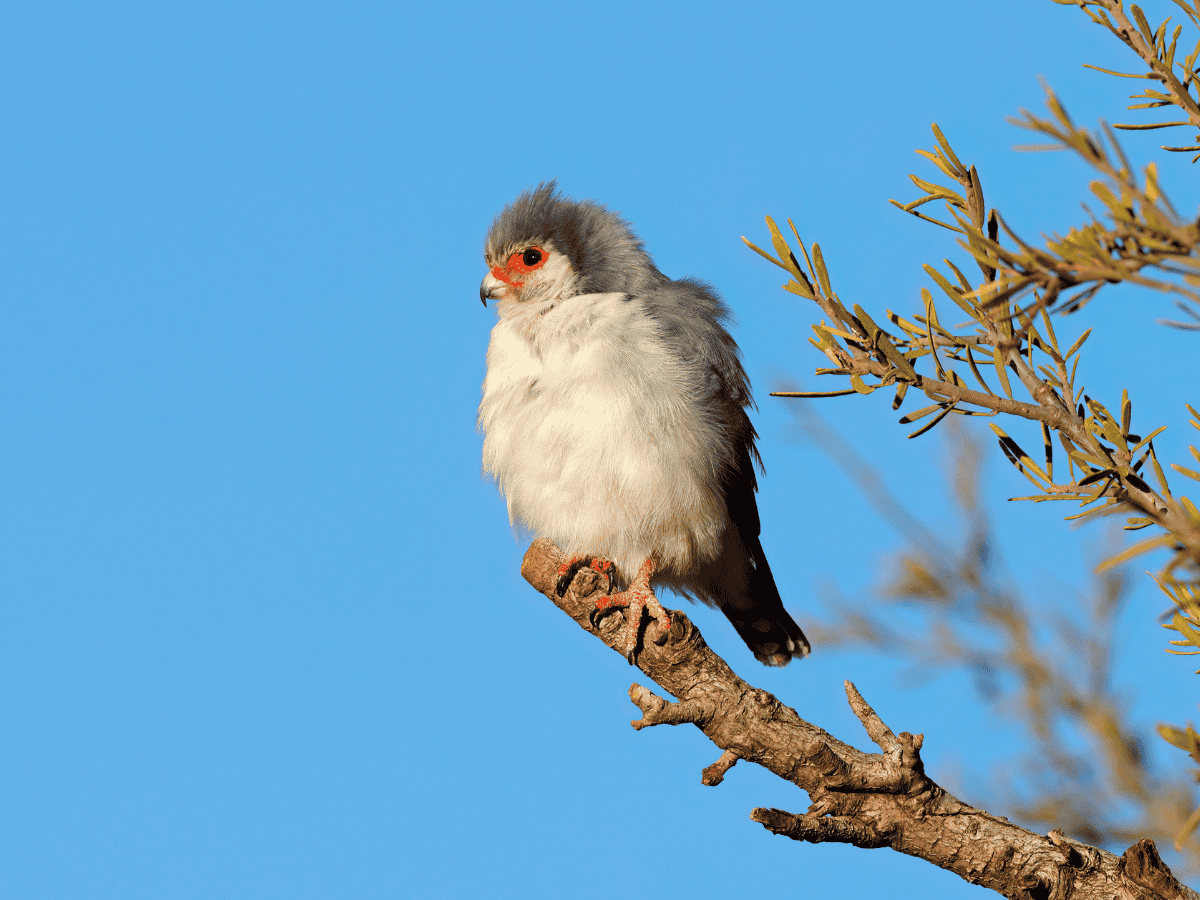
The Pygmy Falcon is a very small bird of prey with grey and white plumage and bright yellow eye rings. It is found in arid regions of Southern Africa, often around sociable weaver nests where it roosts and breeds. Despite its size, it is an efficient hunter of insects and small animals. Its unique nesting behaviour and compact size make it a fascinating species to observe.







Gallery
Summary
Best Places To See
Pygmy Falcon is most reliably found in arid regions where sociable weaver colonies provide nesting sites and shelter. Kgalagadi Transfrontier National Park offers some of the most consistent sightings, particularly in areas with large weaver nests that the falcons use. Tswalu Kalahari provides a strong complementary option with similar habitat and excellent visibility. These areas are reliable because the close relationship between falcons and weaver colonies creates predictable locations where birds can be found repeatedly.
Best Time Of Year To See
Pygmy Falcon can be seen throughout the year, but sightings are most consistent during warmer months when hunting activity increases. Breeding season also brings more visible behaviour around nest sites, making them easier to locate. During wetter periods, insect availability improves, supporting higher feeding rates. In cooler months, activity may decrease slightly. Summer provides the best balance of activity, visibility, and predictable behaviour around nesting sites.
Identification
Pygmy Falcon is a very small raptor with grey upperparts, white underparts, and a relatively large head for its size. It has a short tail and pointed wings. Males and females are similar, though females may be slightly larger. Its association with large weaver nests is a key identifying clue. It can be confused with other small falcons, but its size and behaviour help distinguish it.
Behaviour
Pygmy Falcon feeds mainly on insects and small prey, hunting from perches or making short flights to capture food. It often perches near sociable weaver nests, which it uses for shelter. The species is usually seen in pairs and shows strong site loyalty. Travellers are most likely to observe it perched near nests or making short hunting flights.
Diet
Pygmy Falcon feeds primarily on insects, small reptiles, and occasionally small birds. It hunts by launching quick attacks from perches. Feeding occurs mainly in open habitats where prey is visible. Increased insect activity during warmer months supports higher feeding rates. Its diet reflects its adaptability to arid environments.
Habitat
Pygmy Falcon prefers arid savanna and semi-desert where large trees or structures support sociable weaver nests. It is most often found near these nests, which provide shelter and nesting sites. This habitat allows it to combine hunting and nesting in the same area. Travellers are most likely to encounter it in dry landscapes with visible weaver colonies.
Conservation Status
Pygmy Falcon is considered stable, with populations supported by its association with sociable weavers. Habitat changes can affect local populations, but the species remains widespread. Protected areas such as Kgalagadi Transfrontier National Park and Tswalu Kalahari help maintain suitable conditions. Conservation of arid ecosystems supports its long-term survival.
Interesting Facts
Pygmy Falcon often lives in nests built by sociable weavers rather than building its own. Despite its small size, it is a highly effective hunter. It is one of the smallest raptors in Africa. Its close relationship with weaver colonies makes it unique among birds of prey.
Folklore
Small birds of prey are often associated with precision and efficiency in African folklore. The Pygmy Falcon’s hunting ability despite its size may symbolise skill and adaptability. Its relationship with weaver nests reflects cooperation within nature. It represents resourcefulness in harsh environments.