
Saddle-billed Stork | A Complete Birding Guide
Understand Saddle-billed Stork identification and where to see itOverview
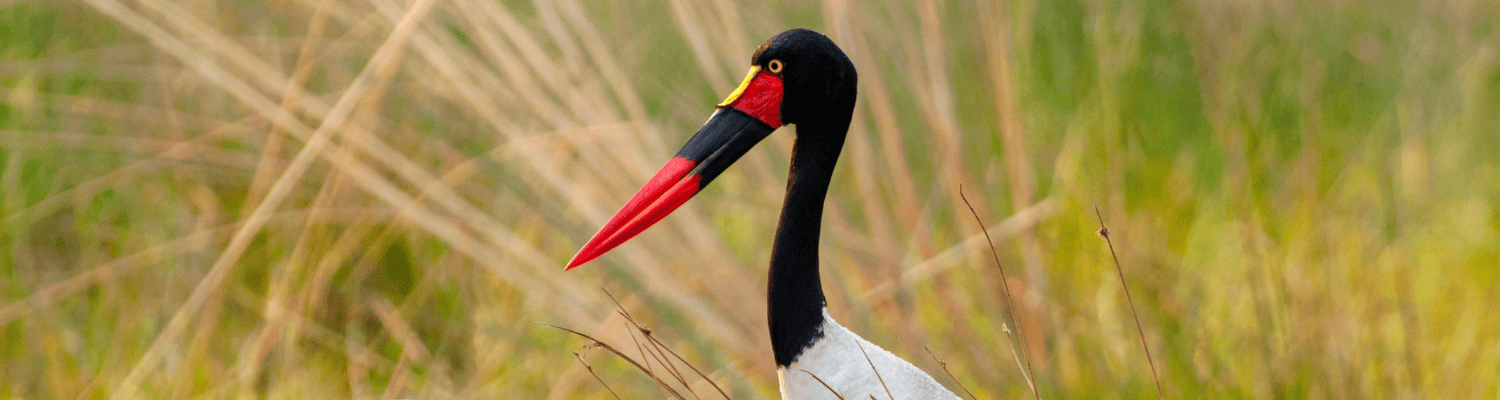
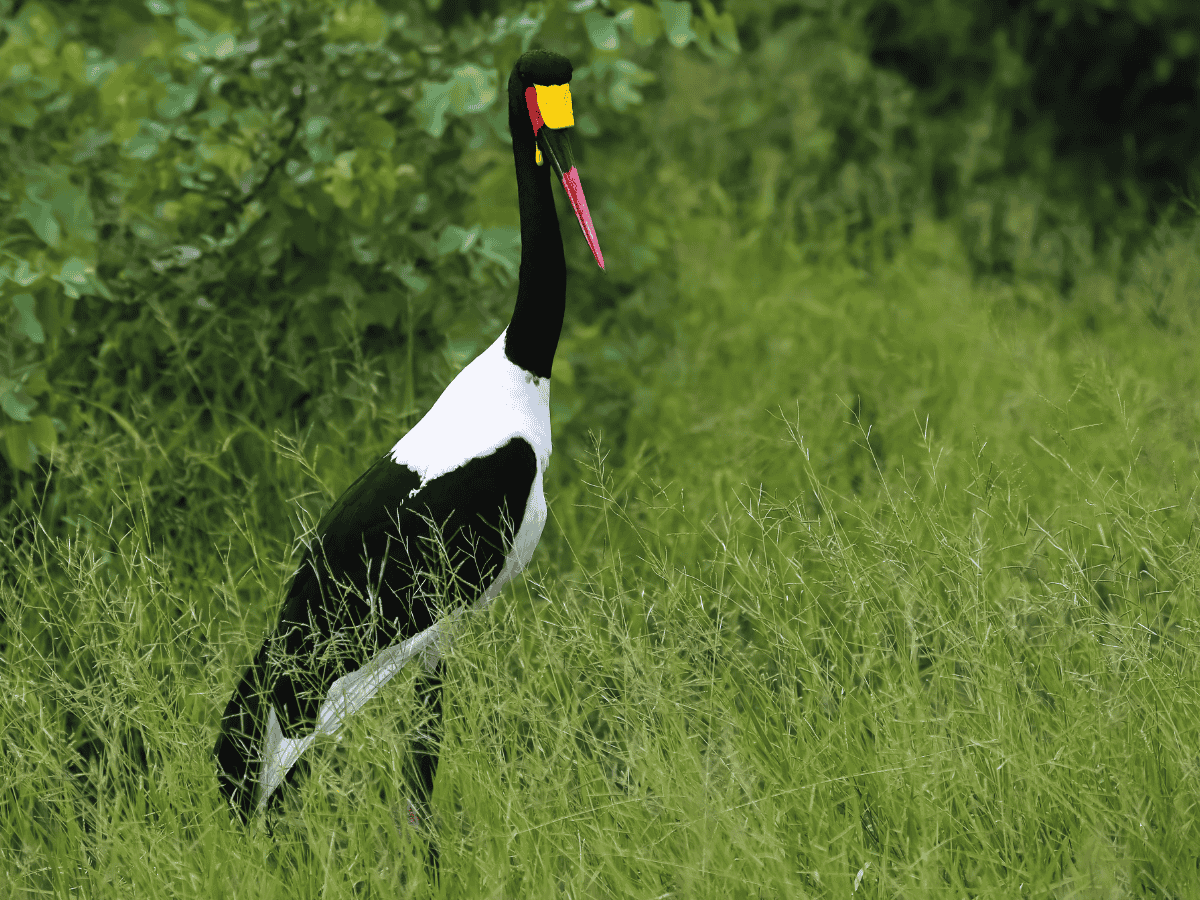
The Saddle-billed Stork is a tall, elegant bird with black and white plumage and a brightly coloured bill with a yellow saddle. It is found in wetlands and rivers across Africa. Often seen wading slowly through water, it hunts fish and small animals. Its striking colours and graceful movements make it a standout wetland species.








Gallery
Summary
Conservation Status
Saddle-billed Storks are considered vulnerable, with populations affected by habitat loss, wetland degradation, and human disturbance. Their reliance on large, undisturbed wetlands makes them sensitive to environmental change. Protected areas such as Kruger National Park and Chobe National Park play a crucial role in supporting populations. Conservation of wetlands and responsible water management are essential for their survival.
Interesting Facts
Saddle-billed Storks are one of the tallest stork species in Africa and can stand over a metre high. Their brightly coloured bill is unique among storks and easily recognisable. They are often solitary, unlike many other waterbirds. Their slow, deliberate feeding style makes them appear calm and controlled in their movements.
Folklore
Large waterbirds are often associated with balance and grace in African folklore. Saddle-billed Storks, with their elegant posture and calm behaviour, may symbolise harmony and control. Their presence in wetlands reflects life and renewal. In some interpretations, birds that move between land and water represent connection and continuity within natural systems.
Best Places To See
Saddle-billed Storks are most reliably found in large wetlands, rivers, and floodplains where shallow water supports feeding activity. Kruger National Park offers some of the most consistent sightings, particularly along major rivers and open pans where birds can be seen wading in clear view. Chobe National Park provides a strong complementary option with extensive floodplains and stable water systems. These locations are reliable because abundant aquatic prey, open shorelines, and minimal disturbance allow the species to feed openly and remain visible for extended periods.
Best Time Of Year To See
Saddle-billed Storks can be seen throughout the year, but sightings are most consistent during warmer months when water levels stabilise and prey such as fish and amphibians are more active. During this time, feeding behaviour increases, improving visibility as birds move through shallow water. In drier periods, receding water can concentrate prey, sometimes enhancing sightings. Early morning and late afternoon provide the best conditions, when feeding activity is highest and light improves observation along water edges.
Identification
Saddle-billed Storks are very large birds with long legs, a long neck, and bold black and white plumage. Their most distinctive feature is their brightly coloured bill, which is red with a yellow saddle-like marking and a dark band. They also have a black head and upper body with white underparts. Males and females are similar, although females may have yellow eyes. They are unlikely to be confused with other species due to their size and bill pattern.
Behaviour
Saddle-billed Storks feed mainly on fish, amphibians, and small aquatic animals, which they capture by probing or snapping their bill in shallow water. They move slowly and deliberately, often alone or in pairs. The species is generally quiet and relies on patience rather than speed when feeding. Travellers are most likely to observe them wading through wetlands or standing still while scanning for prey.
Diet
Saddle-billed Storks feed primarily on fish, frogs, and other aquatic organisms, using their long bill to capture prey in shallow water. They forage by walking slowly and striking with precision. Feeding activity increases during warmer months when prey is more abundant. Their diet reflects their role as top predators within wetland ecosystems.
Habitat
Saddle-billed Storks prefer wetlands, floodplains, rivers, and large pans with shallow water and open visibility. They are most often found in areas where water depth allows for easy movement and feeding. This habitat supports both hunting and nesting. Travellers are most likely to encounter them in open wetland environments with stable water levels.