
Secretarybird | A Complete Birding Guide
Learn to identify Secretarybird behaviour and where to spot itOverview
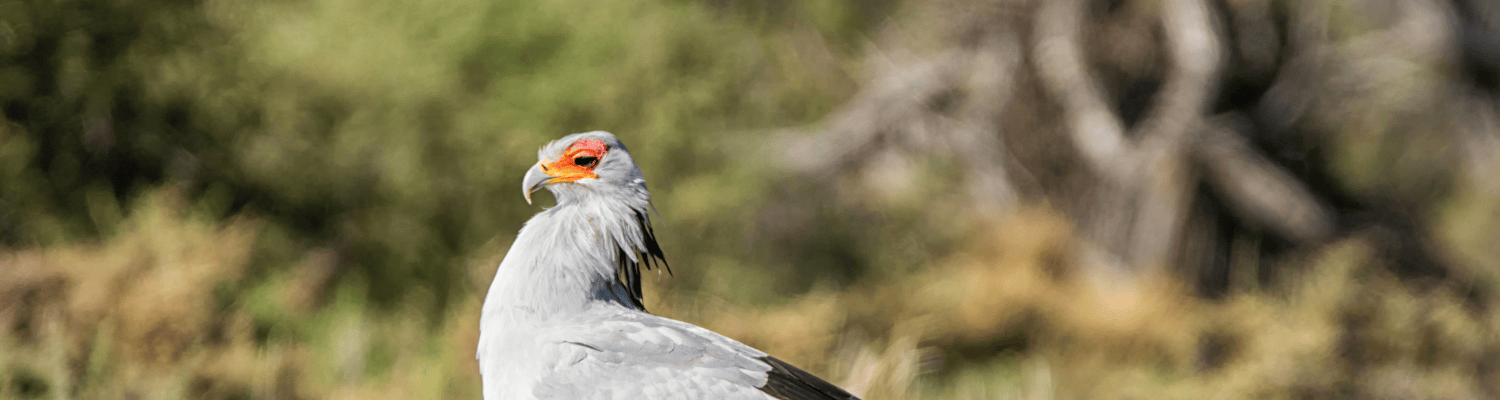
The Secretary Bird is a tall, long-legged bird of prey with a distinctive crest and elegant posture. It is found in open grasslands and savannas across Africa. Unlike most raptors, it hunts on foot, stamping on prey such as snakes. Its unique behaviour and striking appearance make it one of the most iconic birds of the African plains.








Gallery
Summary
Best Places To See
Secretarybirds are most reliably found in open grassland and savanna where low vegetation allows them to hunt effectively on foot. Kruger National Park offers some of the most consistent sightings, particularly in open plains where birds can be seen walking long distances in search of prey. Kgalagadi Transfrontier National Park provides a strong complementary option with wide, open terrain and excellent visibility. These locations are reliable because minimal vegetation, stable prey availability, and large open areas support their ground-based hunting behaviour and make them easy to detect.
Best Time Of Year To See
Secretarybirds can be seen throughout the year, but sightings are most consistent during warmer months when prey such as insects and reptiles are more active. During this time, hunting activity increases, making birds more visible as they move across open ground. Dry conditions can also improve visibility by reducing vegetation height. In cooler months, activity may decrease slightly. Morning and late afternoon are often the most productive periods, when birds are actively foraging and temperatures are suitable for movement.
Identification
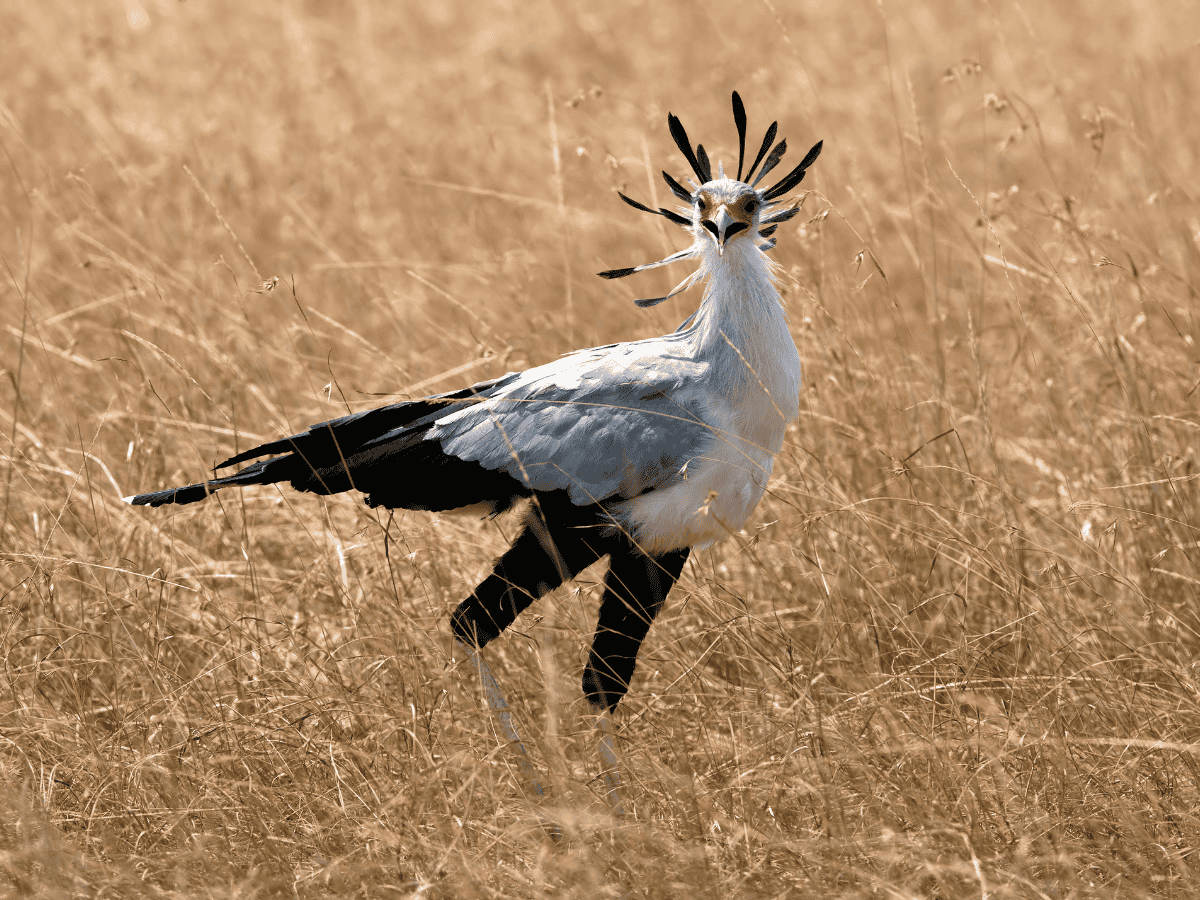
Secretarybirds are large birds with long legs, a slender neck, and a small head with a distinctive crest of dark feathers. They have pale grey plumage, black wing feathers, and long black tail feathers. Their upright, almost crane-like posture is unique among raptors. Males and females are similar in appearance. They are unlikely to be confused with other species due to their size, shape, and ground-based behaviour.
Behaviour
Secretarybirds feed mainly on reptiles, especially snakes, as well as insects and small mammals. They hunt by walking through grassland and using powerful kicks to subdue prey. They are usually seen alone or in pairs and cover large areas while foraging. They may occasionally soar but spend most of their time on the ground. Travellers are most likely to observe them striding through open terrain or pausing to strike at prey.
Diet
Secretarybirds have a varied diet that includes snakes, lizards, insects, and small mammals. They hunt by walking steadily and using strong, precise kicks to stun or kill prey. Feeding activity increases during warmer months when prey is more active. Their specialised hunting technique sets them apart from other birds of prey and reflects their adaptation to life on the ground.
Habitat
Secretarybirds prefer open grassland, savanna, and semi-arid plains where vegetation is low and visibility is high. They are most often found in wide, open areas where they can walk freely and detect prey easily. This habitat supports their unique hunting strategy. Travellers are most likely to encounter them in open landscapes with minimal cover and good sightlines.
Conservation Status
Secretarybirds are considered endangered, with populations declining due to habitat loss, disturbance, and human-related pressures. Their dependence on large, open landscapes makes them vulnerable to environmental change. Protected areas such as Kruger National Park and Kgalagadi Transfrontier National Park play a key role in supporting populations. Conservation efforts focus on habitat protection and reducing disturbance. Responsible tourism and awareness are essential for their survival.
Interesting Facts
Secretarybirds are one of the few birds of prey that hunt primarily on foot rather than in flight. Their powerful legs allow them to deliver strong kicks to prey, including venomous snakes. Their name is thought to come from the crest feathers, which resemble quill pens behind the ear. They can cover large distances each day while searching for food.
Folklore
Large ground-dwelling birds are often associated with strength and resilience in African folklore. Secretarybirds, with their upright stance and deliberate movement, may symbolise discipline and focus. Their ability to hunt snakes reflects control over danger. In some interpretations, they represent balance between land and sky, reinforcing their connection to adaptability and strength within natural systems.