
Serval | A Complete Safari Guide
Understand serval hunting behaviour and where to spot them on safariOverview
The serval is a slender and striking medium-sized cat, known for its long legs, large ears, and golden coat marked with bold black spots. It is found across parts of sub-Saharan Africa, especially in grasslands and wetland areas where prey is abundant. Servals are skilled hunters, using their sharp hearing to locate small animals in tall grass. For travellers, sightings are less common than larger cats, making them feel special and rewarding. Their elegance and precision hunting add a unique and memorable element to the safari experience.










Gallery
Summary
Best Places To See
Serval are most reliably seen in wet, open grassland and floodplain habitats where tall grass supports high rodent densities, with the Serengeti National Park in Tanzania standing out as a flagship destination due to frequent daytime sightings in short, open plains after burns or grazing. In Kenya, the Masai Mara National Reserve offers similarly strong encounters, particularly in areas with mixed grass height and good visibility. In Southern Africa, Moremi Game Reserve in the Okavango Delta provides high-quality sightings in damp floodplain environments, while private reserves such as Phinda Private Game Reserve offer consistent, well-tracked encounters in varied wetland and savanna habitats.
Best Time Of Year To See
The best time to see servals is during the dry season, when shorter grass makes them easier to spot in open grasslands and wetlands. They are most active in the early morning and late afternoon. In the wet season, taller grass reduces visibility, although prey is more abundant.
Identification
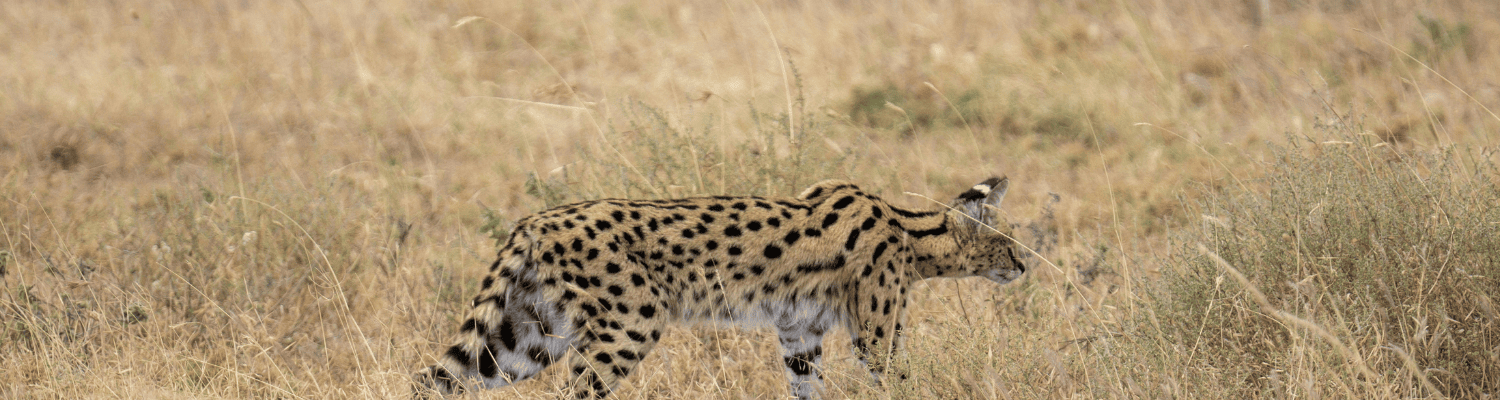
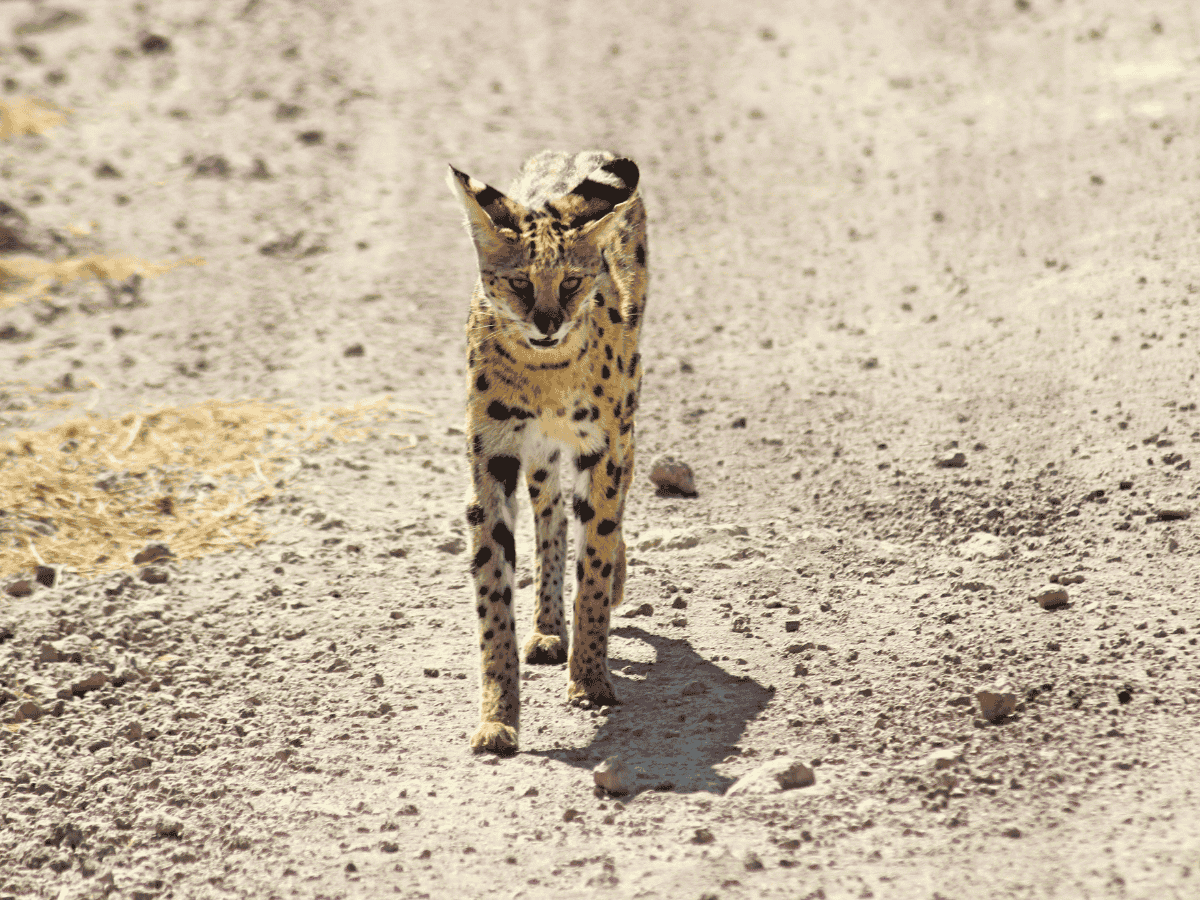
Servals are slender cats with long legs, large ears, and spotted coats. Their bodies are golden with black spots and stripes. They may be confused with cheetahs, but servals are smaller with longer legs and larger ears.
Behaviour
Servals are solitary hunters that feed mainly on rodents, birds, and small animals. They rely on exceptional hearing to detect prey hidden in grass, then use precise, vertical pounces to catch it. They are most active at dawn and dusk and prefer open grasslands. Each serval keeps a defined territory and avoids others except during mating. Females raise their young alone, often in concealed areas. On safari, travellers may see a serval standing still with ears alert, then suddenly leaping into the grass, or slowly walking through open areas while hunting.
Diet
Servals are carnivores that mainly feed on small animals such as rodents, birds, frogs, and insects. They hunt by listening carefully for movement in grass and then pouncing with precision. Their long legs help them see over tall grass. They are most active at dawn and dusk. Their diet depends on the availability of small prey. They may hunt several times a day. Their success rate is high due to their sharp hearing and quick reactions.
Habitat
Servals prefer wetlands, tall grasslands, and areas with dense vegetation where small prey is abundant. Their habitat is closely tied to water and cover. They use tall grass for stalking and hunting. Terrain is usually flat and moist. Travellers are most likely to see servals in wetland areas or grassy plains, especially in reserves where these habitats are protected and prey is plentiful.
Conservation Status
Servals are listed as least concern, with stable populations. Their biggest threats include habitat loss and wetland degradation. They rely on tall grass and wetlands for hunting. Strong populations exist in protected areas. Safari tourism supports habitat conservation and helps protect servals.
Interesting Facts
Servals are slender cats with long legs and large ears, perfectly adapted for hunting in tall grass. They rely on their acute hearing to detect prey underground, such as rodents. Servals can leap high into the air to pounce on prey with precision. Their spotted coat helps them blend into grassland habitats. Although they are relatively common, their secretive nature means sightings are not always guaranteed.
Folklore
Servals are often seen as symbols of precision, patience, and awareness. Their hunting style, which relies on listening and timing, has made them representations of focus. In some traditions, they reflect the importance of patience and observation. Their presence reinforces themes of quiet skill.