
Side-striped Jackal | A Complete Safari Guide
Learn about side-striped jackal behaviour and where to find them on safariOverview
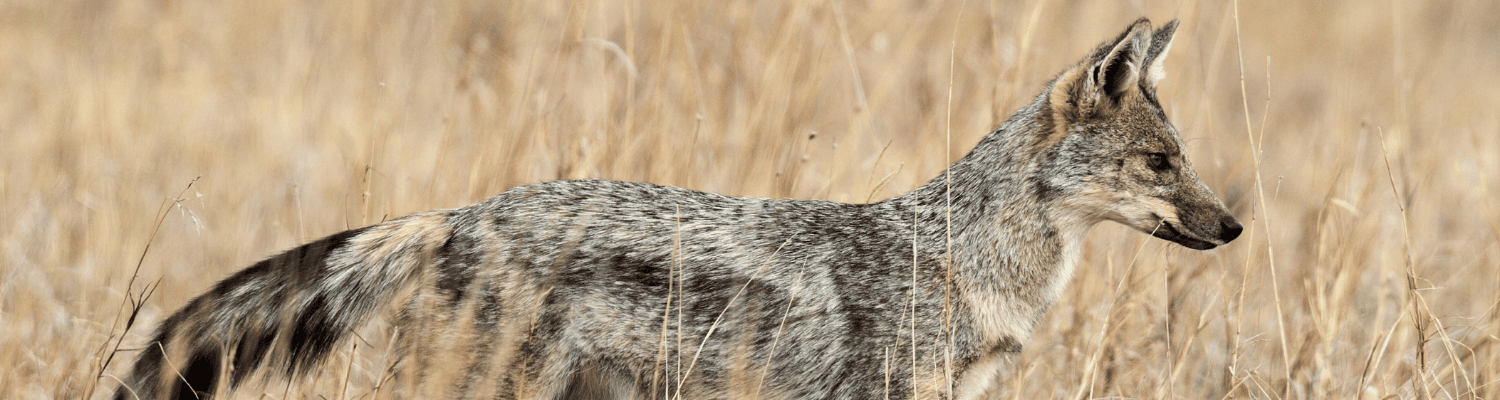
The side-striped jackal is a shy and less commonly seen relative of the black-backed jackal, recognised by its grey coat and faint white stripe along its side. It is found across central, eastern, and parts of southern Africa, often in woodlands and areas with thicker cover. Unlike other jackals, it is more solitary and mostly active at night. For travellers, sightings are rare and rewarding, usually on night drives. Its quiet nature and preference for dense habitats add a different and more elusive element to the safari experience.










Gallery
Summary
Best Places To See
Side-striped jackals are most reliably seen in well-watered woodland and savanna environments where vegetation is denser and human pressure is low, with Moremi Game Reserve in Botswana’s Okavango Delta standing out as a flagship destination due to consistent sightings in mixed woodland and floodplain habitats. In Zimbabwe, Hwange National Park offers strong opportunities, particularly in quieter areas where jackals move between cover and open ground. In South Africa, Kruger National Park provides occasional but regular encounters, especially in thicker bushveld regions, while private reserves such as Phinda Private Game Reserve deliver higher-quality sightings supported by expert guiding in varied, well-managed habitat.
Best Time Of Year To See
The best time to see side-striped jackals is during the dry season, when reduced vegetation improves visibility in woodland and savanna habitats. They are more elusive and often active at night or in low light. In the wet season, thicker vegetation and abundant food make sightings less consistent, although they remain present in suitable habitats.
Identification
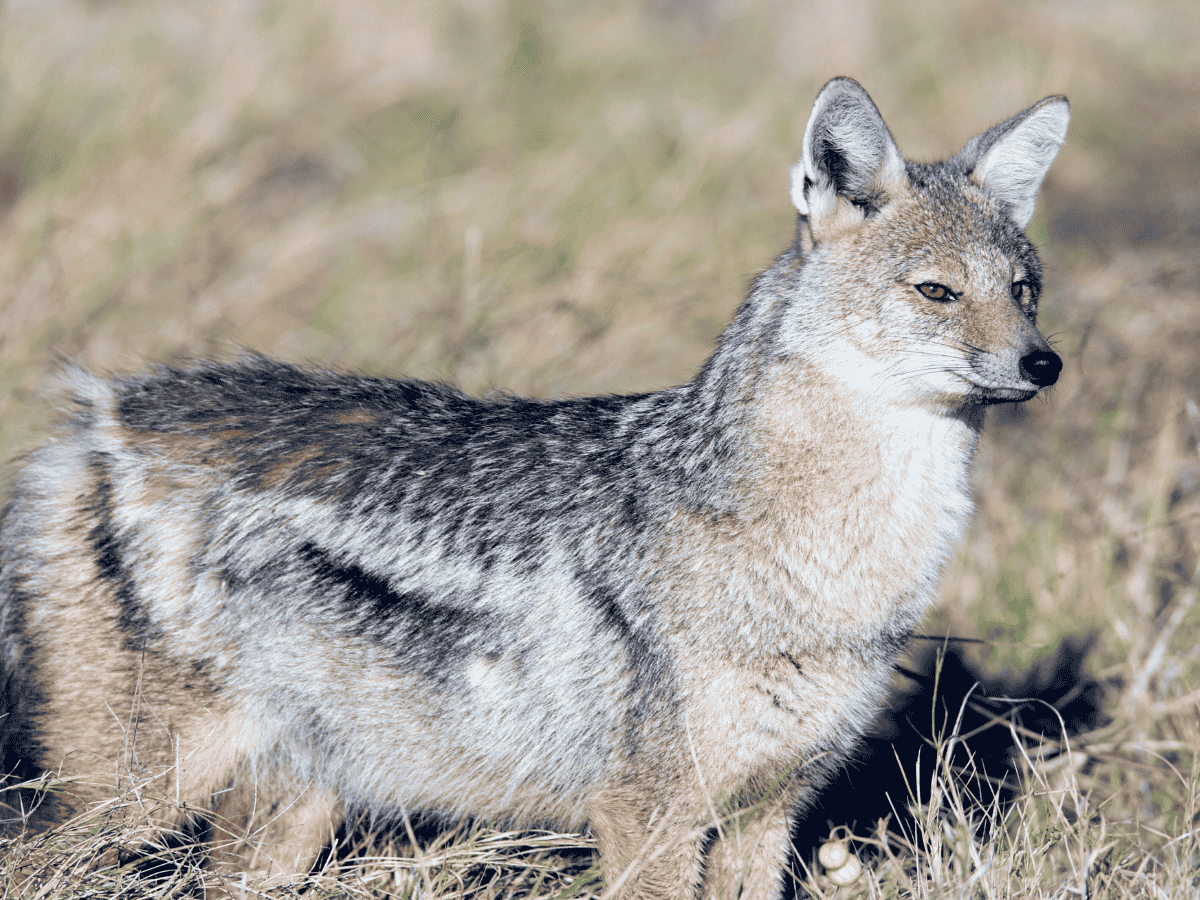
Side-striped Jackals are slightly larger with grey coats and a pale stripe along the side. They have bushier tails and more rounded ears. They may be confused with black-backed jackals, but lack the dark saddle.
Behaviour
Side-striped jackals are shy omnivores that feed on small animals, fruit, insects, and carrion. They usually forage alone or in pairs and prefer areas with thicker vegetation. They are mainly active at night and are less visible than other jackal species. They maintain territories and communicate through softer calls. Breeding pairs raise their young together, often in hidden dens. On safari, sightings are less common, but travellers may occasionally see them moving quietly along woodland edges or near water, foraging cautiously and avoiding open spaces.
Diet
Side-striped jackals are omnivores that feed on small animals, fruit, insects, and carrion. They are less active hunters than black-backed jackals and rely more on scavenging and plant matter. They feed mostly at night and often move alone or in pairs. Their diet changes with the seasons, with more fruit eaten when available. They are shy and less often seen. Their adaptable diet allows them to survive in woodland and wetter habitats.
Habitat
Side-striped jackals prefer woodland, savanna, and areas with thicker vegetation compared to black-backed jackals. Their habitat provides cover and access to a varied diet. They are more associated with moist environments and areas near water. Terrain is often more wooded and less open. Travellers are less likely to see them, but sightings occur in quieter, bushier areas of reserves where their shy and nocturnal behaviour makes them harder to detect.
Conservation Status
Side-striped jackals are listed as least concern, with stable populations. Their biggest threats include habitat loss and conflict with people. They prefer more wooded habitats compared to other jackals. Strong populations exist in protected areas. Safari tourism supports these ecosystems and helps ensure their continued survival.
Interesting Facts
Side-striped jackals are more elusive and less vocal than their black-backed relatives. They have a pale stripe along their sides and a bushier tail. These jackals prefer denser habitats and are often active at night. They are omnivorous, feeding on fruits, insects, and small animals. Side-striped jackals are typically seen alone or in pairs, and their shy nature makes them less frequently spotted on safari.
Folklore
Side-striped jackals are associated with caution, adaptability, and quiet intelligence. Their more secretive nature compared to other jackals has linked them to subtlety and awareness. In some traditions, they represent careful movement and survival through observation. Their presence reinforces themes of patience and adaptability.