
Southern Carmine Bee-eater | A Complete Birding Guide
Learn to identify Southern Carmine Bee-eater and where to see itOverview
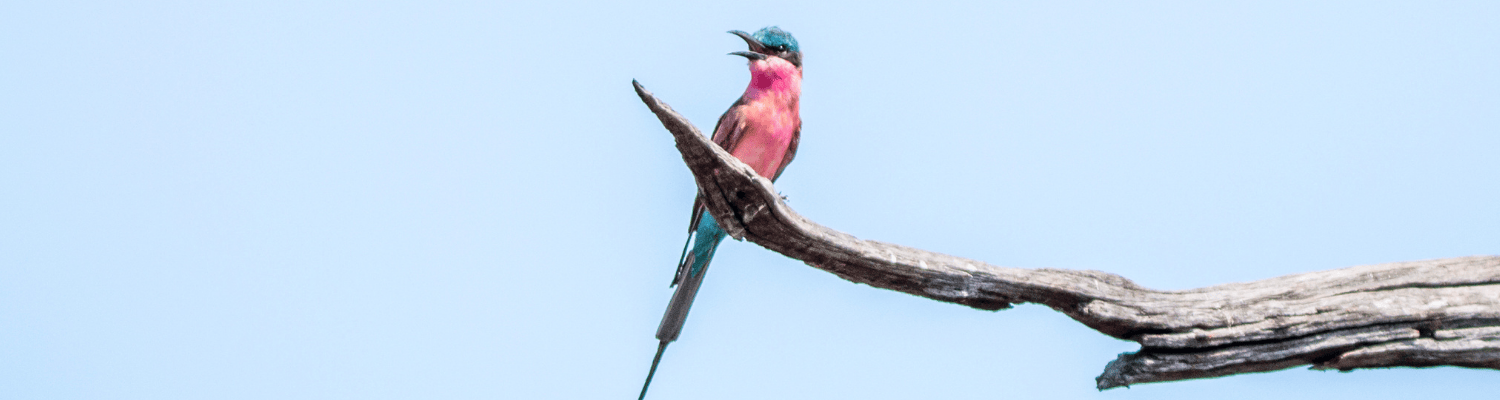
The Southern Carmine Bee-eater is a striking bird with bright red plumage and blue-green accents. It is found near rivers and open plains across Southern Africa. Often seen in large colonies, it nests in riverbanks and hunts insects in flight. Its colour, group behaviour, and movement create one of the most memorable birding spectacles.








Gallery
Summary
Best Places To See
Southern Carmine Bee-eater is most reliably found along major river systems where it nests in large colonies on sandy banks. Kruger National Park offers strong seasonal sightings, particularly along northern rivers where colonies form during breeding season. Chobe National Park provides a complementary option with large, well-known colonies along the riverbanks. These locations are reliable because suitable nesting sites and abundant insect life create predictable gathering points where birds are highly visible and active.
Best Time Of Year To See
Southern Carmine Bee-eater is most consistently seen during the warmer months when it arrives to breed along riverbanks. During this time, large colonies form, and birds are highly active and vocal. Increased insect availability supports constant feeding behaviour. Outside of this period, the species is largely absent from these areas. Summer provides the best opportunity, with large, visible colonies, continuous movement, and high activity levels creating exceptional viewing conditions.
Identification
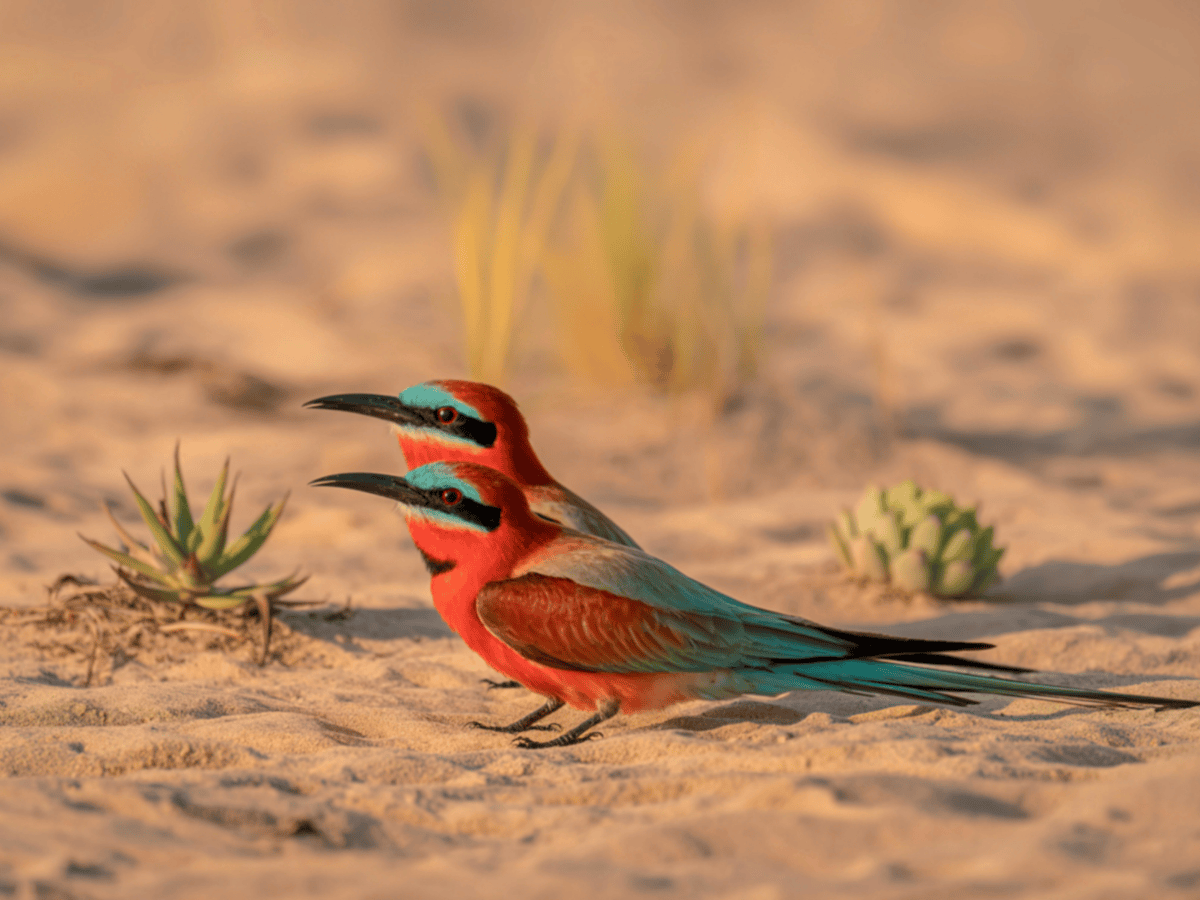
Southern Carmine Bee-eater is a slender bird with vivid pink-red plumage, a blue-green head, and a long, slightly curved black bill. It has elongated central tail feathers and a graceful shape in flight. Males and females are similar in appearance. Its bright colour and flocking behaviour make it easy to identify. It can be confused with other bee-eaters, but its strong red colouring clearly distinguishes it.
Behaviour
Southern Carmine Bee-eater feeds on flying insects, catching prey in mid-air with smooth, agile flight. It is highly social and often seen in large groups, especially around breeding colonies. Birds perch together and repeatedly launch into the air to feed. The species is active throughout the day and produces soft calls. Travellers are most likely to observe constant aerial movement and group behaviour.
Diet
Southern Carmine Bee-eater feeds primarily on flying insects such as bees, wasps, and other aerial prey. It hunts in flight, catching insects with precision before returning to a perch. Feeding is most active near water where insect density is high. During warmer months, increased prey availability supports continuous feeding activity.
Habitat
Southern Carmine Bee-eater prefers riverbanks, floodplains, and open areas near water where sandy banks allow for nesting. It is most often seen in open airspace or perched near colonies. This habitat supports both feeding and breeding. Travellers are most likely to encounter it along rivers with visible nesting sites.
Conservation Status
Southern Carmine Bee-eater is considered stable, with healthy populations supported by suitable riverine habitat. However, changes to river systems can impact local breeding sites. Protected areas such as Kruger National Park and Chobe National Park help maintain suitable conditions. Conservation of river ecosystems supports the species.
Interesting Facts
Southern Carmine Bee-eater nests in colonies dug into sandy riverbanks. Its bright red colour makes it one of the most visually striking birds in Africa. It spends much of its time in flight catching insects. Large colonies create some of the most memorable birding spectacles.
Folklore
Bright, social birds are often linked to energy and celebration in African folklore. The Southern Carmine Bee-eater’s vivid colour and group behaviour may symbolise vitality and community. Its presence along rivers reflects life and abundance. It represents the richness of natural ecosystems.