
Spotted Eagle Owl | A Complete Birding Guide
Understand Spotted Eagle Owl identification and where to see itOverview
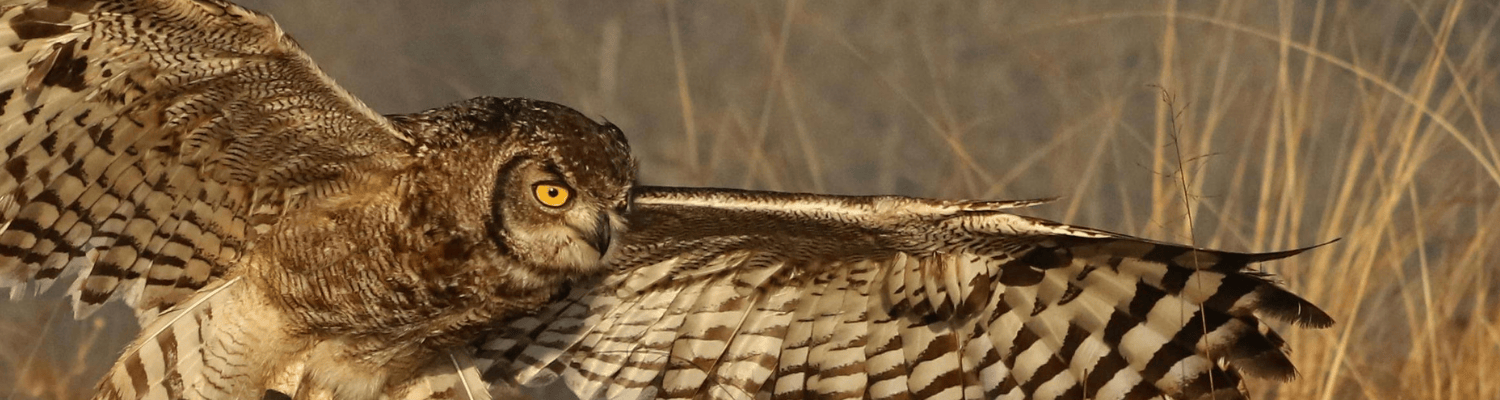
The Spotted Eagle-Owl is a medium to large owl with mottled brown plumage and prominent ear tufts. It is widely found across Africa in a variety of habitats, including savannas and even urban areas. Often seen perched at dusk, it hunts small animals from elevated positions. Its adaptability and visibility make it a common and rewarding owl to observe.








Gallery
Summary
Best Places To See
Spotted Eagle-Owl is most reliably found in open savanna, woodland, and semi-arid regions where trees, rocky outcrops, or open perches provide suitable roosting sites. Kruger National Park offers some of the most consistent sightings, particularly in areas with scattered trees and good visibility where individuals often perch in the open during the day. Etosha National Park provides a strong complementary option with expansive open terrain and accessible viewing conditions. These locations are reliable because the species is highly adaptable and frequently uses exposed perches, making it easier to detect both during daylight hours and on night drives.
Best Time Of Year To See
Spotted Eagle-Owl can be seen throughout the year, with consistently good visibility due to its adaptability and tendency to perch in open areas. Sightings are often most rewarding during warmer months when birds are more active at night and vocal during breeding season. Increased prey availability during this period supports more frequent hunting and movement. In cooler months, the species remains present but may be slightly less active. Early morning, late afternoon, and night drives generally provide the best opportunities for clear and reliable sightings.
Identification
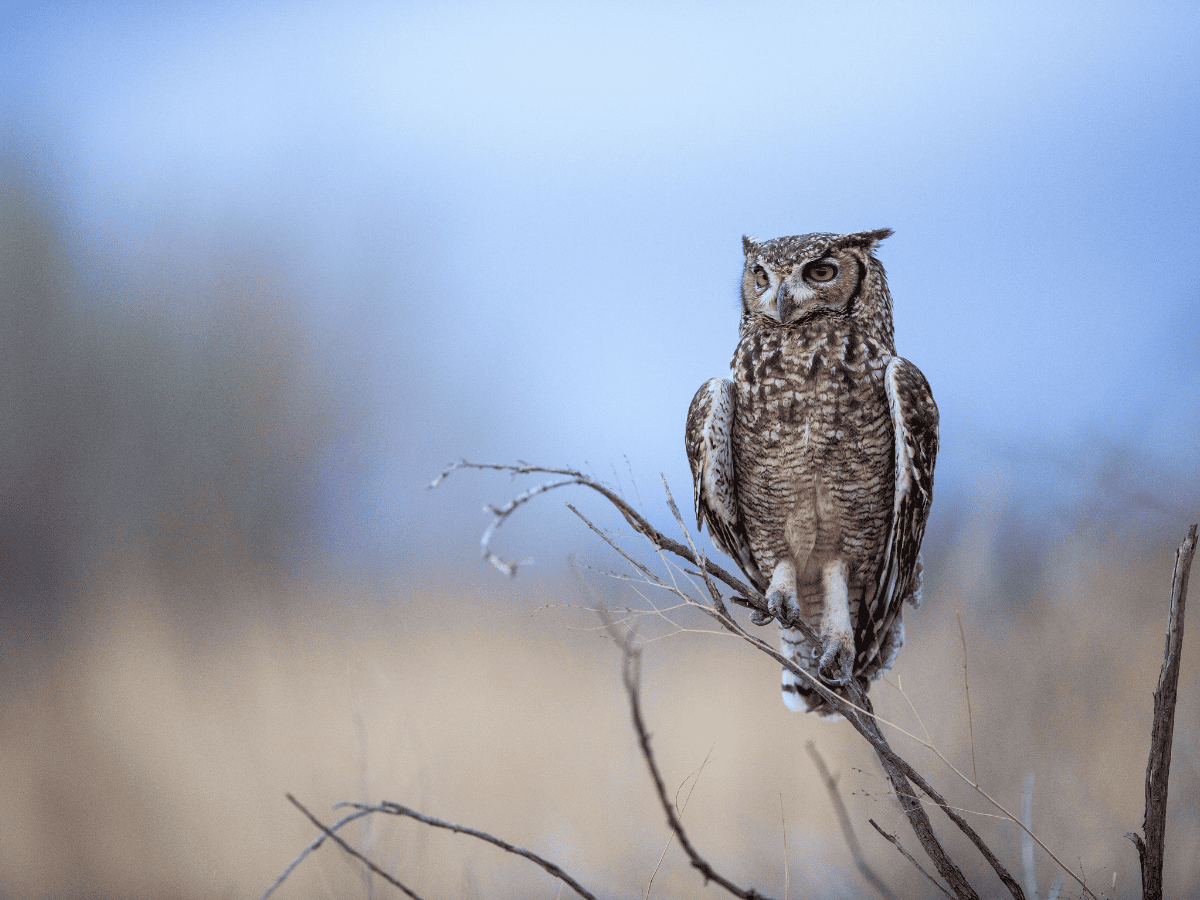
Spotted Eagle-Owl is a medium to large owl with mottled brown plumage, a rounded facial disc, and prominent ear tufts that give it a distinctive silhouette. Its bright yellow eyes stand out clearly against its darker face. It has a strong, compact body and broad wings. Males and females are similar in appearance, although females are typically larger. It can be confused with other eagle-owls, but its size, overall pattern, and relatively smaller build help distinguish it from larger species.
Behaviour
Spotted Eagle-Owl feeds mainly on small mammals, birds, reptiles, and insects, hunting at night from elevated perches. It typically sits still while scanning for movement before launching silent, controlled flights to capture prey. The species is usually solitary or seen in pairs and becomes more vocal during breeding season. During the day, it often roosts in trees or shaded areas. Travellers are most likely to observe it perched quietly during daylight or actively hunting during night drives.
Diet
Spotted Eagle-Owl has a varied diet that includes small mammals, birds, reptiles, and large insects. It hunts by watching from a perch and then making a silent descent to capture prey on the ground or in low vegetation. Feeding activity is most intense at night when prey is more active. During warmer months, increased prey availability supports more frequent hunting. Its flexible diet allows it to adapt to a wide range of habitats and maintain stable populations.
Habitat
Spotted Eagle-Owl prefers open savanna, woodland, semi-arid areas, and even lightly developed landscapes where trees or rocky outcrops provide suitable roosting and nesting sites. It is most often found perched in exposed positions that offer a clear view of its surroundings. This habitat supports both efficient hunting and visibility. Travellers are most likely to encounter it in open environments with scattered trees and good sightlines, especially where bird activity is high.
Conservation Status
Spotted Eagle-Owl is considered stable and widespread, with no major threats affecting overall populations across its range. Its adaptability to both natural and modified environments supports its resilience. However, local disturbances and habitat changes can affect populations in certain areas. Protected areas such as Kruger National Park and Etosha National Park play an important role in maintaining suitable conditions. Conservation of open ecosystems and responsible land management help ensure the continued presence of this species.
Interesting Facts
Spotted Eagle-Owl is one of the most commonly encountered owl species in Southern Africa and is often seen during the day resting in trees. Its bright yellow eyes are highly distinctive and give it an intense, watchful appearance. It adapts well to human-altered landscapes, sometimes occurring near settlements. Despite its regular presence, it remains a highly effective nocturnal predator, playing an important role in controlling small animal populations within its habitat.
Folklore
Owls are often associated with mystery, awareness, and the unseen in African folklore. The Spotted Eagle-Owl, with its piercing eyes and quiet presence, may symbolise watchfulness and perception beyond what is immediately visible. Its ability to move silently at night reflects ideas of hidden knowledge and subtle awareness. In some traditions, owls are seen as messengers or indicators of change, and this species’ frequent presence in both wild and semi-developed areas reinforces its connection to observation and balance within the natural world.