
Spotted Hyena | A Complete Safari Guide
Learn about spotted hyena behaviour and where to find them on safariOverview
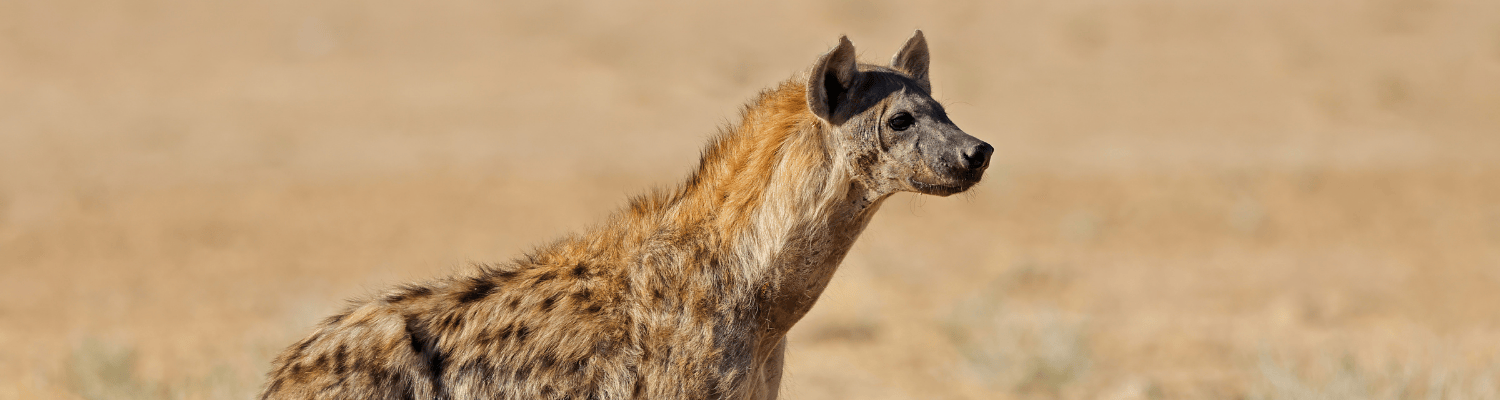
The spotted hyena is a powerful and intelligent predator, known for its sloping back, strong jaws, and distinctive spotted coat. It is widely found across sub-Saharan Africa, often in savannas and open woodlands. Hyenas live in large clans with complex social structures, and are active both as hunters and scavengers. For travellers, they offer fascinating sightings, especially at night or around kills. Their eerie calls and bold behaviour make them one of the most memorable animals on safari, playing a vital role in keeping ecosystems balanced.









Gallery
Summary
Best Places To See
Spotted hyenas are most reliably seen in areas with high predator density and strong prey availability, with the Serengeti National Park in Tanzania standing out as a flagship destination due to its large clans and constant interaction with the Great Migration. In Kenya, the Masai Mara National Reserve offers equally consistent sightings, especially around river systems and open plains. In Southern Africa, Kruger National Park and adjacent reserves such as Sabi Sands Game Reserve provide regular encounters, often around den sites and active predator areas, while in Botswana, Moremi Game Reserve delivers high-quality sightings in a mix of floodplains and woodland where hyenas thrive.
Best Time Of Year To See
The best time to see spotted hyenas is during the dry season, when shorter grass and reduced vegetation make it easier to locate clans and follow their movements. As prey gathers around limited water sources, hyenas benefit from more predictable hunting opportunities, increasing activity and encounter rates. They are most active at night, but early morning and late afternoon often reveal individuals returning to dens or resting near them. In the wet season, thicker vegetation and dispersed prey can make sightings less consistent, although den sites still offer reliable viewing and conditions are quieter with fewer vehicles.
Identification
Spotted Hyenas are large, stocky animals with sloping backs, powerful shoulders, and spotted coats. Their fur is sandy with dark spots, and they have strong jaws and a distinctive laugh-like call. Females are larger than males and dominate the group. Cubs are born with dark coats that lighten as they age. They may be confused with brown hyenas, but spotted hyenas have shorter fur and clearer spots. Their confident walk and social clan structure make them easy to recognise.
Behaviour
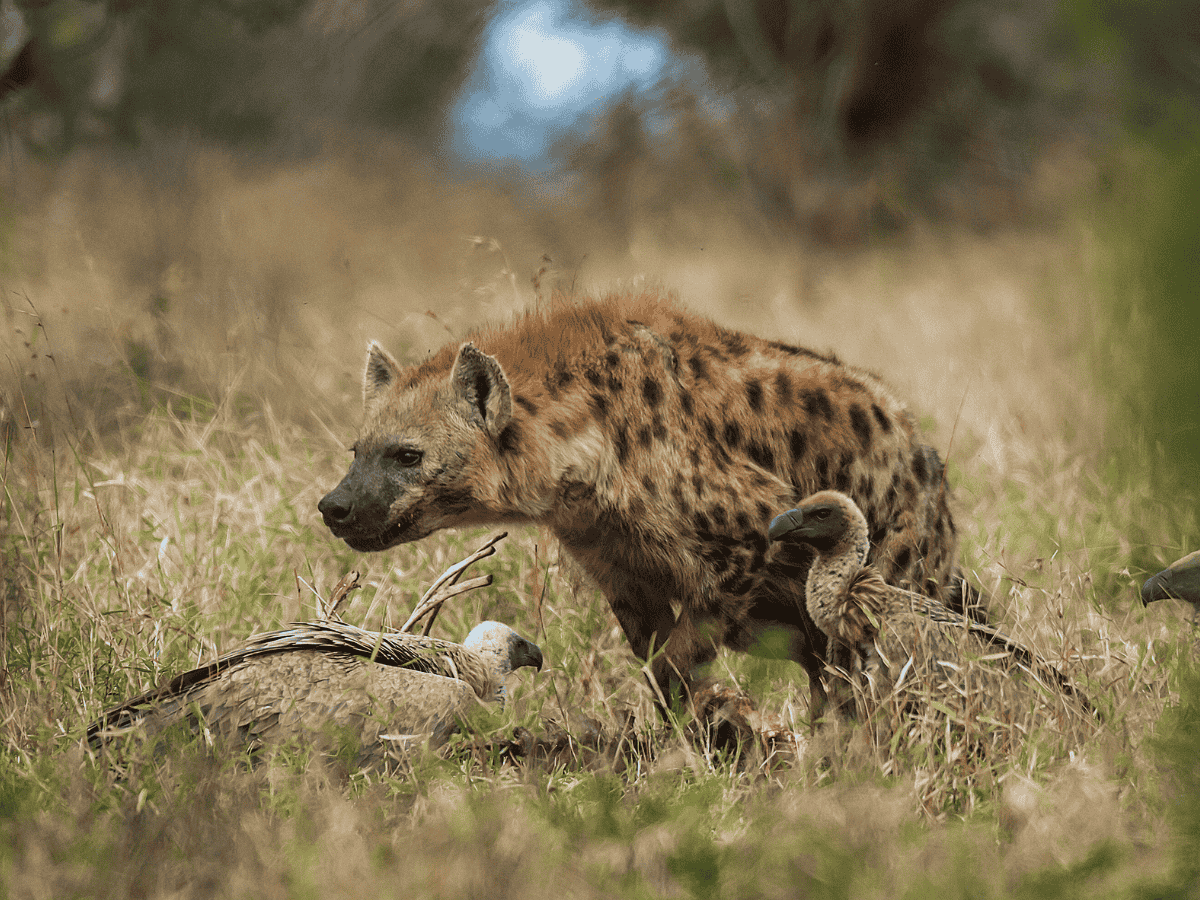
Spotted hyenas are both hunters and scavengers, feeding on a wide variety of prey. They live in large clans with a clear hierarchy led by dominant females. They are active mostly at night but can be seen during the day. They communicate through vocalisations and scent marking. On safari, travellers often see them near kills, moving between territories, or resting near dens.
Diet
Spotted hyenas are powerful carnivores that both hunt and scavenge. They hunt medium to large prey, often working in groups to bring down animals like wildebeest or zebra. They also scavenge from other predators when possible. Their strong jaws allow them to crush bones and consume almost the entire carcass. Feeding is competitive, with dominant individuals eating first. Their diet is flexible and depends on opportunity. They are active mostly at night. Their role as both hunters and scavengers makes them important in maintaining balance in the ecosystem.
Habitat
Spotted hyenas are highly adaptable and found in savanna, grassland, woodland, and even semi-desert areas. Their habitat is linked to prey availability rather than specific terrain. They often use dens in open areas or rocky outcrops. Hyenas are commonly found near water but can survive in drier regions. Travellers frequently see them in open areas, especially at dawn or dusk, or near dens where clans gather. Areas with high predator activity often offer the best sightings.
Conservation Status
Spotted hyenas are currently listed as least concern, with stable populations across much of Africa. However, they still face threats from habitat loss and conflict with people, particularly where they come into contact with livestock farming. In some areas, they are persecuted due to negative perceptions. Despite this, they remain one of Africa’s most adaptable and successful predators. Strong populations exist in protected areas where they play an important ecological role. Safari tourism helps support these ecosystems and promotes a better understanding of hyenas, contributing to their continued survival.
Interesting Facts
Spotted hyenas are powerful hunters, not just scavengers as often believed, and can take down large prey with remarkable efficiency. They have one of the strongest bite forces in the animal kingdom, capable of crushing bones. Their social structure is matriarchal, with females dominating males. Hyenas communicate using a range of vocalisations, including their famous “laugh,” which signals excitement or tension within the clan.
Folklore
Spotted hyenas have a complex cultural image, often associated with cunning, adaptability, and survival. In some African folklore, they are portrayed as clever opportunists, able to thrive in challenging conditions. While sometimes viewed negatively due to their scavenging habits, they are also respected for their intelligence and resilience. Their role in cleaning the ecosystem has led to a more balanced understanding, highlighting their importance in maintaining natural cycles.