
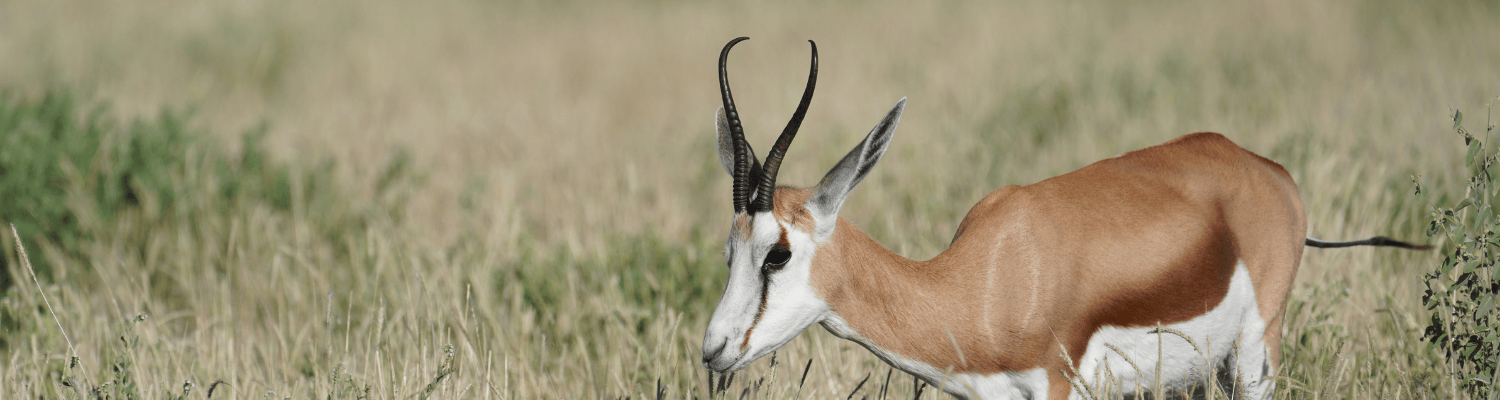
Springbok | A Complete Safari Guide
Learn how to identify springbok and where to find them on safariOverview
The springbok is a small and graceful antelope, known for its light brown and white colouring and its energetic, bouncing movements. It is found mainly in southern Africa, especially in open plains and semi-arid regions. Springbok are often seen in groups and are famous for “pronking,” where they leap high into the air in a display of energy and alertness. For travellers, they bring life and movement to the landscape. Their speed and agility also make them an important part of the ecosystem, supporting many predators.









Gallery
Summary
Best Places To See
Springbok are most reliably seen in open, arid environments where visibility is high and grazing conditions suit large herds, with Kgalagadi Transfrontier National Park standing out as a flagship destination due to its vast, sparsely vegetated landscapes and consistently strong populations. In South Africa, areas within the Kalahari and Karoo regions, including private reserves such as Tswalu Kalahari, offer high-quality sightings supported by low vegetation and open terrain. In Namibia, Etosha National Park provides regular encounters, particularly around waterholes where springbok gather, making sightings both predictable and easy to observe.
Best Time Of Year To See
The best time to see springbok is during the dry season, when they gather in open plains with shorter grass, making sightings easy and consistent. In some regions, large movements occur in response to rainfall. During the wet season, they spread out across wider areas with abundant grazing, although they remain visible in open habitats.
Identification
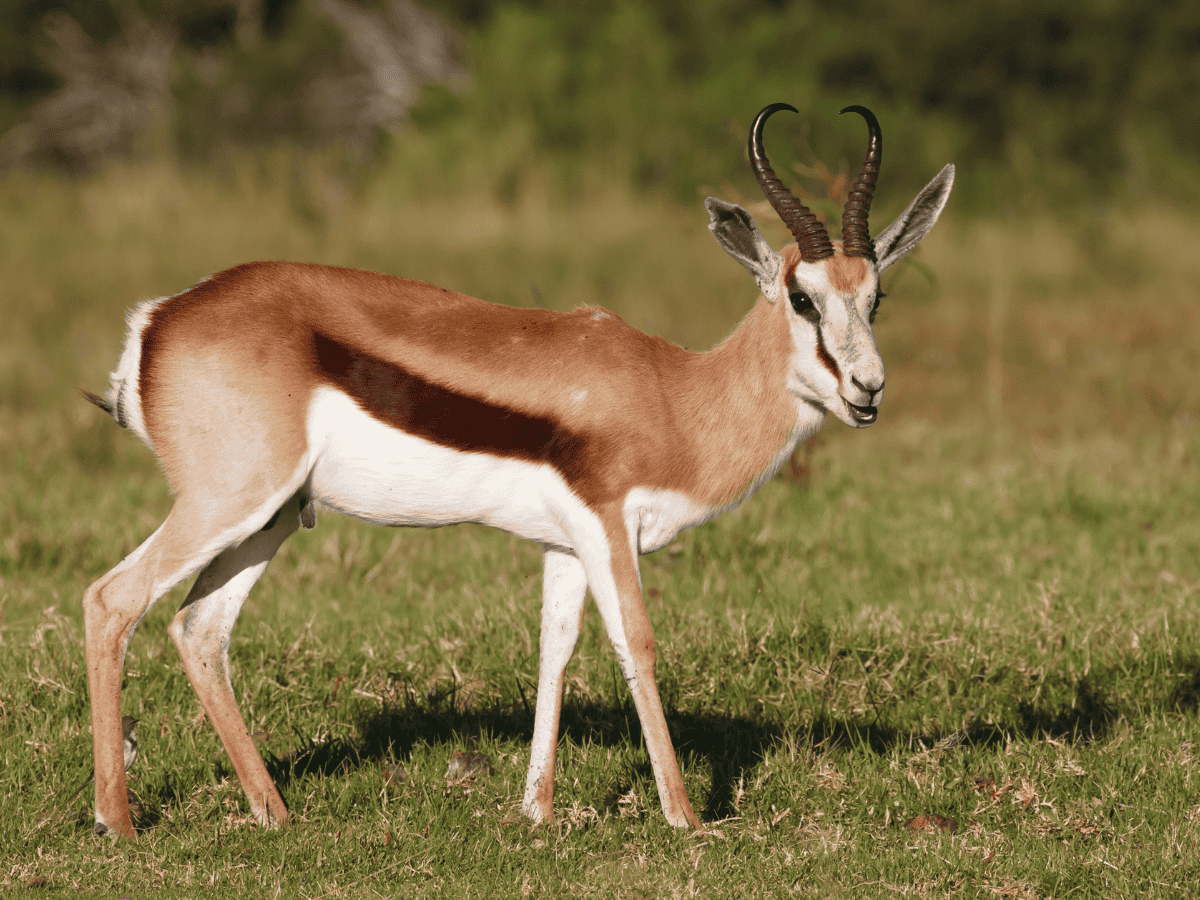
Springbok are small antelope with tan backs, white bellies, and a dark stripe along the side. They have slender horns in both males and females. They are known for their high jumps called pronking. They may be confused with impala, but springbok are smaller and have a distinct side stripe. Their behaviour makes them easy to identify.
Behaviour
Springbok are grazers and browsers that live in herds. They are known for their energetic jumping displays called pronking. On safari, they are often seen in open areas moving in groups.
Diet
Springbok are mixed feeders that graze on grasses and browse on shrubs when needed. They are well adapted to dry environments and can survive long periods without drinking water by getting moisture from plants. They feed mostly during cooler parts of the day. During dry seasons, they rely more on shrubs and hardy vegetation. They are selective feeders and often choose nutrient-rich plants. Their diet supports their ability to live in open, dry landscapes where food and water can be limited.
Habitat
Springbok are found in open plains, semi-arid regions, and desert grasslands where vegetation is sparse. Their habitat is shaped by low rainfall and wide-open spaces. They are well adapted to dry conditions and can survive with limited water. Terrain is typically flat and expansive. Travellers most often see springbok in large herds across open landscapes, particularly in arid regions where their speed and behaviour are easily observed.
Conservation Status
Springbok are listed as least concern, with healthy populations in southern Africa. Their main threats include habitat changes and fencing, which can limit movement. However, they remain one of the most common antelope in open landscapes. Conservation management and protected areas have helped maintain stable numbers. Safari tourism supports these environments and contributes to the preservation of the open plains that springbok depend on.
Interesting Facts
Springbok are famous for their unique “pronking” behaviour, where they leap into the air with stiff legs and arched backs. This display may signal fitness to predators or communicate with other springbok. They are well adapted to arid environments and can survive without direct access to water. Springbok have a distinctive white and brown coat with a dark stripe along their sides, making them easily recognisable.
Folklore
Springbok are widely recognised as symbols of energy, freedom, and national identity in southern Africa. Their distinctive jumping behaviour, known as pronking, has been interpreted as a display of vitality and strength. In some traditions, they represent resilience and adaptability in open landscapes. Their cultural significance extends to modern symbolism, reinforcing pride and connection to the land.