
Trumpeter Hornbill | A Complete Birding Guide
Learn to identify Trumpeter Hornbill and where to find itOverview
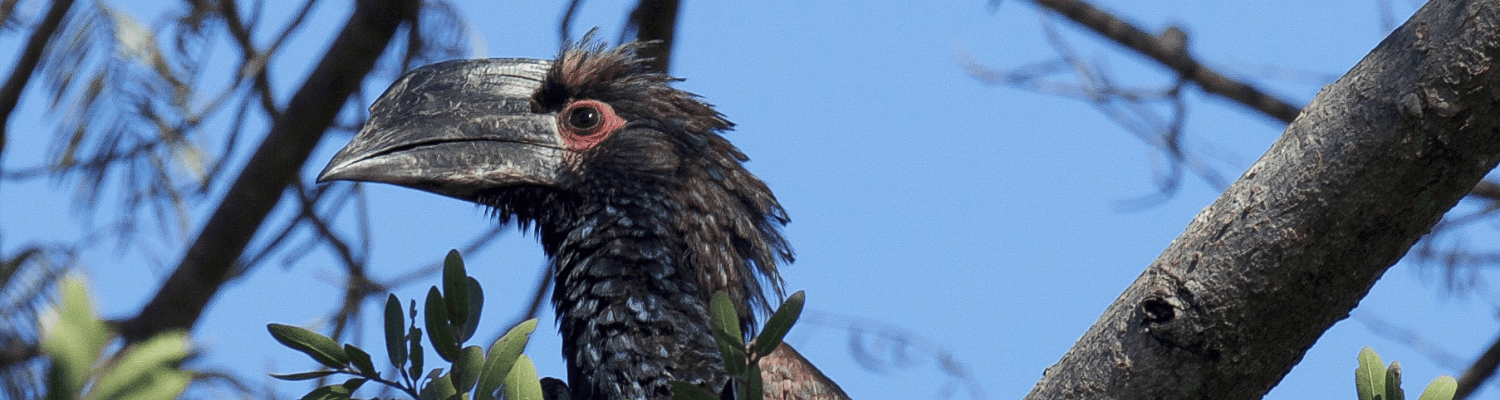
The Trumpeter Hornbill is a medium-sized bird with black plumage, a white belly, and a large curved bill. It is found in forests and woodlands across parts of Southern and East Africa. Often moving through trees in small groups, it feeds on fruit and insects. Its loud, trumpeting calls and active nature make it easy to notice.








Gallery
Summary
Best Places To See
The Trumpeter Hornbill is most reliably found in dense coastal forest and riverine woodland where tall trees provide feeding and nesting sites. iSimangaliso Wetland Park offers some of the most consistent sightings, particularly in coastal forest where fruiting trees attract feeding birds. Tsitsikamma National Park provides a strong complementary option with well-preserved forest habitat and excellent canopy visibility. These locations are reliable because rich forest ecosystems support high fruit availability and stable populations, allowing birds to move actively and remain detectable through calls and movement.
Best Time Of Year To See
The Trumpeter Hornbill can be seen throughout the year, but sightings are most consistent during warmer months when fruiting trees are abundant and feeding activity increases. During this time, birds move more frequently through the canopy and vocalise more often, improving detection. Breeding season may also increase territorial behaviour and calling. In cooler months, activity may decrease slightly, although the species remains present. Early mornings are particularly productive, when birds are most active and vocal within forest environments.
Identification
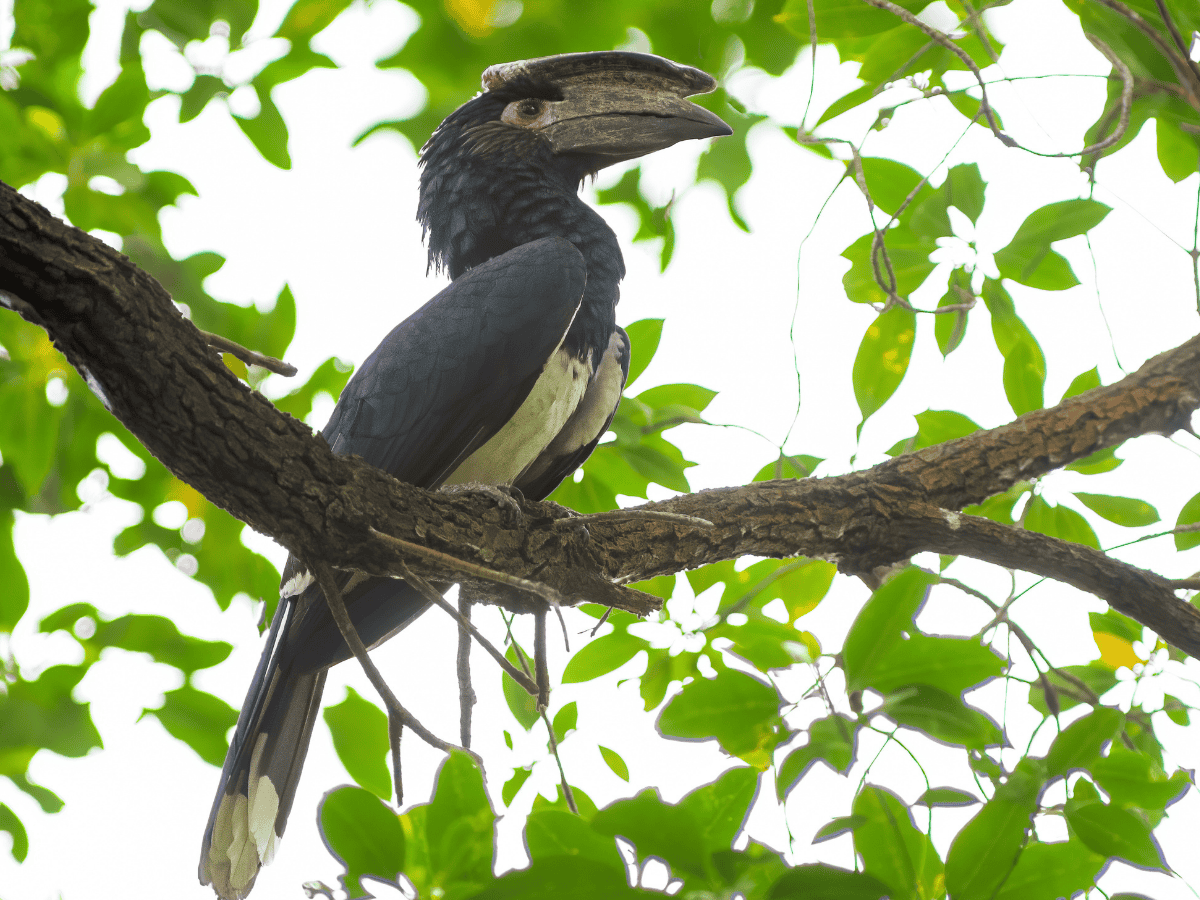
The Trumpeter Hornbill is a medium-sized bird with glossy black plumage, a long tail with white tips, and a bright red bill that stands out clearly against its dark body. It has a slightly curved bill and a slender, elongated shape typical of hornbills. Males and females are similar, although females may show subtle differences in facial skin colour. Its loud call and active canopy movement help with identification. It can be confused with other hornbills, but its bill colour and forest habitat distinguish it.
Behaviour
The Trumpeter Hornbill feeds mainly on fruit, but also takes insects and small animals when available. It moves actively through the canopy, hopping and gliding between branches while searching for food. The species is often seen in pairs or small groups and produces loud, nasal calls that carry over long distances. During breeding season, it uses tree cavities for nesting. Travellers are most likely to observe it moving through treetops or calling from elevated perches.
Diet
The Trumpeter Hornbill feeds primarily on fruit, including figs and other forest fruits, which form the bulk of its diet. It also consumes insects, small reptiles, and other animal matter when available. It forages in the canopy, picking fruit directly from branches or making short flights between feeding sites. During warmer months, increased fruit availability supports higher feeding activity. Its diet reflects its important role in seed dispersal within forest ecosystems.
Habitat
The Trumpeter Hornbill prefers dense forest, coastal woodland, and riverine forest where tall trees provide food and nesting sites. It is most often found in the upper canopy, moving through dense foliage. This habitat supports both feeding and breeding requirements. Travellers are most likely to encounter it in well-preserved forest areas with high fruit availability and active birdlife.
Conservation Status
The Trumpeter Hornbill is considered stable, although it depends on intact forest habitats for long-term survival. Habitat loss and deforestation can impact local populations, particularly in coastal regions. Protected areas such as iSimangaliso Wetland Park and Tsitsikamma National Park help maintain suitable conditions. Conservation of forest ecosystems and responsible land use are essential for supporting this species and ensuring its continued presence.
Interesting Facts
The Trumpeter Hornbill gets its name from its loud, trumpet-like call, which is often heard echoing through the forest before the bird is seen. It plays an important role in dispersing seeds, helping maintain forest health. Unlike some hornbills, it is often seen in small groups. Its bright red bill contrasts sharply with its dark body, making it easier to spot in good light.
Folklore
Hornbills are often associated with communication and connection in African folklore due to their loud, distinctive calls. The Trumpeter Hornbill’s voice may symbolise announcement or presence within the forest. Its movement through the canopy reflects connection between different layers of nature. In some interpretations, forest birds that call loudly are seen as messengers, reinforcing this species’ link to awareness and communication within dense natural environments.