
Verreaux Eagle | A Complete Birding Guide
Discover Verreaux Eagle identification and where to see itOverview
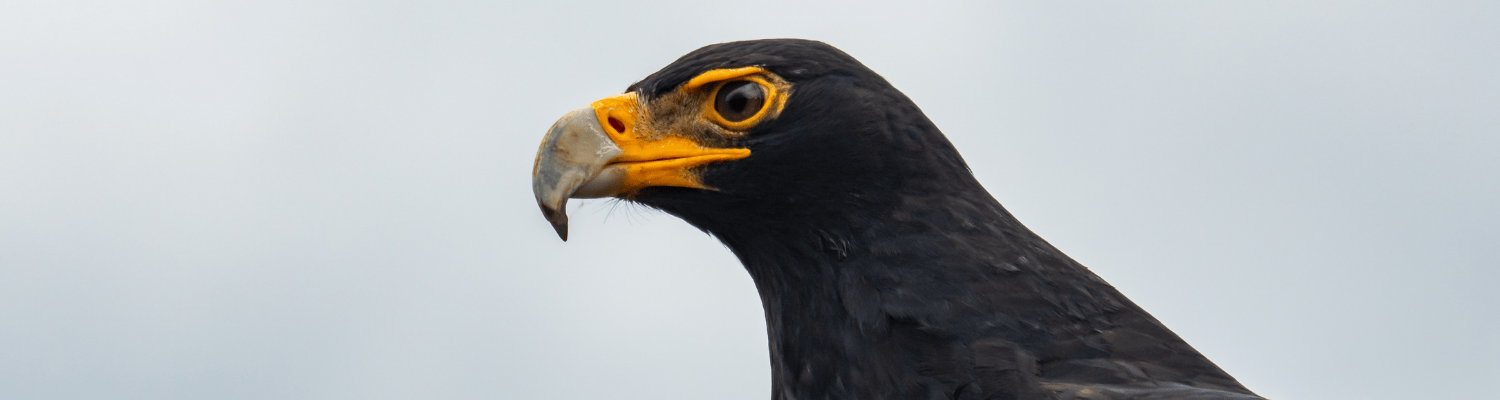
Verreaux’s Eagle is a large, powerful raptor with glossy black plumage and a pale back that stands out in flight. It is found in mountainous and rocky areas across Africa. Often seen soaring along cliffs, it hunts mammals such as rock hyrax. Its strength and association with dramatic landscapes make it a memorable species for birders.








Gallery
Summary
Best Places To See
Verreaux’s Eagles are most reliably found in mountainous and rocky terrain where cliffs provide nesting sites and prey such as rock hyrax are abundant. Marakele National Park offers some of the most consistent sightings, particularly around steep cliffs where birds soar close to the terrain. Tsitsikamma National Park provides a strong complementary option with rugged landscapes and suitable habitat. These locations are reliable because stable nesting sites, abundant prey, and strong updrafts allow the species to soar predictably and remain visible along cliff faces.
Best Time Of Year To See
Verreaux’s Eagles can be seen throughout the year, with consistently good visibility due to their territorial nature and reliance on resident prey. Sightings are often most rewarding during warmer months when thermal currents are strong, allowing birds to soar more actively along cliffs. Breeding season may also increase aerial displays and vocal activity. In cooler months, they remain present but may be less active. Mid-morning to early afternoon is often the most productive period, when soaring activity peaks.
Identification
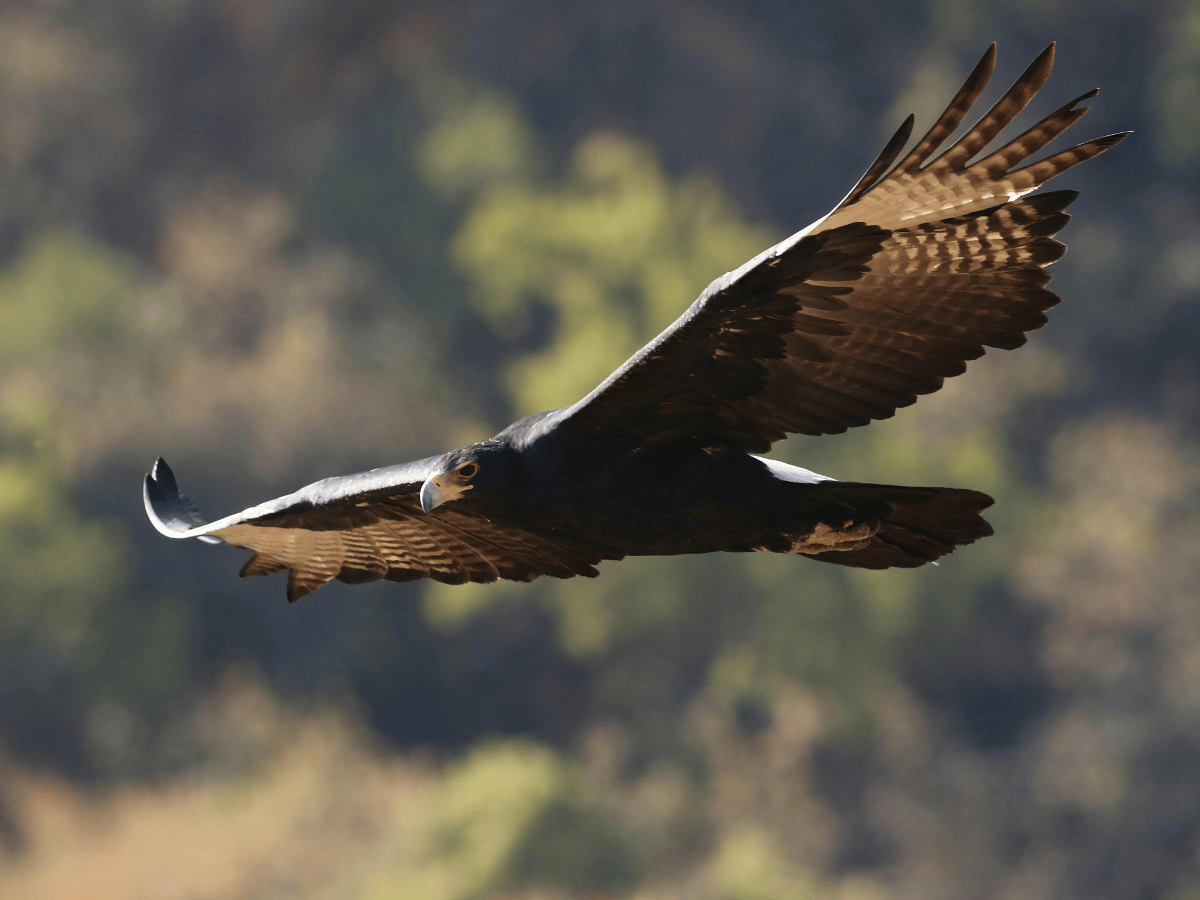
Verreaux’s Eagles are large, dark eagles with entirely black plumage and a distinctive pale back that forms a clear “V” shape when viewed in flight. They have broad wings, a relatively long tail, and bright yellow eyes. Their flight is strong and controlled, often along cliff edges. Males and females are similar, although females are larger. They are unlikely to be confused with other species due to their unique colouring and habitat preference.
Behaviour
Verreaux’s Eagles feed mainly on rock hyrax, using speed and precision to capture prey in rocky terrain. They often hunt in pairs and are highly territorial, remaining close to nesting areas throughout the year. They soar along cliffs and ridges, using updrafts to conserve energy. Travellers are most likely to observe them gliding near rocky slopes or perched on cliff ledges.
Diet
Verreaux’s Eagles feed primarily on rock hyrax, although they may also take small mammals, birds, and reptiles. They hunt by using terrain to their advantage, launching fast, controlled attacks from above. Feeding activity is consistent throughout the year due to stable prey availability. Their specialised diet reflects their close association with rocky habitats and their role as top predators within these ecosystems.
Habitat
Verreaux’s Eagles prefer mountainous regions, rocky outcrops, and cliff-dominated landscapes where nesting and hunting opportunities are closely linked. They are most often seen soaring along ridgelines or perched on cliffs. This habitat supports both breeding and feeding. Travellers are most likely to encounter them in rugged terrain with steep slopes and strong updrafts.
Conservation Status
Verreaux’s Eagles are considered stable, although they depend on undisturbed cliff habitats and healthy prey populations. Habitat disturbance and human activity near nesting sites can impact breeding success. Protected areas such as Marakele National Park and Tsitsikamma National Park help maintain suitable conditions. Conservation of mountainous ecosystems and minimising disturbance are key to supporting this species.
Interesting Facts
Verreaux’s Eagles are highly specialised hunters of rock hyrax and are rarely found far from suitable prey. They often form long-term pair bonds and use the same nesting sites for many years. Their striking “V” pattern in flight makes them easy to recognise from a distance. They are among the most powerful raptors in rocky environments.
Folklore
Large eagles are often associated with strength and authority in African folklore. Verreaux’s Eagles, with their presence in high, rugged landscapes, may symbolise dominance and elevated perspective. Their ability to navigate cliffs reflects control and precision. In some interpretations, mountain-dwelling birds represent connection between land and sky, reinforcing their link to power and balance within natural systems.