
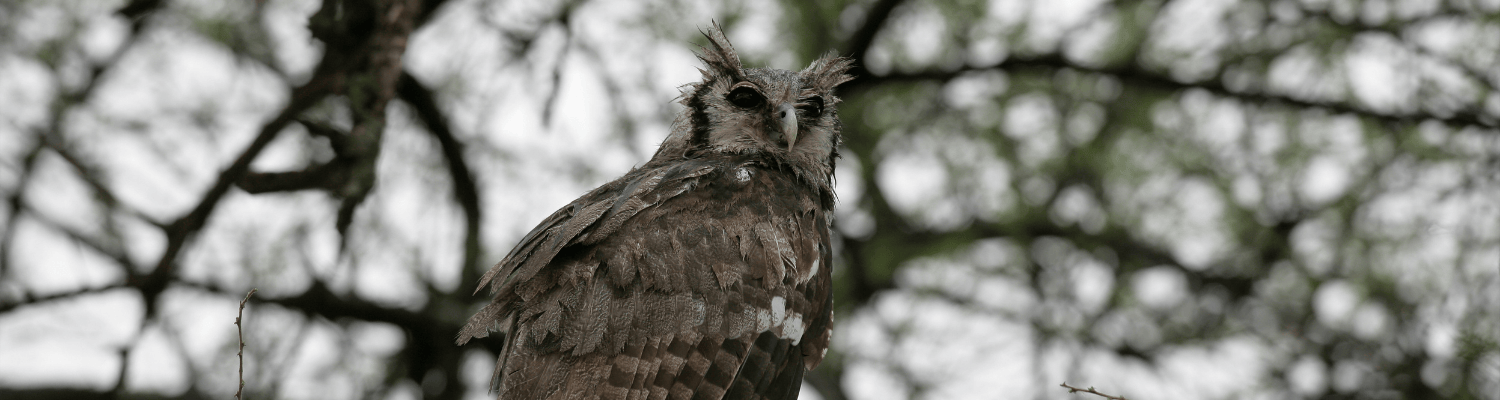
Verreaux’s Eagle-Owl | A Complete Birding Guide
Understand Verreaux’s Eagle-Owl identification and where to spot itOverview
Verreaux’s Eagle-Owl is a large, powerful owl with dark plumage and striking pink eyelids that stand out in low light. It is found in woodlands and savannas across Africa. Often seen roosting in large trees during the day, it becomes active at night. Its size and distinctive features make it one of the most impressive owls on safari.








Gallery
Summary
Best Places To See
Verreaux’s Eagle-Owl is most reliably found in open woodland and riverine areas where large trees provide suitable roosting and nesting sites. Kruger National Park offers some of the most consistent sightings, particularly in well-wooded areas near rivers where large trees support stable territories. Chobe National Park provides a strong complementary option with similar habitat and good visibility along river systems. These locations are reliable because the species often roosts in prominent trees and uses predictable territories, increasing the chances of both daytime and night-time sightings.
Best Time Of Year To See
Verreaux’s Eagle-Owl can be seen throughout the year, but sightings are most consistent during warmer months when birds are more active and vocal during breeding season. Increased prey availability during this period supports more frequent hunting and movement. Their deep calls are more regularly heard at night, making them easier to locate. In cooler months, activity may decrease slightly, although the species remains present. Night drives and early morning searches for roosting birds provide the best opportunities for reliable sightings.
Identification
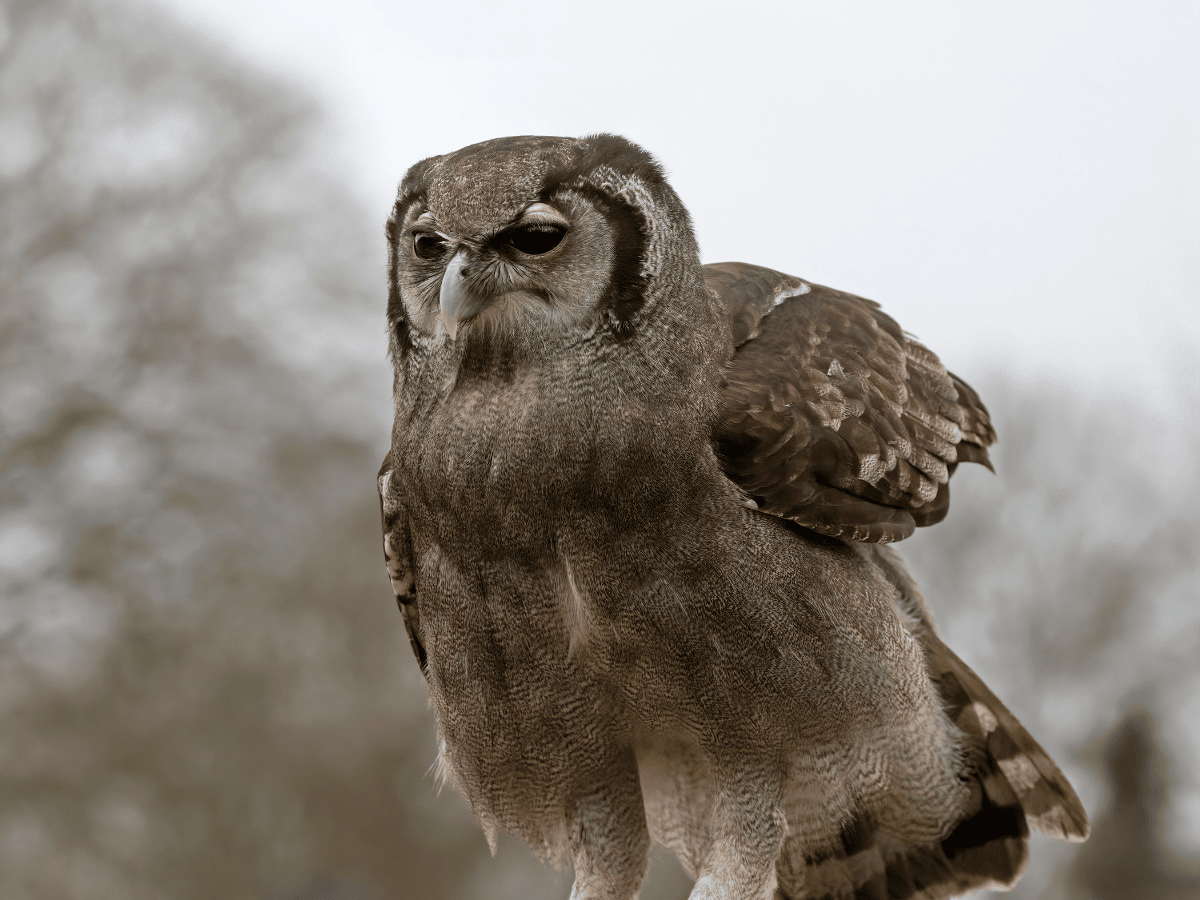
Verreaux’s Eagle-Owl is a very large owl with mottled grey plumage, a broad head, and prominent ear tufts that give it a powerful appearance. Its most distinctive feature is its pink eyelids, which are visible when the eyes are partially closed. It has a heavy build, broad wings, and a relatively short tail. Males and females are similar, though females are larger. It can be confused with other large eagle-owls, but its size, colouring, and eye features clearly distinguish it.
Behaviour
Verreaux’s Eagle-Owl feeds on a wide range of prey, including mammals, birds, and reptiles, hunting at night from elevated perches. It often sits quietly before launching powerful, silent flights to capture prey. The species is usually solitary or seen in pairs and becomes more vocal during breeding season. During the day, it roosts in large trees, often remaining still and well camouflaged. Travellers are most likely to observe it roosting during the day or hear its deep calls at night.
Diet
Verreaux’s Eagle-Owl has a varied and opportunistic diet that includes small to medium-sized mammals, birds, reptiles, and even other owls. It hunts from elevated perches, scanning for prey before making strong, silent attacks. Feeding activity is highest at night when prey is active. Its ability to take larger prey than many other owls reflects its size and strength. This flexible diet allows it to thrive across a wide range of habitats.
Habitat
Verreaux’s Eagle-Owl prefers open woodland, savanna, and riverine areas where large trees provide suitable roosting and nesting sites. It is most often found perched in tall trees, particularly in areas with access to open hunting grounds. This habitat supports both its need for cover during the day and efficient hunting at night. Travellers are most likely to encounter it in well-wooded areas near water or in mature savanna with large trees.
Conservation Status
Verreaux’s Eagle-Owl is considered stable and widespread, with no major threats affecting overall populations across its range. Its adaptability to different habitats and varied diet support its resilience. However, habitat loss and disturbance can impact local populations. Protected areas such as Kruger National Park and Chobe National Park play an important role in maintaining suitable conditions. Conservation of woodland and savanna ecosystems supports the long-term survival of this species.
Interesting Facts
Verreaux’s Eagle-Owl is capable of preying on surprisingly large animals, including other birds of prey and small mammals. Its pink eyelids are a unique feature among African owls. It often roosts in the same tree for extended periods, making it possible to locate repeatedly. Its deep, booming call carries over long distances and is one of the most recognisable night sounds in the bush.
Folklore
Large owls are often associated with power, authority, and mystery in African folklore. Verreaux’s Eagle-Owl, with its size and deep call, may symbolise strength and presence within the night. Its ability to hunt a wide range of prey reflects dominance and control. In some traditions, owls are seen as guardians or watchers of the darkness, and this species’ commanding presence reinforces its connection to awareness and balance within the natural world.