
Vervet Monkey | A Complete Safari Guide
Learn vervet monkey behaviour and how to identify them on safariOverview
The vervet monkey is a small and lively primate, known for its grey coat, black face, and long tail. It is widely found across eastern and southern Africa, especially in woodlands, savannas, and areas close to water. Vervet monkeys are highly social and often seen in active groups, moving through trees or foraging on the ground. For travellers, they are entertaining and easy to observe, offering constant activity around lodges and camps. Their alert calls and behaviour also help signal the presence of predators, adding to the safari experience.










Gallery
Summary
Best Places To See
Vervet monkeys are most reliably seen in well-watered savanna and woodland habitats where trees and river systems provide both food and shelter, with Kruger National Park standing out as a flagship destination due to consistently high densities and frequent sightings along rivers and rest camps. Adjacent private reserves such as Sabi Sands Game Reserve offer equally regular encounters, often with more relaxed, natural behaviour. In Botswana, Chobe National Park and Moremi Game Reserve provide dependable sightings along riverine forests and floodplains, while in East Africa, the Masai Mara National Reserve delivers widespread encounters in open woodland where troops move predictably throughout the day.
Best Time Of Year To See
The best time to see vervet monkeys is during the dry season, when they stay close to water sources and are easier to locate in open woodland and riverine areas. They are active during the day and often visible in trees or on the ground. In the wet season, they remain common but may spread out slightly.
Identification
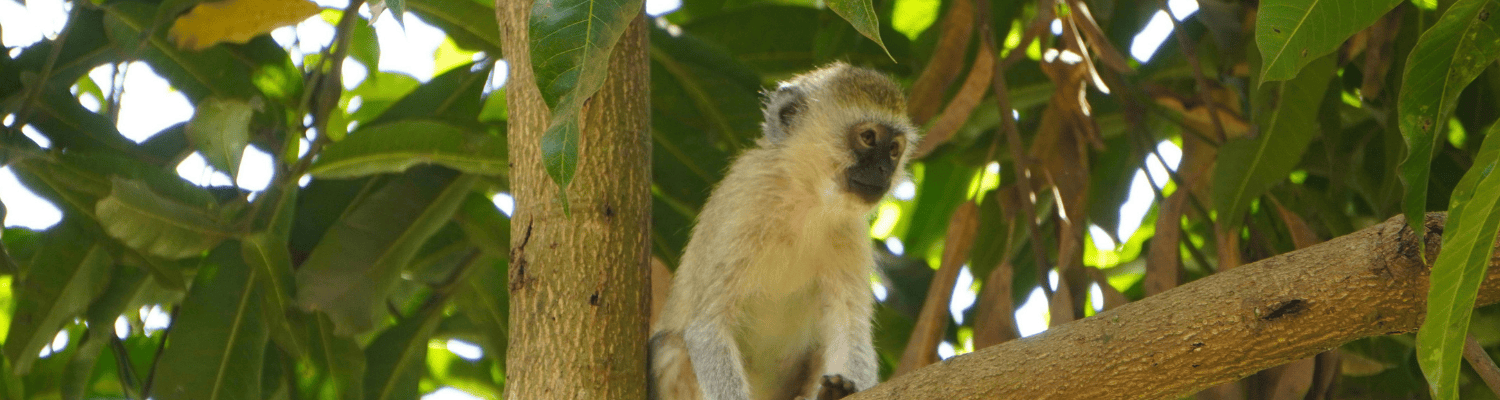
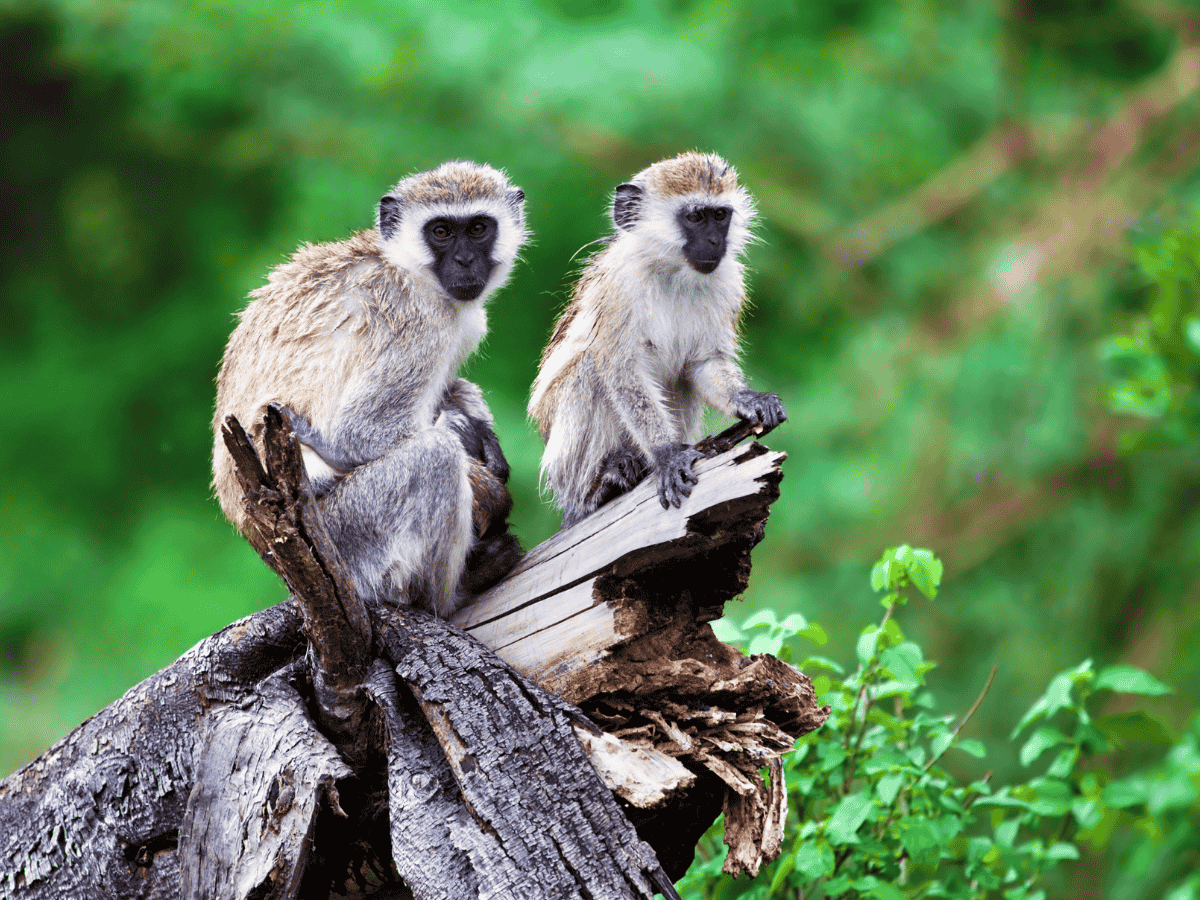
Vervet Monkeys are small, agile monkeys with grey fur and black faces. They have long tails and are often seen in trees. Males have blue skin on their underside. They may be confused with baboons, but vervets are much smaller and more delicate.
Behaviour
Vervet monkeys are omnivores that feed on fruit, seeds, and insects. They live in social groups and are highly vocal. On safari, they are often seen in trees or near lodges.
Diet
Vervet monkeys are omnivores that feed on fruits, leaves, seeds, insects, and small animals. They are active during the day and often feed in trees and on the ground. They are opportunistic and may take food from human areas. During dry periods, they rely more on leaves and other available vegetation. They often forage in groups, spreading out to find food. Their diet allows them to adapt to different environments, including areas close to people.
Habitat
Vervet monkeys inhabit savanna, woodland, and riverine areas where trees and water are available. Their habitat supports climbing, feeding, and social interaction. They prefer areas with good tree cover and nearby water. Terrain is usually flat to gently rolling. Travellers commonly encounter vervet monkeys near camps, rivers, and forest edges, where their active and social behaviour makes them easy to observe.
Conservation Status
Vervet monkeys are listed as least concern, with widespread populations. Their main threats include habitat loss and conflict with people. They are highly adaptable and often live near human settlements. Strong populations exist in protected areas. Safari tourism supports conservation and helps maintain healthy populations.
Interesting Facts
Vervet monkeys are small, agile primates known for their distinctive black faces and expressive behaviour. They have a complex system of alarm calls, with different calls for different predators. Vervets are highly adaptable and often found near water or human settlements. They are curious and intelligent, sometimes stealing food from camps or lodges. Their playful nature and vocal communication make them fascinating to observe.
Folklore
Vervet monkeys are commonly linked to curiosity, communication, and adaptability. Their vocalisations and social behaviour have made them symbols of awareness and intelligence. In some traditions, they represent observation and learning. Their presence reinforces the importance of communication within groups.