
Overview
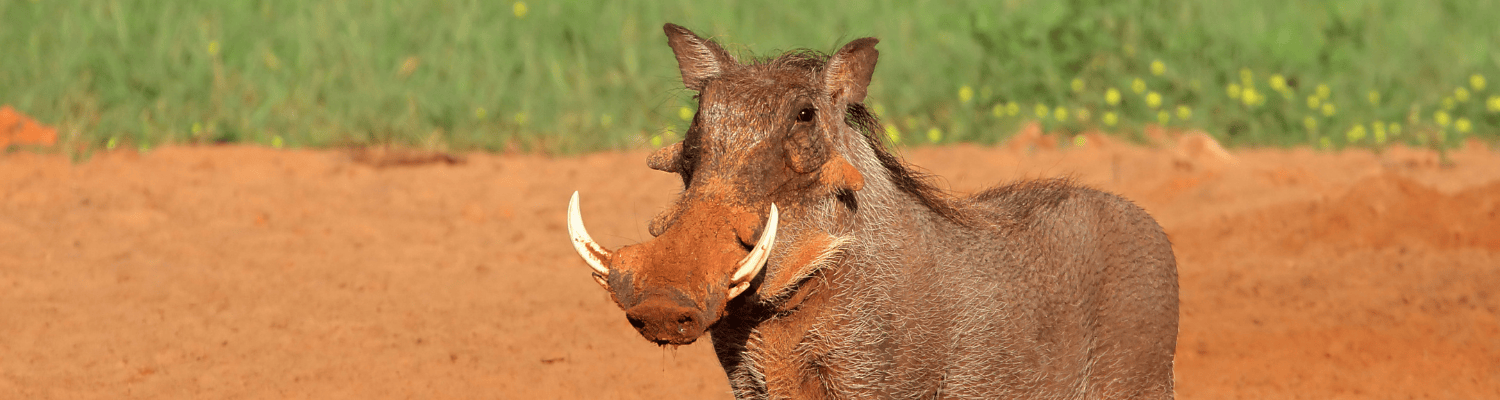
The warthog is a sturdy and distinctive animal, known for its tusks, facial warts, and upright mane. It is found across much of sub-Saharan Africa, especially in savannas and open woodlands where it can graze and access burrows. Warthogs are often seen kneeling on their front legs while feeding or running with their tails held straight up. For travellers, they add character and humour to safari sightings. Despite their playful appearance, they are well adapted to survive in the wild and play a role in shaping the landscape.










Gallery
Summary
Behaviour
Warthogs are omnivores that feed on grass, roots, and small animals. They live in small family groups and use burrows for shelter. On safari, they are often seen grazing on their knees or running with tails upright.
Best Places To See
Warthogs are most reliably seen in open savanna and grassland ecosystems where short grazing and burrow availability support stable populations, with Kruger National Park standing out as a flagship destination due to consistently high densities and excellent visibility along roads and open plains. Adjacent private reserves such as Sabi Sands Game Reserve and Timbavati Game Reserve offer equally frequent sightings, often in relaxed, undisturbed settings. In East Africa, the Serengeti National Park and Masai Mara National Reserve provide widespread encounters across open landscapes, while in Botswana, Moremi Game Reserve and Chobe National Park deliver regular sightings in floodplain and woodland areas where warthogs move predictably.
Best Time Of Year To See
The best time to see warthogs is during the dry season, when they gather around water sources and open areas, making sightings consistent. Shorter grass improves visibility. They are active during the day and often seen feeding or moving between burrows and water. In the wet season, they spread out slightly but remain common.
Identification
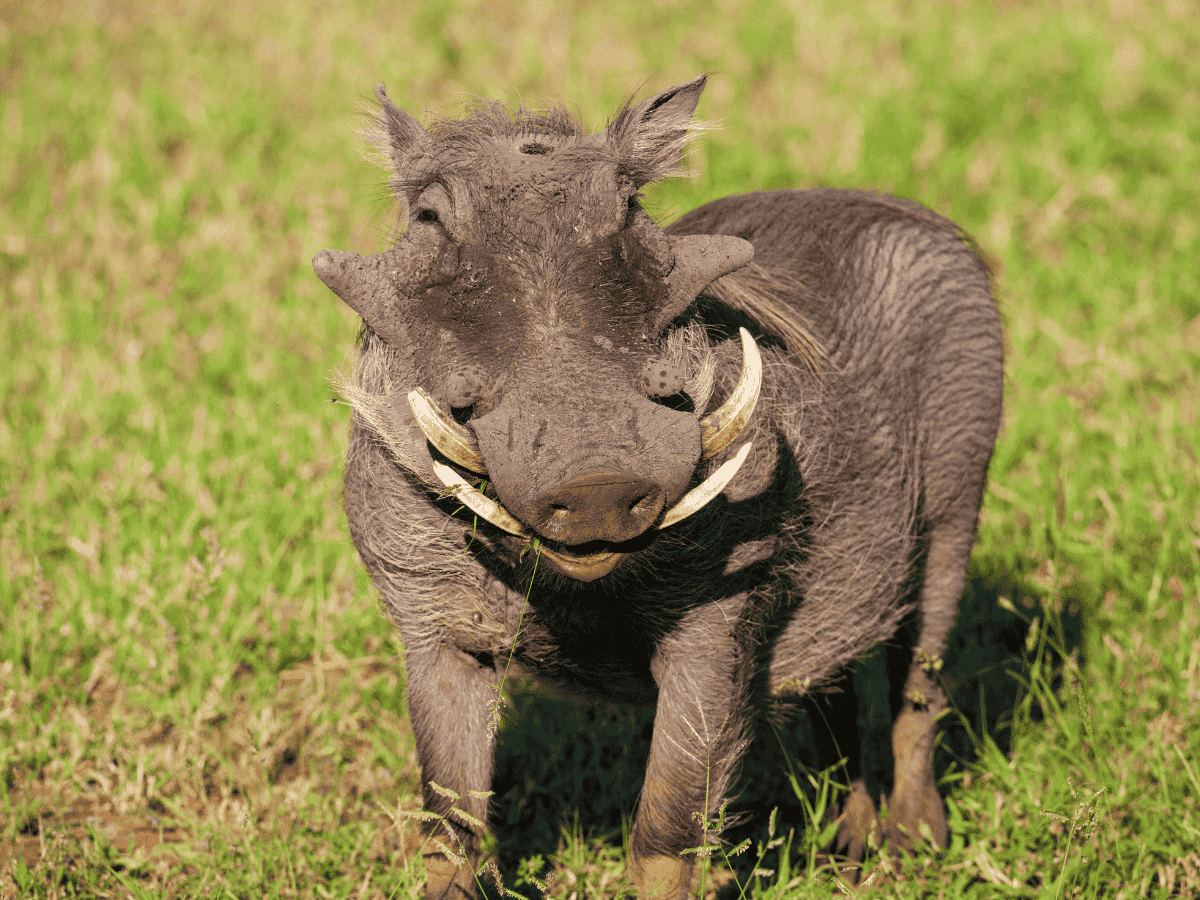
Warthogs are pig-like animals with large heads, tusks, and facial warts. Their bodies are grey with sparse hair and a mane along the back. Both sexes have tusks, but males’ are larger. They are often seen kneeling while feeding. They may be confused with bushpigs, but warthogs are more open-habitat animals.
Diet
Warthogs are omnivores that feed mainly on grasses, roots, and bulbs. They often kneel on their front legs while grazing to reach short grass. They also dig for roots using their tusks. During dry seasons, they rely more on underground food sources. They may also eat fruit and occasionally small animals or carrion. Their feeding is mostly during the day. Their ability to dig for food helps them survive in harsh conditions.
Habitat
Warthogs are found in savanna, grassland, and open woodland where burrows and grazing are available. Their habitat includes areas with short grasses and access to water. They use abandoned burrows for shelter and protection. Terrain is typically open with scattered vegetation. Travellers commonly see warthogs feeding on open plains or near waterholes, often kneeling while grazing, and retreating quickly to burrows when threatened.
Conservation Status
Warthogs are listed as least concern, with stable and widespread populations. Their biggest threats include habitat loss and hunting in some regions. However, they are highly adaptable and thrive in many environments. Strong populations exist in protected areas. Safari tourism supports these ecosystems and helps maintain healthy warthog populations.
Interesting Facts
Warthogs are easily recognised by their facial “warts” and curved tusks. They often kneel on their front legs while feeding, which helps them graze short grass. Warthogs use abandoned burrows for shelter, entering tail-first so they can defend themselves with their tusks. Despite their comical appearance, they are fast runners and can escape predators quickly. Their behaviour and expressions make them a favourite among safari travellers.
Folklore
Warthogs are often seen as symbols of resilience, adaptability, and practicality. Their ability to thrive in varied environments has made them representations of survival. In some African stories, they are portrayed as resourceful animals that make the most of their surroundings. Their behaviour reinforces themes of persistence and adaptability.