

Western Barn Owl | A Complete Birding Guide
Learn to identify Western Barn Owl and where to spot itOverview
The Barn Owl is a pale, ghost-like owl with a heart-shaped face and soft white underparts. It is found across much of Africa in open areas, farmland, and around lodges. Active at night, it hunts silently for small mammals. Its eerie appearance and quiet flight make it one of the most recognisable and atmospheric birds after dark.








Gallery
Summary
Best Places To See
Barn Owl is most reliably found in open grassland, farmland, and savanna where low vegetation supports hunting activity. Kruger National Park offers consistent sightings, particularly in open areas where owls hunt along roads at night. Etosha National Park provides a strong complementary option with similar open terrain and excellent visibility. These locations are reliable because wide, open landscapes allow for unobstructed hunting flights, making it easier to spot individuals as they move silently across the ground during night drives.
Best Time Of Year To See
Barn Owl can be seen throughout the year, but sightings are most consistent during warmer months when prey activity increases and hunting becomes more frequent. During breeding season, adults may be more active and visible as they hunt for young. Warmer nights improve conditions for observing their silent flight. In cooler months, activity may decrease slightly, although the species remains present. Night drives during summer provide the best opportunity, combining higher prey availability with more active hunting behaviour.
Identification
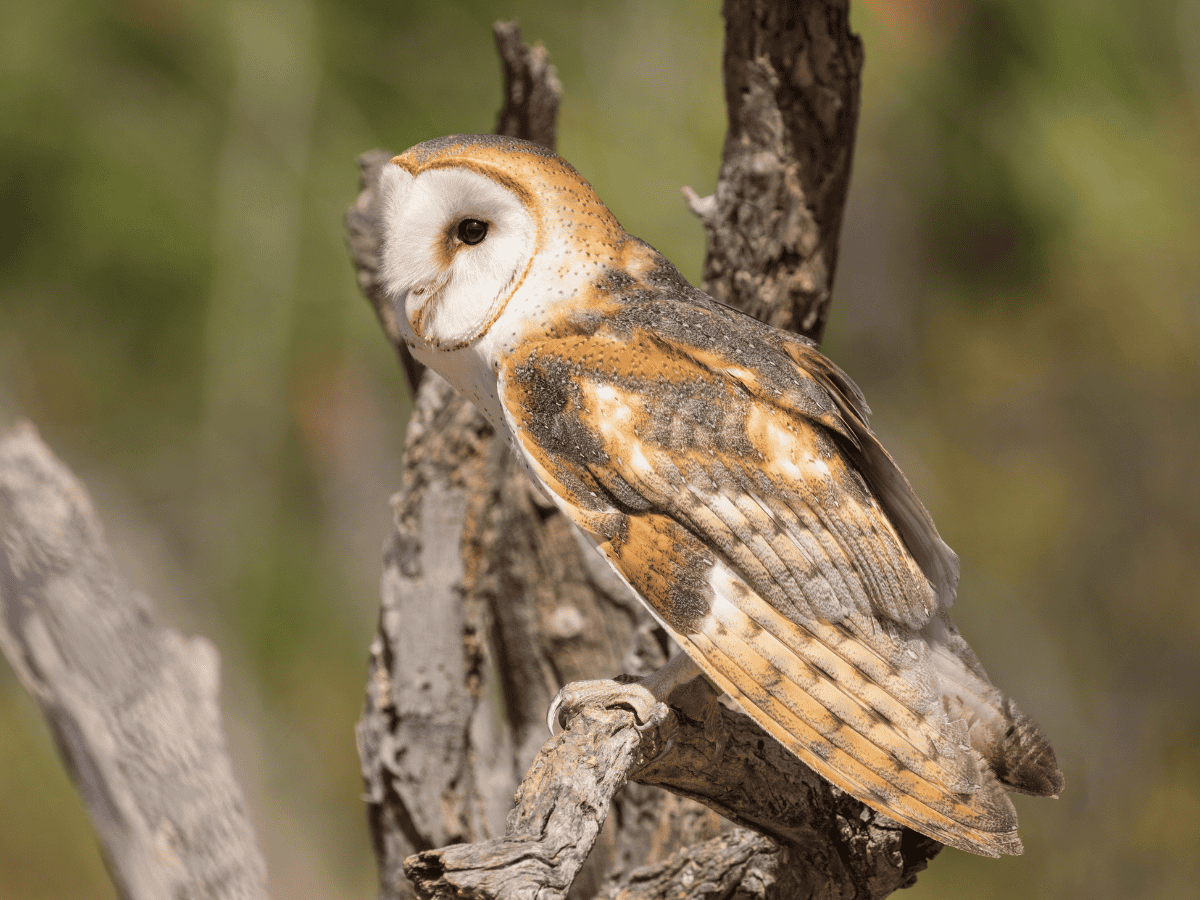
Barn Owl is a medium-sized owl with a distinctive heart-shaped white face, dark eyes, and pale underparts. Its upperparts are golden-brown with subtle mottling. It has long wings and a slender body, giving it a graceful appearance in flight. Males and females are similar, although females may show slightly heavier markings. It cannot easily be confused with other owls due to its unique facial shape and pale colouring.
Behaviour
Barn Owl feeds mainly on small mammals such as rodents, hunting at night using silent flight and exceptional hearing. It often flies low over open ground, listening for movement before dropping down to capture prey. The species is usually solitary and roosts in sheltered areas during the day. Travellers are most likely to observe it on night drives, gliding silently over grassland or perched quietly in low light conditions.
Diet
Barn Owl feeds primarily on small mammals, especially rodents, which it captures using precise hearing and silent flight. It hunts by flying low over open ground, detecting prey movements before striking. Feeding activity is highest at night when prey is active. Its diet plays an important role in controlling rodent populations and maintaining ecological balance within its habitat.
Habitat
Barn Owl prefers open grassland, farmland, savanna, and lightly wooded areas where hunting conditions are ideal. It is often associated with open landscapes and may roost in trees, cliffs, or structures. This habitat supports efficient hunting and access to prey. Travellers are most likely to encounter it in open areas during night drives.
Conservation Status
Barn Owl is considered stable and widespread, with no major threats affecting overall populations across its range. Its adaptability to both natural and modified environments supports its resilience. Protected areas such as Kruger National Park and Etosha National Park help maintain suitable conditions. Conservation of open habitats and prey species supports its continued success.
Interesting Facts
Barn Owl is known for its silent flight, which allows it to hunt without being detected. Its heart-shaped face helps funnel sound to its ears, giving it exceptional hearing. It is one of the most widely distributed owl species in the world. Its pale appearance often gives it a ghost-like presence at night.
Folklore
Barn Owls are often associated with mystery and the supernatural in African folklore due to their silent flight and nocturnal habits. Their pale appearance and sudden movements can create a sense of presence in the dark. In some traditions, they are seen as messengers or symbols of unseen forces. They represent the hidden and quiet aspects of the natural world.